
A counselor experienced in one state's workers' compensation system starts a case for a worker injured in another state. What caution is most important?
Select an answer to reveal the explanation.
Short Explanation
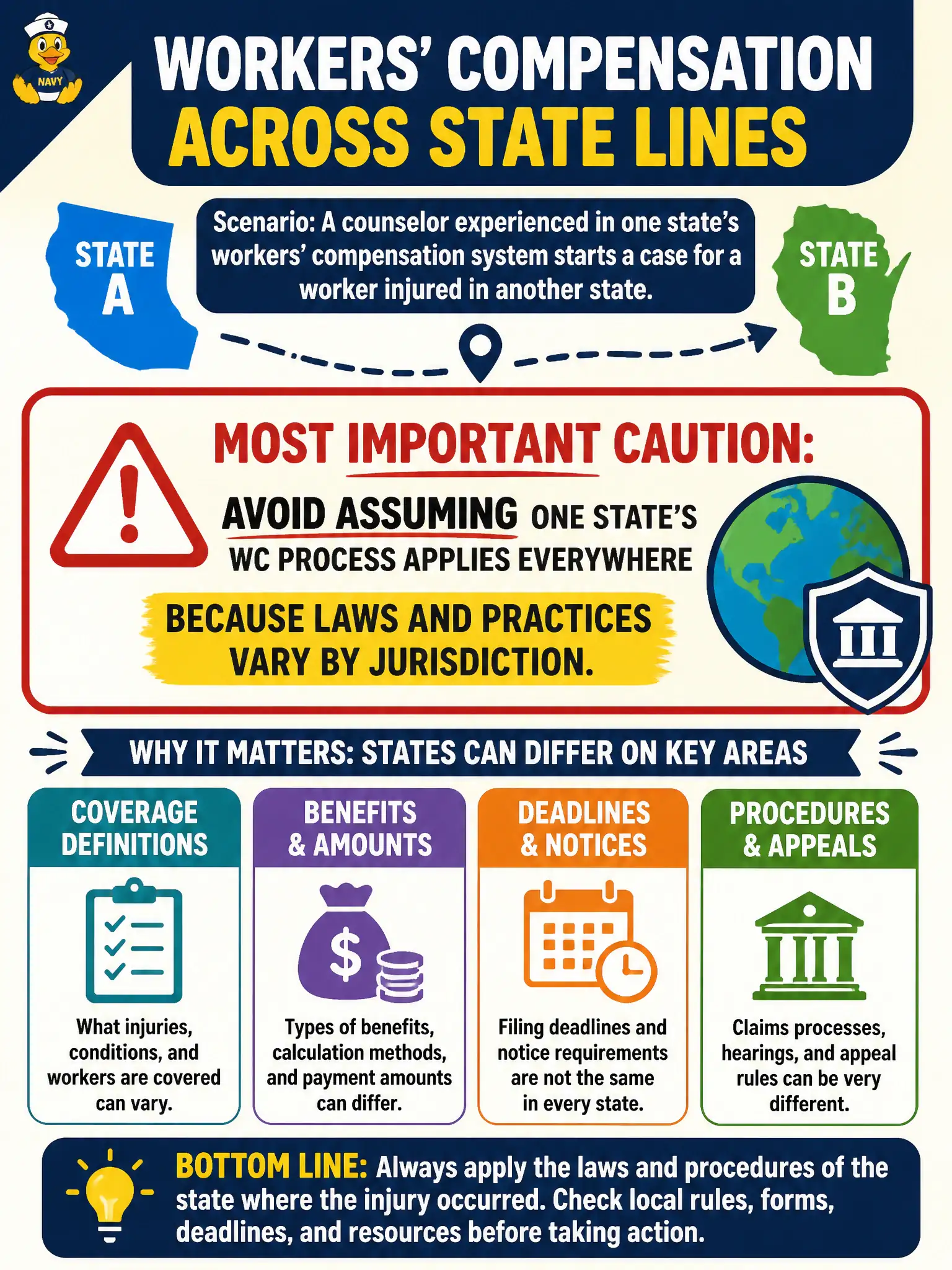
Workers' comp isn't one national playlist—every state remixes the rules. Don't drag State A's forms and deadlines into State B on autopilot. Check the local playbook.
Full Explanation
Workers' compensation laws and practices vary by jurisdiction, so a counselor experienced in one state's system must avoid assuming that state's process applies unchanged when a worker was injured in another state. Forms, vocational entitlements, timelines, and provider rules can differ substantially across municipal and state systems. Jurisdictional humility prevents procedural errors that delay rehab. Applying the first state's forms and timelines unchanged to every new jurisdiction imports the wrong rule set. Treating WC as a single federal program with identical rules in all states is a common misconception. Ignoring jurisdictional differences because employers never follow state WC law is both inaccurate and reckless for case coordination. Exam caveat: some federal systems (for example, certain federal employee or longshore contexts) differ again from state WC; always verify the controlling system for the injury rather than generalizing from prior civic cases. Operational check: before filing or counseling on WC rehab steps, identify the state or system of injury, obtain a current local process overview or specialist consult, and document which jurisdictional rules guide the plan.