
After a workplace injury, which disability management approach best supports timely recovery of work function?
Select an answer to reveal the explanation.
Short Explanation
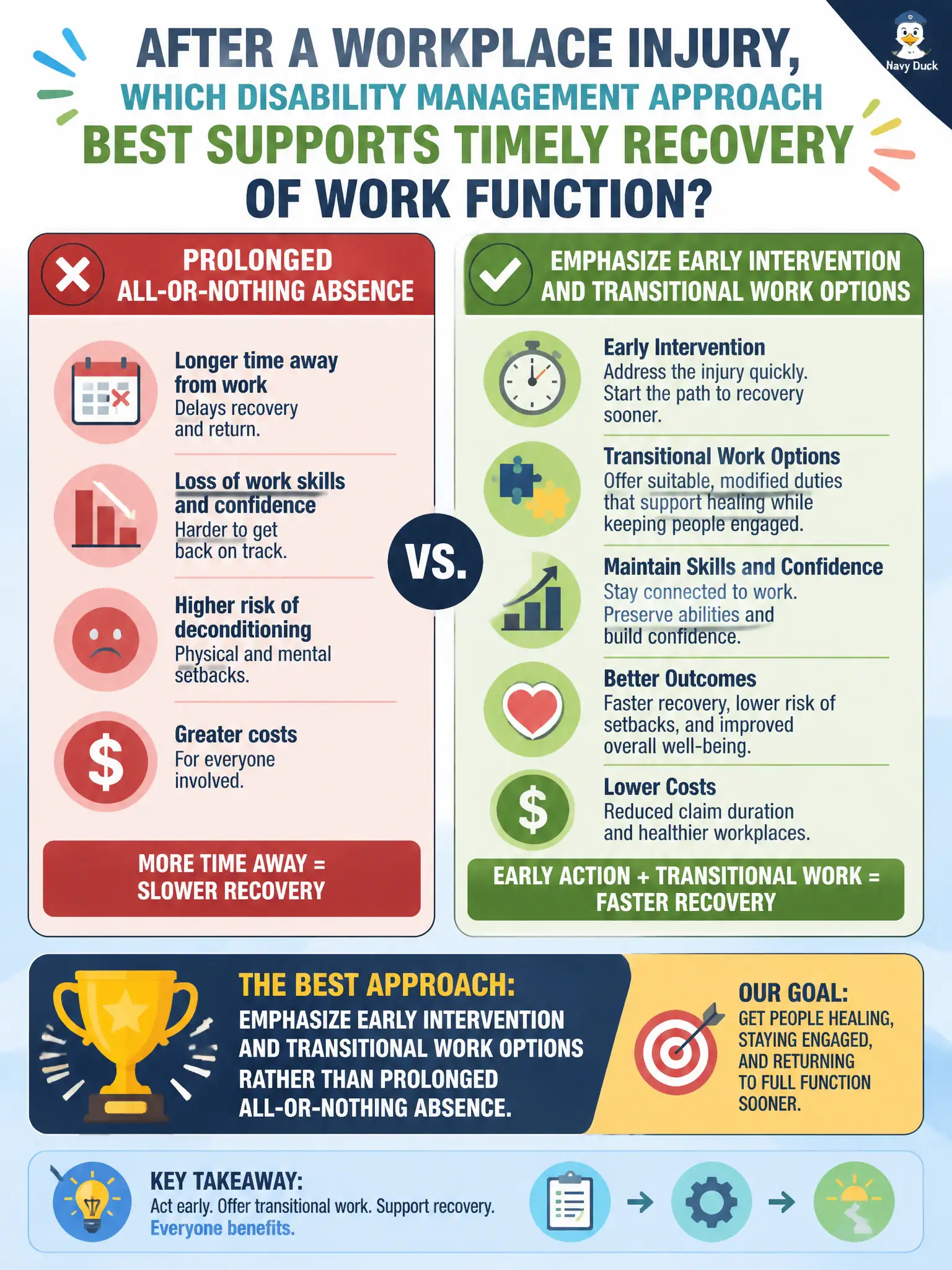
The longer someone sits in limbo, the harder the comeback. Early check-ins and transitional duty beat a years-later 'all or nothing' leap. Disability management likes on-ramps, not cliffs.
Full Explanation
After a workplace injury, disability management that emphasizes early intervention and transitional work options rather than prolonged all-or-nothing absence best supports timely recovery of work function. Progressive return with accommodations keeps workers connected to municipal or private employers while medical recovery continues, reducing detachment and claim duration. Delayed contact until maximum medical improvement years later with no interim plan often hardens disability identity and job loss. Prohibiting transitional duty because only full-duty return counts as success creates a false binary that increases time away from work. Ending medical care immediately so the worker can resume unrestricted overtime endangers recovery and workplace safety. Exam caveat: transitional work must be medically appropriate and consistent with restrictions; early intervention is not a mandate to force unsafe duty or to ignore treating-provider guidance in civic disability management. Operational check: within agency early-contact timelines, confirm medical restrictions, propose a written transitional duty plan with the employer, and calendar progressive upgrades rather than waiting passively for MMI before any RTW activity.