
An employer partner reports rising musculoskeletal claims. Which disability prevention strategy fits best?
Select an answer to reveal the explanation.
Short Explanation
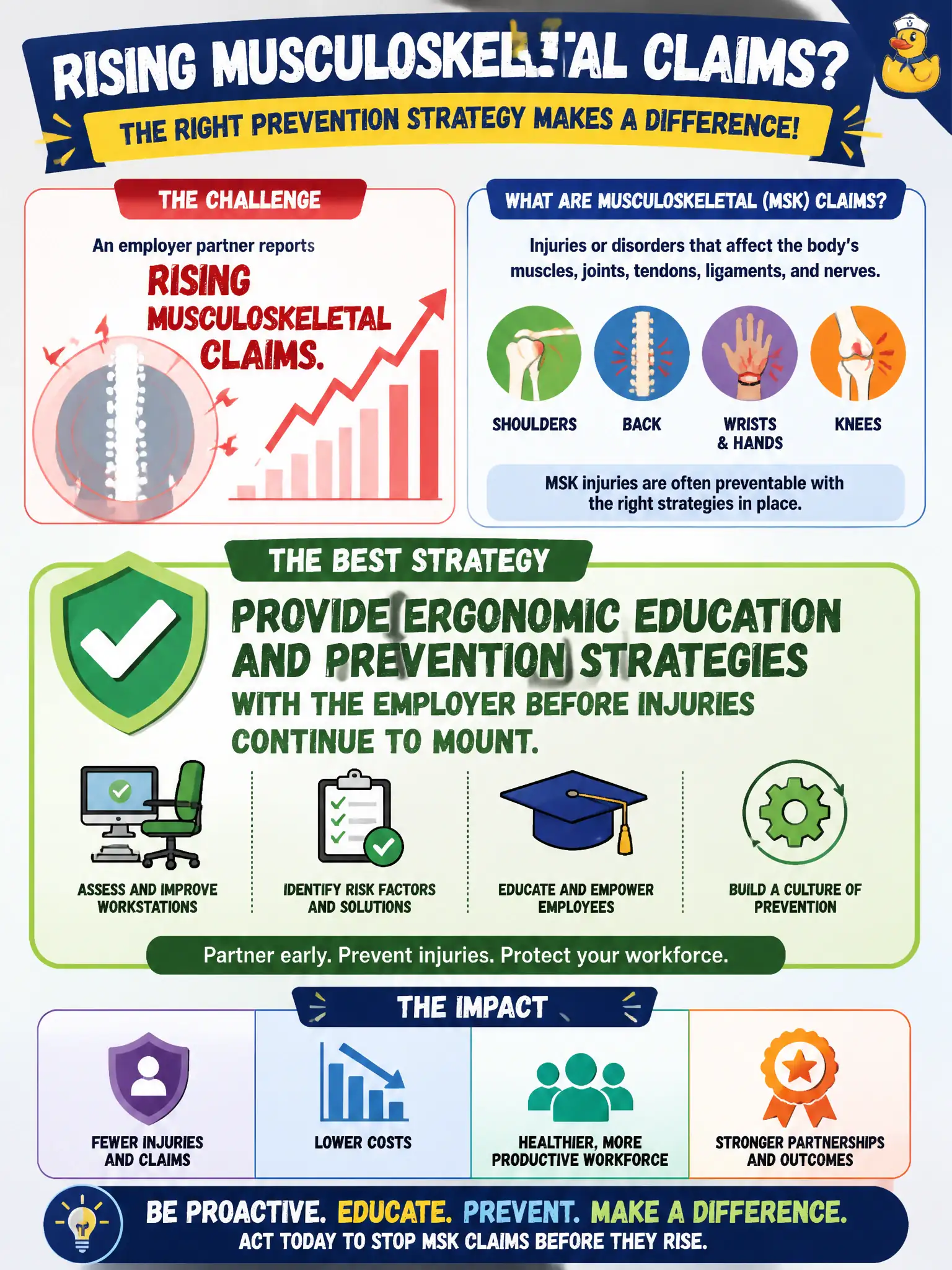
Fix the workstation before the claim pile grows—that's prevention, not after-the-fact paperwork. Ergonomic education with employers is disability management with the lights on early.
Full Explanation
When an employer partner reports rising musculoskeletal claims, disability prevention through ergonomic education and prevention strategies before injuries continue to mount is the fitting disability-management response. Early partnership with municipal or private employers reduces human harm and claim costs more effectively than waiting for catastrophic outcomes. Prevention education is squarely inside disability management collaboration. Waiting until permanent total disability awards peak before discussing prevention accepts preventable injury as the trigger for learning. Discouraging all early education because prevention is supposedly outside disability management narrows the CRC role to after-the-fact salvage only. Recommending elimination of hiring of any workers who perform physical tasks is discriminatory exclusion rather than ergonomic prevention. Exam caveat: prevention programs must still respect labor rules, unions, and non-discrimination—ergonomics is not a pretext to screen out people with disabilities from civic jobs. Operational check: schedule an employer ergonomic education session tied to the high-claim tasks, document attendance and hazard controls discussed, and track musculoskeletal claim or incident trends over a defined post-intervention window.