
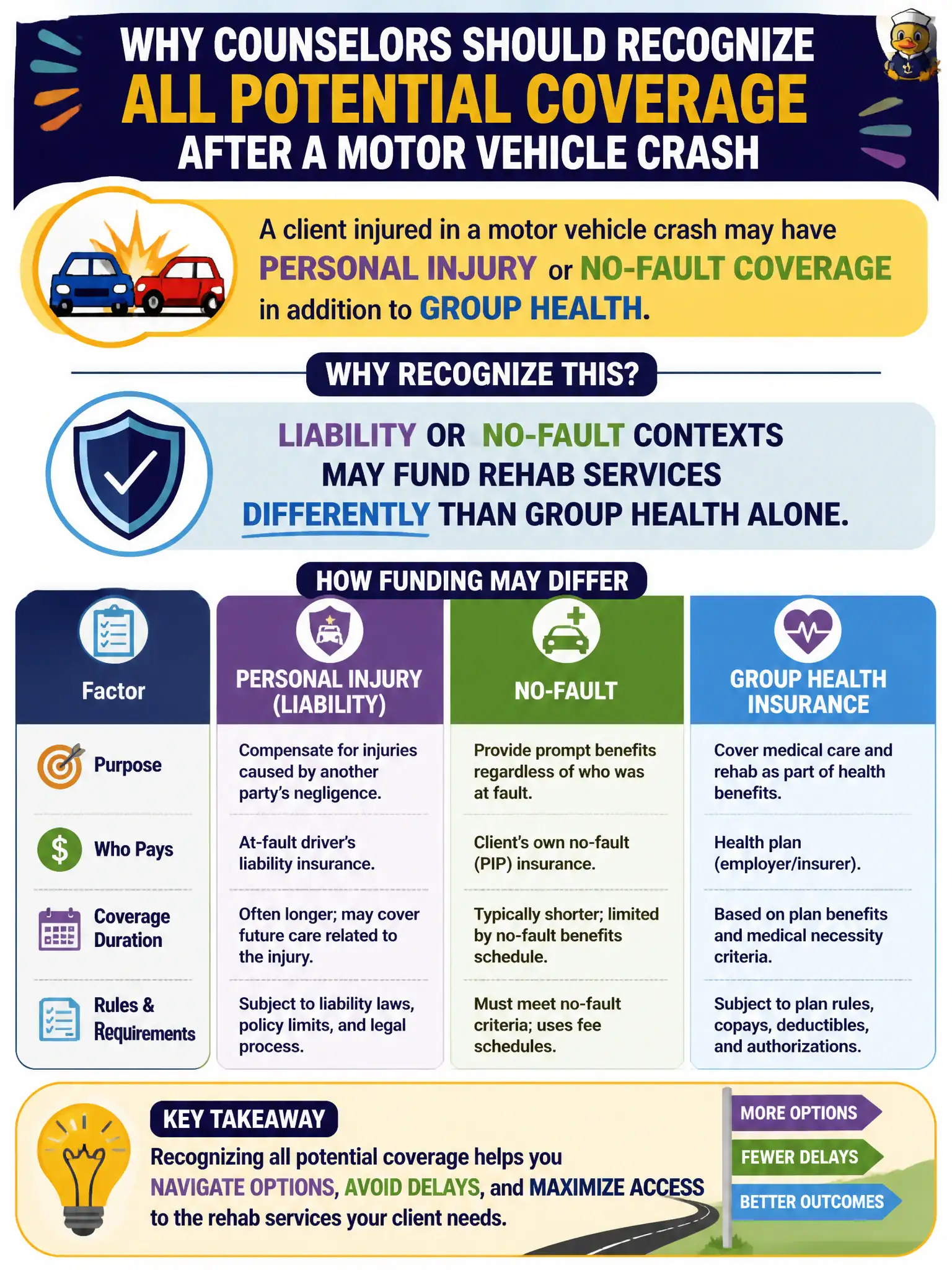
A client injured in a motor vehicle crash may have personal injury or no-fault coverage in addition to group health. Why should the counselor recognize this?
Select an answer to reveal the explanation.
Short Explanation
Car-crash cases sometimes open a second wallet—liability or no-fault—that group health doesn't mirror. Spotting that funding path can unlock rehab that the health plan stalls. Different insurance, different doors.
Full Explanation
Liability, personal injury, or no-fault contexts may fund rehabilitation services differently than group health alone after a motor vehicle crash, so municipal counselors should recognize alternate coverage that can shape authorizations, timelines, and documentation. Ignoring these payers can leave needed rehab unfunded or improperly billed. Coordinating among possible sources is part of practical community resource and disability management literacy. Claiming personal injury and no-fault never pay for rehab so they can be ignored is often false and abandons potential funding. Treating group health as the only possible payer in every injury scenario nationwide erases state no-fault and liability variations common in civic caseloads. Equating no-fault rules with Medicare Part D pharmacy rules in all states confuses unrelated benefit designs. Exam caveat: coverage interactions are jurisdiction-specific; counselors identify possible sources and coordinate with claims or benefits experts rather than issuing definitive legal payment-order opinions beyond competence. Operational check: after an MVC-related civic case opens, inventory group health, auto no-fault or PIP, and liability possibilities with the client, request claim contacts, and document which payer is being pursued for which rehab service before assuming group health is sole funder.