
A client on short-term disability asks when long-term disability and return-to-work timing typically become relevant. What explanation is most accurate?
Select an answer to reveal the explanation.
Short Explanation
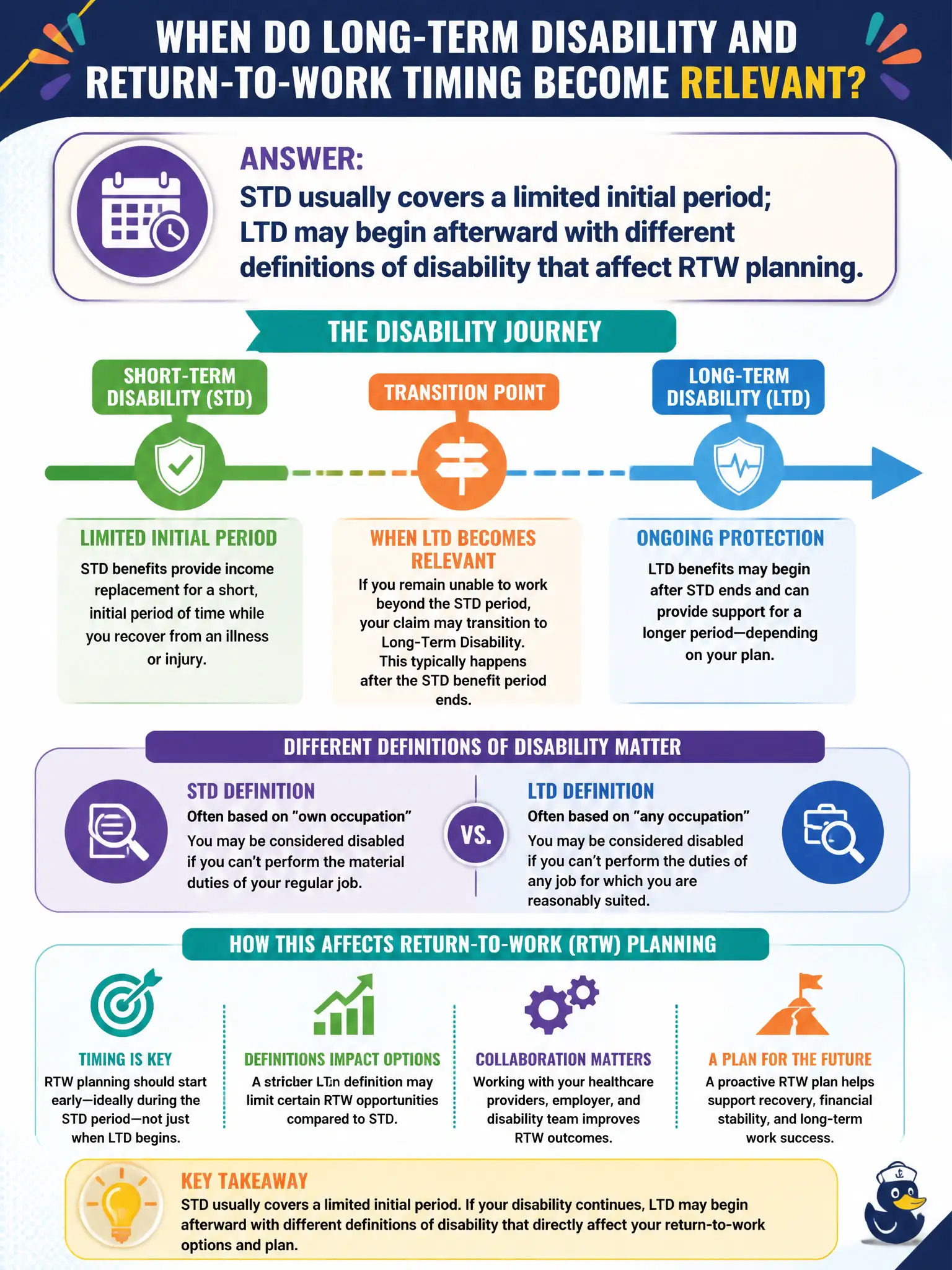
Short-term is the sprinter; long-term is the marathon with a different rulebook. When STD winds down, LTD definitions can reshape what 'disabled' means for RTW. Time the rehab plan to that handoff.
Full Explanation
Short-term disability usually covers a limited initial period, after which long-term disability may begin under different definitions of disability that affect return-to-work timing and municipal rehabilitation planning. Counselors help clients and employers anticipate when transitional work, accommodations, and claim documentation become salient as STD ends and LTD criteria apply. Treating STD and LTD as the same benefit with identical duration and definitions in all policies erases common policy structure differences. Claiming LTD always starts on day one of illness and never interacts with rehab timing misstates typical sequencing and coordination needs. Asserting that private disability insurance never influences when transitional work should be considered ignores a major driver of civic RTW timelines for covered workers. Exam caveat: policy language varies widely; counselors read or obtain summary plan details and coordinate with claims adjusters rather than assuming a universal STD/LTD calendar. Operational check: obtain the client's STD end date and LTD definition overview, align the rehab plan's transitional work targets with that timeline, and calendar a pre-transition meeting with client and relevant claim or employer contacts.