
An SSDI beneficiary considering work asks how Medicare differs from Medicaid at a basic level. What distinction should the counselor convey?
Select an answer to reveal the explanation.
Short Explanation
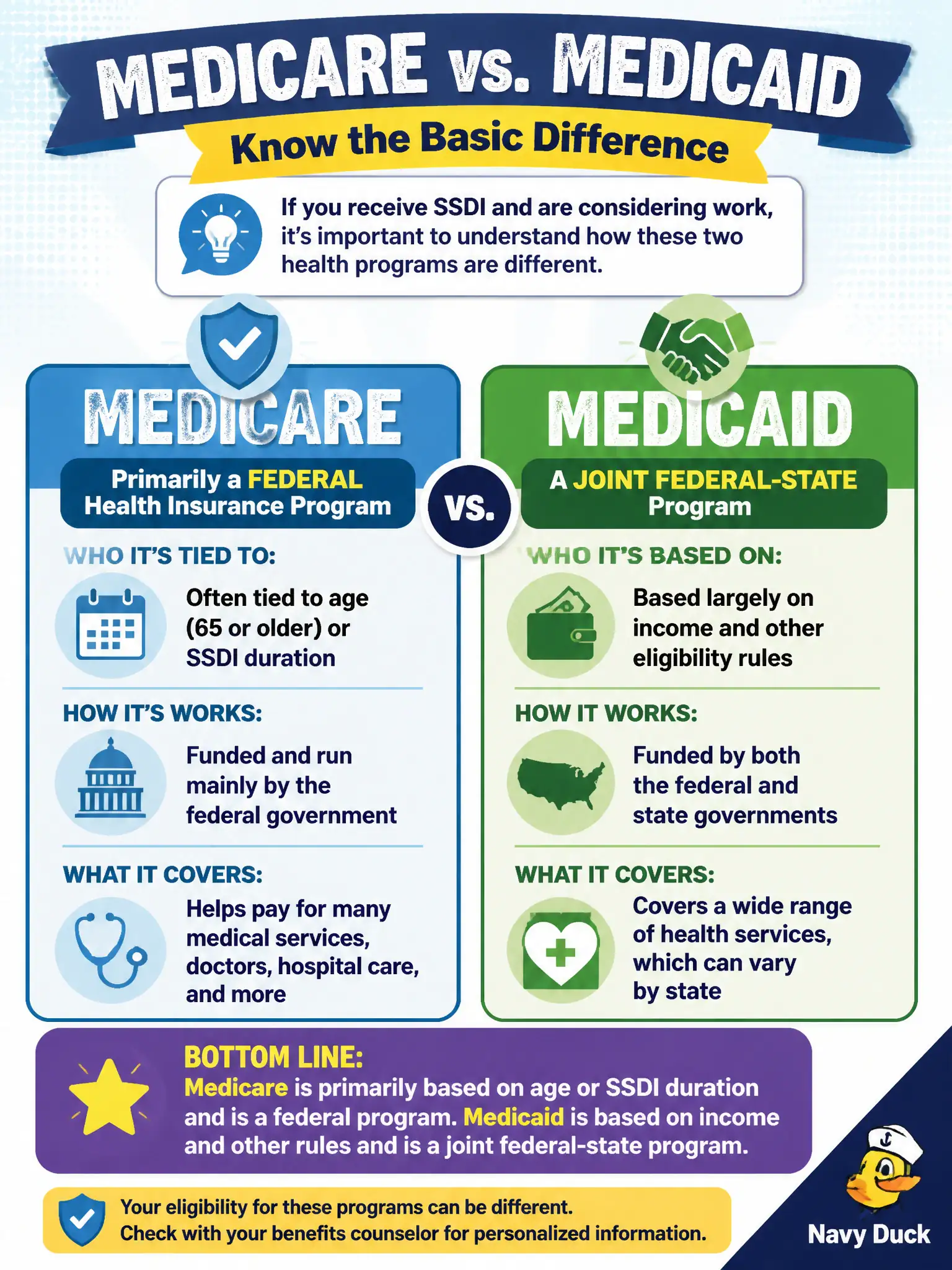
Quick label check: Medicare is the federal insurance many SSDI folks eventually get; Medicaid is the needs-based federal-state program. Different doors, different keys—knowing which is which keeps work counseling honest.
Full Explanation
At a basic counseling level, Medicare is primarily a federal health insurance program often tied to age or SSDI duration, while Medicaid is a joint federal-state program based largely on income and other eligibility rules. Conveying that distinction helps SSDI beneficiaries considering work understand why coverage pathways, premiums, and state variation differ in municipal benefits counseling. Accurate contrasts prevent dangerous assumptions that the programs are interchangeable private employer plans. Claiming Medicare and Medicaid are identical private employer plans with the same rules in every state is incorrect on sponsorship, eligibility, and variability. Saying Medicaid is only for retirees over 80 and Medicare is only for children reverses and caricatures eligibility. Asserting that neither program ever interacts with disability or work planning makes the distinction irrelevant when dual eligibility, buy-in options, and coverage transitions frequently affect civic RTW decisions. Exam caveat: CRCs provide general education and referrals to benefits specialists; they should not give binding eligibility determinations or state-specific legal advice beyond competence. Operational check: explain the federal-versus-joint and age/SSDI-versus-income distinction in plain language, ask the client to restate it, and document a referral to a benefits counselor for case-specific Medicare/Medicaid work-incentive questions.