
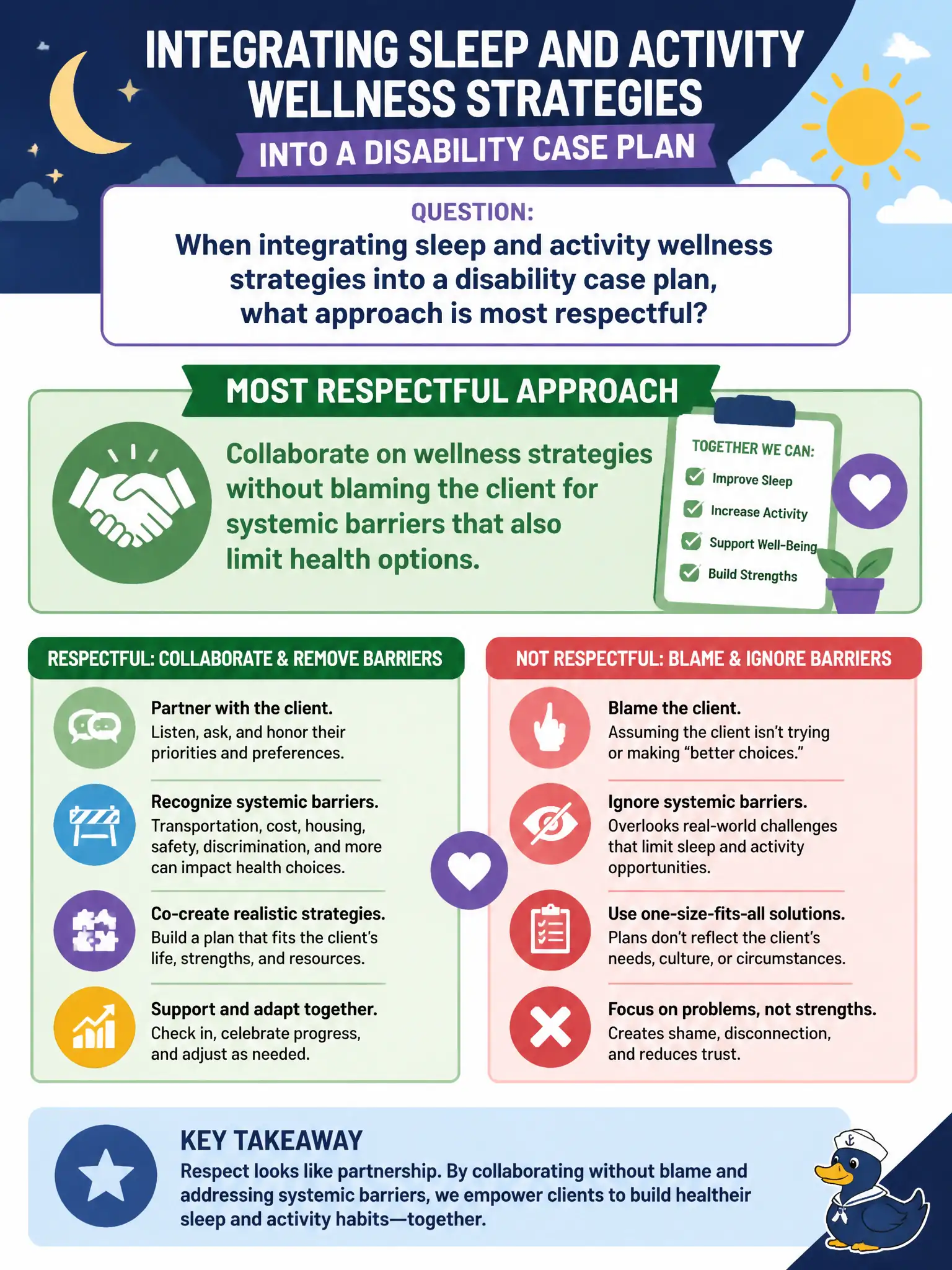
When integrating sleep and activity wellness strategies into a disability case plan, what approach is most respectful?
Select an answer to reveal the explanation.
Short Explanation
Coaching sleep and movement is great; shaming someone for a broken transit system or inaccessible gym isn't. Pair wellness tips with respect for real barriers. Partnership beats blame.
Full Explanation
Integrating sleep and activity wellness strategies into a municipal disability case plan should be collaborative and should avoid blaming the client for systemic barriers that also limit health options—such as unsafe neighborhoods, shift work, housing instability, food access, or inaccessible recreation. Respectful wellness counseling pairs personal strategies with environmental problem-solving so civic clients are not shamed for structural constraints. Framing all health setbacks as personal failure and ignoring environmental constraints damages alliance and misses determinants of health that rehabilitation must address. Refusing wellness collaboration because disability precludes any health behavior change is fatalistic and inaccurate. Replacing accommodations with wellness lectures as the only intervention swaps rights-based access for lectures and can become coercive rather than enabling. Exam caveat: collaboration still invites clients to try workable strategies; avoiding blame is not the same as avoiding all personal agency discussion or medically indicated recommendations. Operational check: when adding sleep or activity goals, list both personal strategies and systemic barriers, pair each barrier with an advocacy or resource action, and confirm the client experiences the plan as collaborative rather than blaming before implementation.