
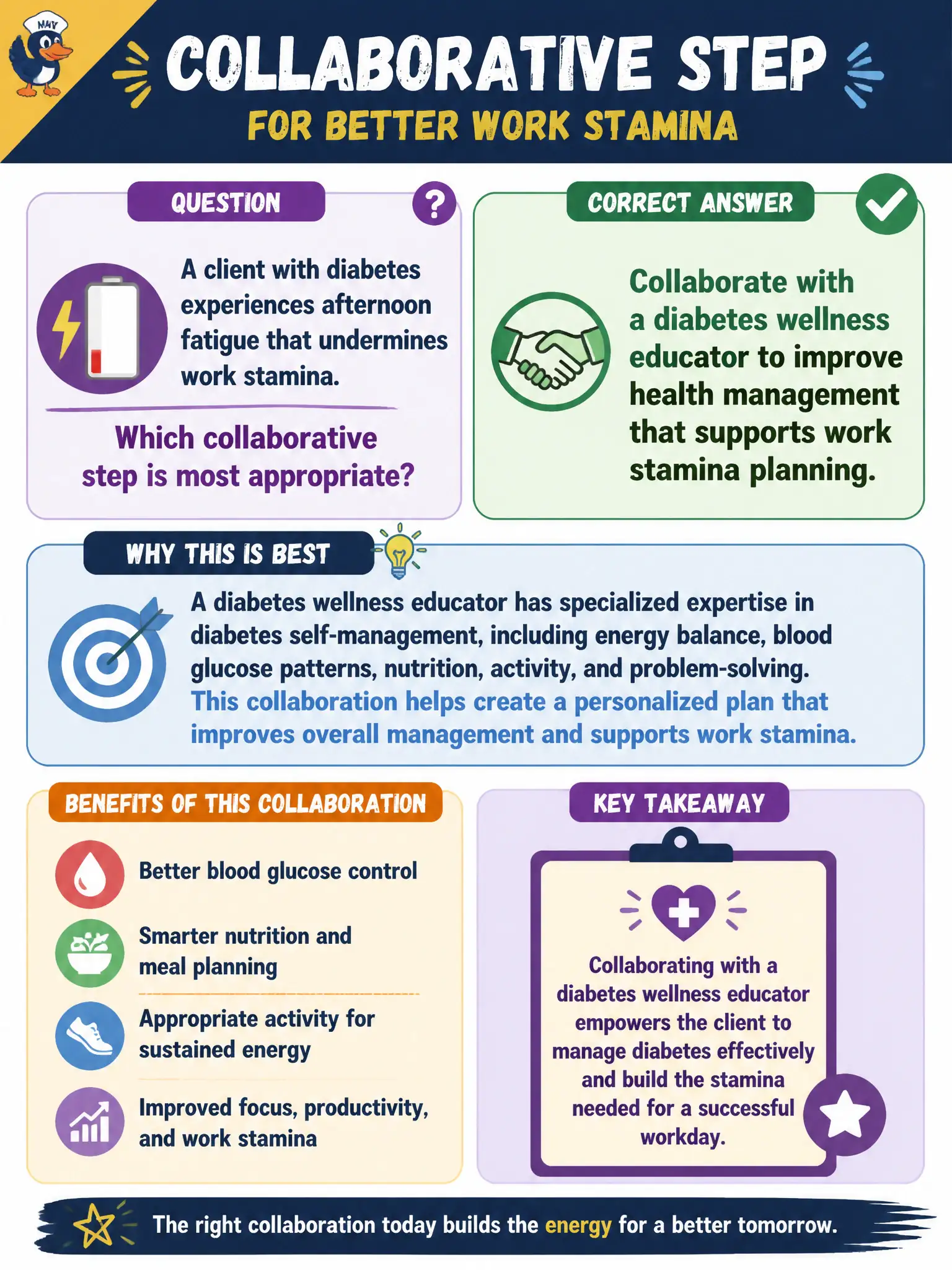
A client with diabetes experiences afternoon fatigue that undermines work stamina. Which collaborative step is most appropriate?
Select an answer to reveal the explanation.
Short Explanation
Afternoon crashes aren't fixed with a stronger cover letter. Pull in a diabetes wellness educator so stamina and schedule planning match real energy patterns. Health partners make the job plan stickier.
Full Explanation
Collaborating with a diabetes wellness educator to improve health management that supports work stamina planning is an appropriate interdisciplinary step when afternoon fatigue undermines a municipal client's job endurance. Wellness partnership links medical self-management to vocational function without reducing the case to resume coaching alone, and it respects the chronic-condition realities many civic workers manage daily. Ignoring medical wellness partners and only coaching résumé formatting leaves the stamina barrier unaddressed while pretending paperwork will fix physiology. Instructing the client to hide diabetes from all health educators permanently blocks needed care and models unsafe concealment that can endanger worksite safety. Canceling the employment plan because diabetes always precludes competitive work endorses a categorical myth contradicted by countless successful workers with diabetes in public and private employment. Exam caveat: wellness educators complement—not replace—medical providers; counselors coordinate with consent and stay within scope regarding medical advice or medication changes. Operational check: with client consent, refer to or conference with a diabetes wellness educator about fatigue patterns affecting work, document jointly agreed self-management and schedule strategies, and reassess stamina on the job or in a work trial within a set timeframe.