
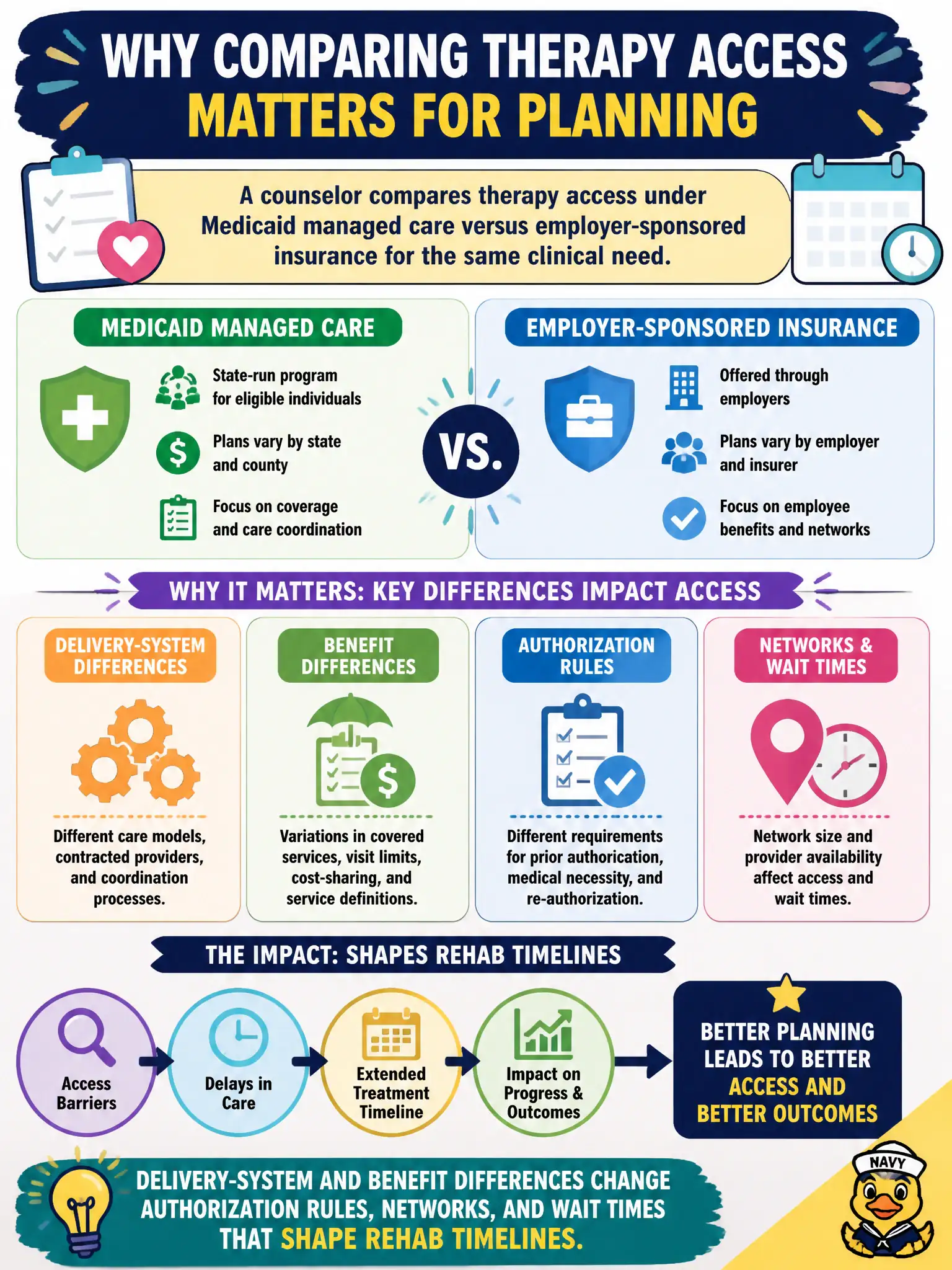
A counselor compares therapy access under Medicaid managed care versus employer-sponsored insurance for the same clinical need. Why does this matter for planning?
Select an answer to reveal the explanation.
Short Explanation
Same diagnosis, different door keys. Medicaid managed care and employer plans can mean different networks, prior auth, and waitlists. Plan the rehab calendar around how the benefits actually work.
Full Explanation
Delivery-system and benefit differences between Medicaid managed care and employer-sponsored insurance change authorization rules, networks, and wait times that shape municipal rehabilitation timelines. Comparing therapy access across payers is practical case planning, not academic curiosity. Counselors who ignore payer design set clients up for stalled starts and surprise denials. Claiming all insurance products authorize identical therapy with identical timelines nationwide is false and erases state and plan variation. Asserting that benefit type never affects people with disabilities' access to outpatient care contradicts common civic practice realities. Blaming only the client's motivation—not payer design—for therapy start dates individualizes a structural access problem. Exam caveat: counselors explain likely process differences and advocate within plan rules; they should not invent coverage guarantees or practice medicine by promising specific authorizations. Operational check: for the same clinical need, compare authorization steps, network providers, and estimated wait times under the client's actual payer; document implications for the rehab timeline and interim supports while therapy is pending.