
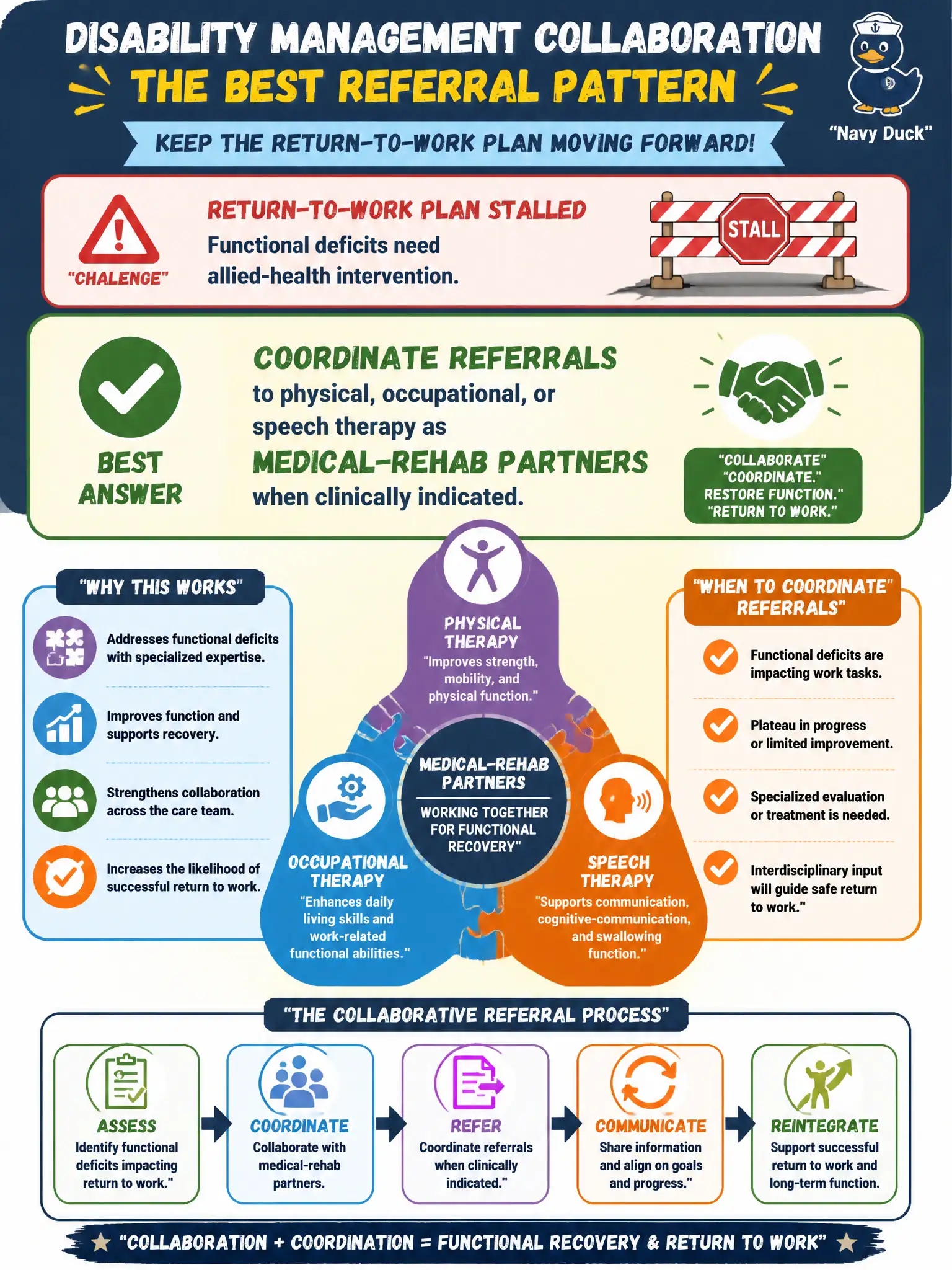
A client's return-to-work plan stalls because functional deficits need allied-health intervention. Which referral pattern best reflects disability management collaboration?
Select an answer to reveal the explanation.
Short Explanation
PT, OT, and speech aren't side quests—they're often the engines that make the job plan realistic. Bring those partners in when function is the bottleneck. Solo job coaching can't stretch a stiff shoulder.
Full Explanation
Disability management collaboration for return-to-work often includes coordinating referrals to physical, occupational, or speech therapy when functional deficits stall a municipal client's plan. Allied-health partners address capacity that counseling and job leads alone cannot restore, and clinically indicated PT, OT, or speech referrals are standard medical-rehab teamwork in civic disability management. Avoiding those referrals because only psychiatrists supposedly influence work capacity arbitrarily narrows the allied-health landscape and can prolong avoidable work disability. Replacing all therapy with unsupervised internet exercise videos as the sole plan risks unsafe self-treatment and weak accountability to the rehab team. Requiring the employer to become the treating therapist to save referral time confuses workplace supervision with licensed clinical care and creates liability and quality problems. Exam caveat: not every RTW delay needs all three therapies; selection follows assessed deficits and medical guidance, and counselors coordinate rather than independently prescribe therapy regimens. Operational check: match documented functional deficits to the indicated therapy discipline, complete the referral with goals tied to work tasks, and schedule a joint progress check that updates the civic RTW plan.