
A client with complex pain needs specialty medical intervention that advances vocational rehab goals. What is the counselor's most appropriate action?
Select an answer to reveal the explanation.
Short Explanation
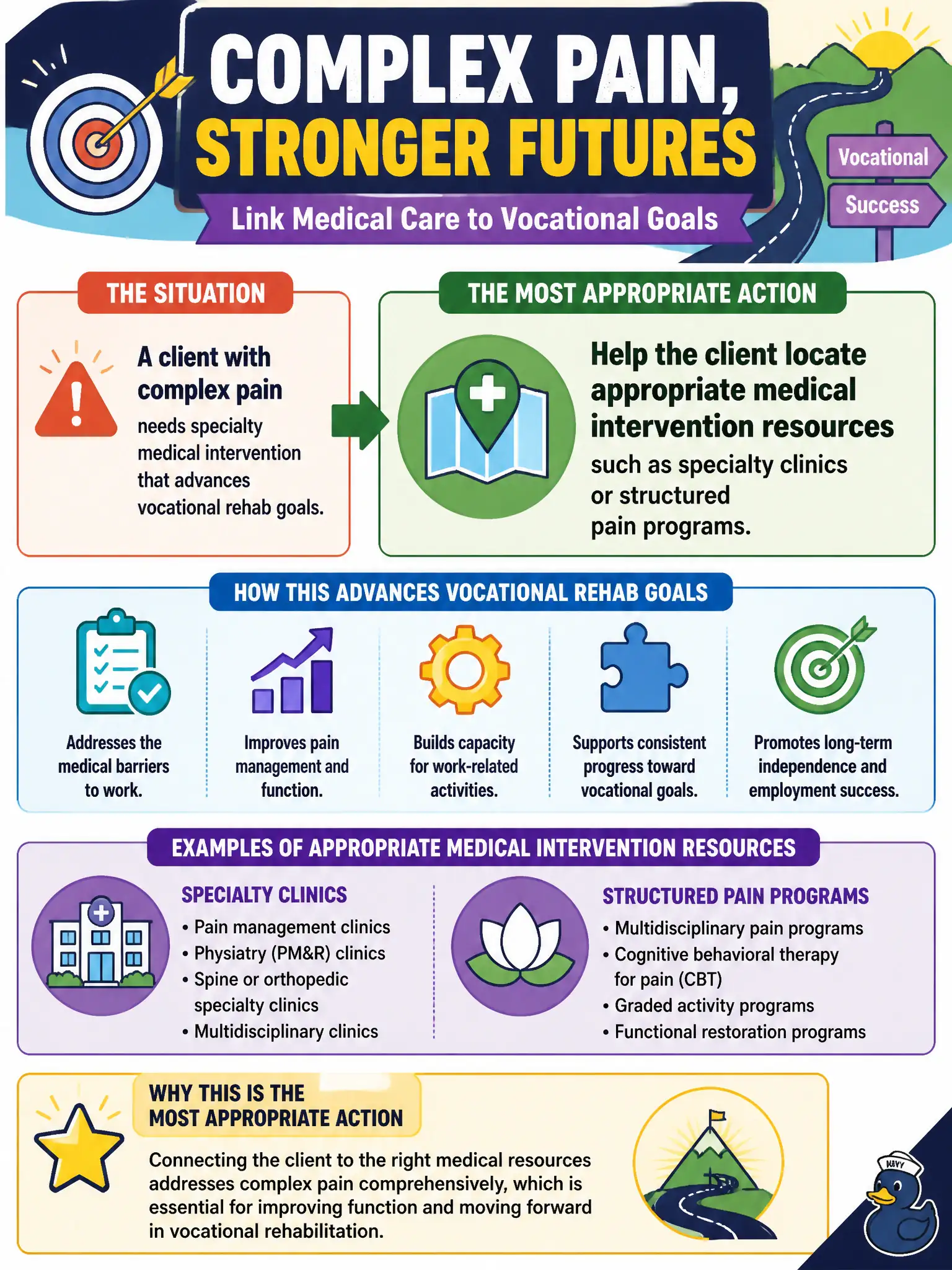
You don't have to be the pain doctor—you do need the map to the right clinic. Pointing someone to a specialty pain program or clinic is part of rehab, not mission creep into prescribing.
Full Explanation
When specialty medical intervention advances vocational rehab goals for a municipal client with complex pain, the counselor helps locate appropriate medical intervention resources such as specialty clinics or structured pain programs. Resource location and coordination are within the CRC role; prescribing controlled medications is not. Linking medical resources to work goals exemplifies disability management collaboration in civic settings. Prescribing controlled medications directly because counselors supposedly manage medical interventions exceeds scope of practice and creates serious legal risk. Discouraging all medical care so job search remains the only focus can worsen function and ignores medical-vocational interdependence. Limiting resource help to entertainment apps unrelated to pain or function trivializes the clinical need. Exam caveat: counselors facilitate access and communication with medical providers; they do not diagnose beyond competence or guarantee specialty appointment outcomes. Operational check: identify clinically appropriate pain or specialty resources, obtain client consent for referrals, document contacts and barriers (insurance, waitlists), and align vocational pacing with the medical plan in the civic case file.