
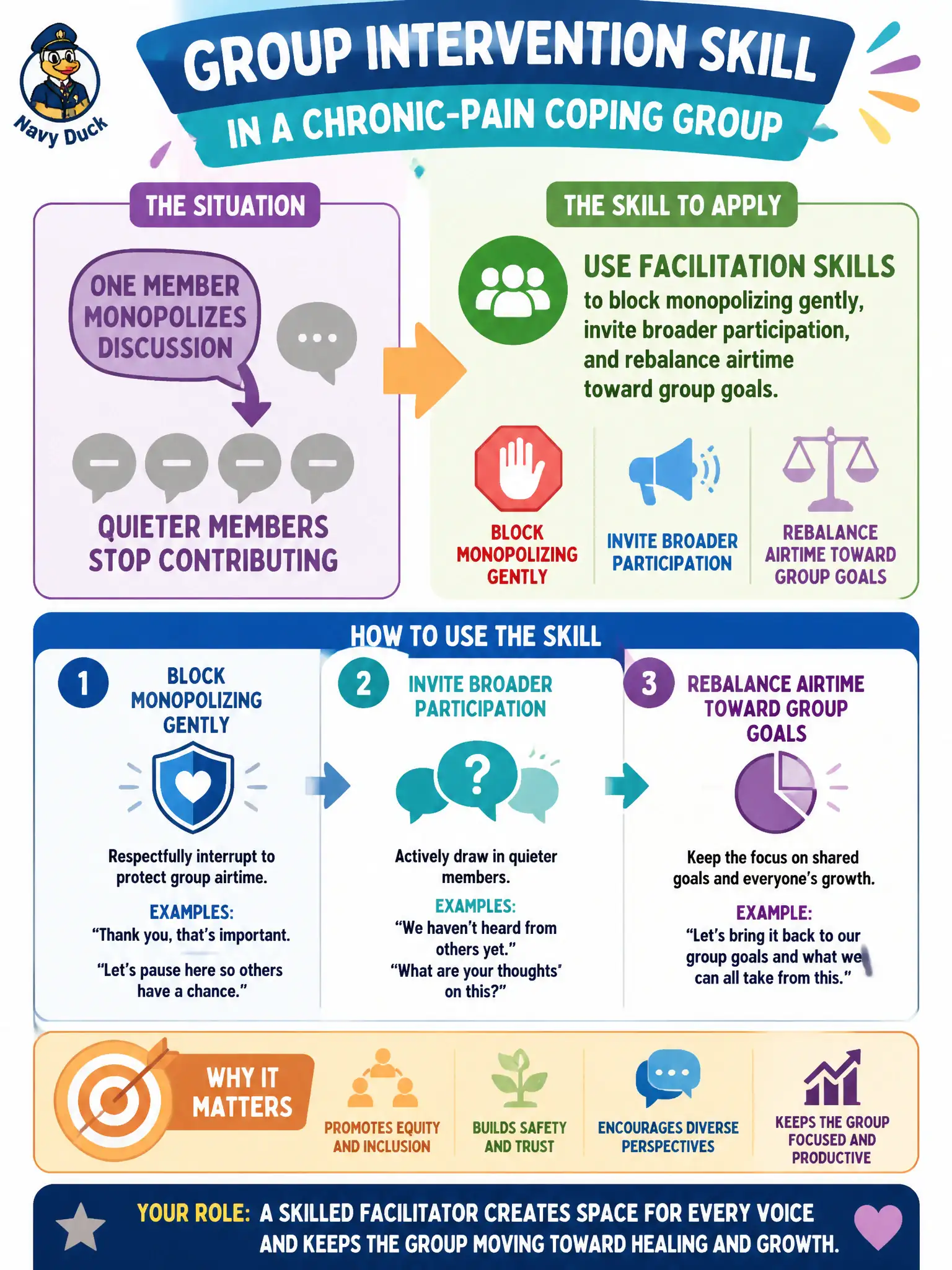
In a chronic-pain coping group, one member monopolizes discussion and quieter members stop contributing. What group intervention skill should the counselor apply?
Select an answer to reveal the explanation.
Short Explanation
One microphone for the whole band leaves the rest of the group mute. Good facilitation redirects the monopolizer with respect and opens the floor so coping ideas aren’t a solo act. Quiet members still have gold—if they get a turn.
Full Explanation
In a chronic-pain coping group, when one member monopolizes and quieter members stop contributing, the counselor applies facilitation skills to block monopolizing gently, invite broader participation, and rebalance airtime toward group goals. Civic group equity of voice is a facilitation duty that protects cohesion and ensures quieter members receive therapeutic access, not an optional courtesy left to chance.
Allowing unlimited monopolizing because any talk time equals equal benefit fails by concept: unequal airtime harms cohesion and quieter members’ therapeutic access. Ejecting quiet members for not competing verbally fails as punishing silence rather than facilitating inclusion. Canceling the group permanently the first time uneven talk occurs fails as an overreaction that abandons the modality instead of intervening with standard facilitation skills.
Exam caveat: blocking monopolizing should be respectful and skill-focused—not shaming—and may include private coaching for the talkative member outside the circle. Operational check: interrupt supportively, summarize and redirect, use round-robin or timed shares, invite quieter members by name with opt-out respect, and revisit airtime norms in the next session opening.