
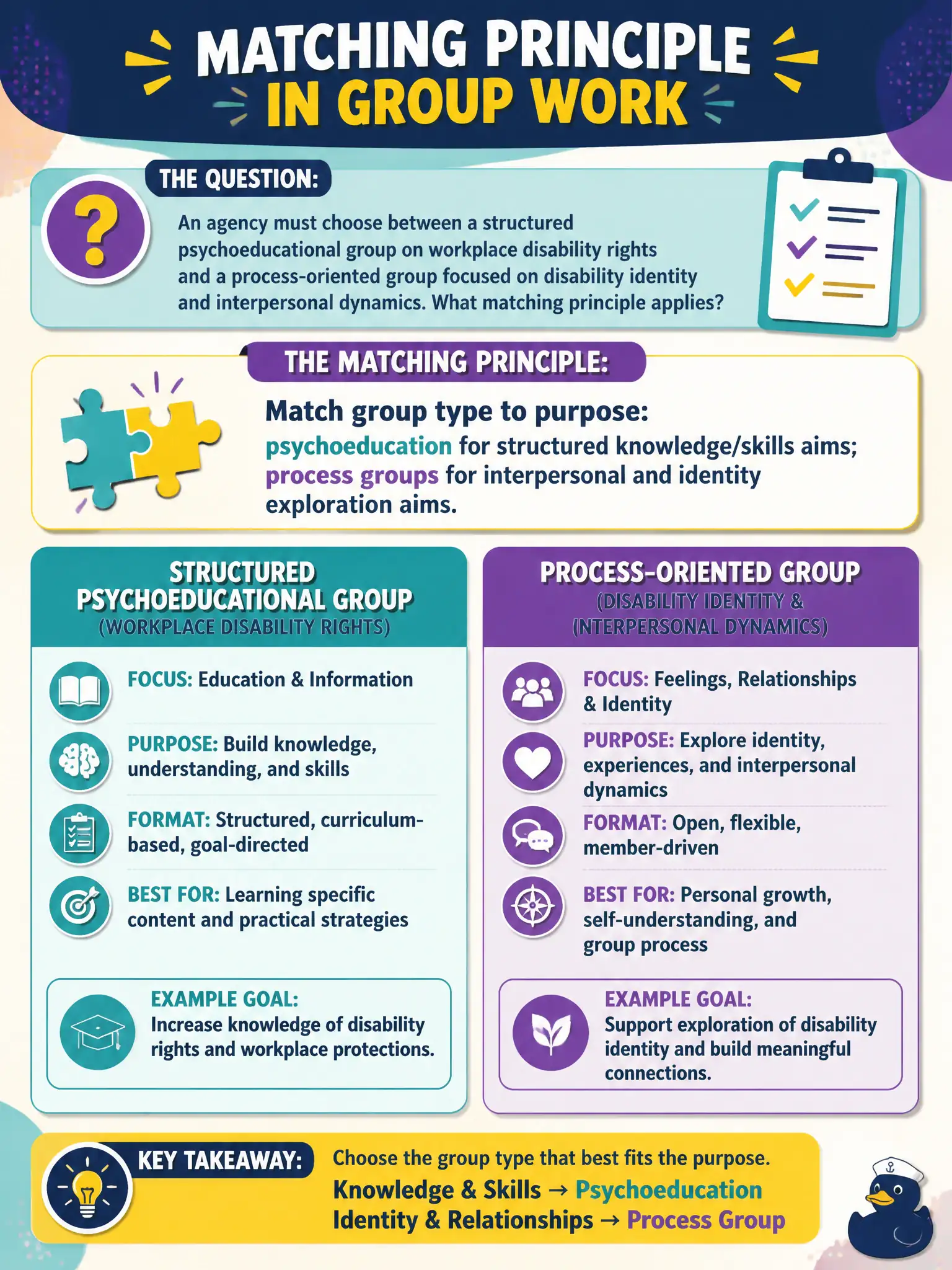
An agency must choose between a structured psychoeducational group on workplace disability rights and a process-oriented group focused on disability identity and interpersonal dynamics. What matching principle applies?
Select an answer to reveal the explanation.
Short Explanation
Pick the tool for the job: a rights workshop wants a curriculum (psychoeducation); identity and “how we relate” work wants a process group. Same roof, different rooms—match the format to the purpose.
Full Explanation
Choosing between a structured psychoeducational group on workplace disability rights and a process-oriented disability-identity group requires matching group type to purpose: psychoeducation for structured knowledge and skills aims; process groups for interpersonal and identity exploration aims. Civic agencies waste client time and dilute outcomes when format ignores purpose or pretends all groups are interchangeable containers.
Saying both group types are identical so purpose does not matter fails by concept because structure, facilitator role, and outcomes differ. Claiming process groups are the only ethical format and psychoeducation is never used fails against common rehabilitation psychoeducation practice for rights and skills. Requiring workplace rights content only in unstructured process groups without curriculum fails by mismatching content that needs clear information design and learning checks.
Exam caveat: hybrid groups exist, but exam items test clean matching of primary purpose to primary format. Operational check: write a one-sentence purpose, pick psychoeducation if rights knowledge or skills are primary, pick process if identity and interpersonal dynamics are primary, train facilitators accordingly, and evaluate with measures that match that purpose.