
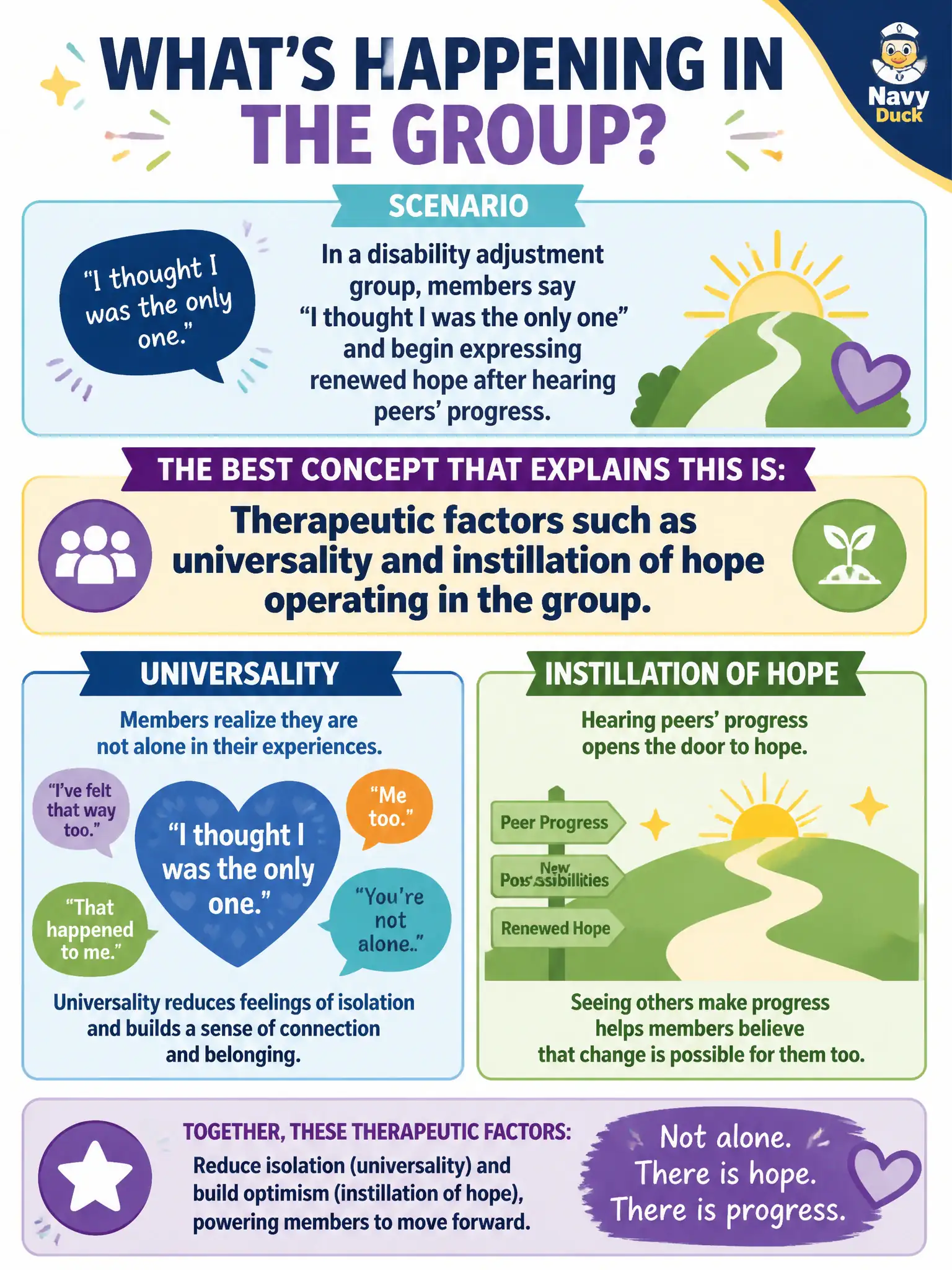
In a disability adjustment group, members say “I thought I was the only one” and begin expressing renewed hope after hearing peers’ progress. Which group counseling concept best names what is occurring?
Select an answer to reveal the explanation.
Short Explanation
“I thought I was the only one” is universality waving hello, and peer progress plants hope. Those classic group therapeutic factors are doing real work in a disability adjustment group—not paperwork theater.
Full Explanation
In a disability adjustment group, members saying “I thought I was the only one” and expressing renewed hope after peers’ progress illustrates therapeutic factors such as universality and instillation of hope. Civic peer groups reduce isolation and rebuild expectancy—core mechanisms of group benefit, not accidental side effects to be ignored by facilitators focused only on content delivery or attendance sheets.
Calling the phenomenon administrative caseload compliance auditing inside the group hour fails by concept as a category error unrelated to members’ experiential reports. Claiming it proves individual counseling theories never apply alongside group work fails because individual and group concepts coexist in competent practice. Saying groups should avoid discussing shared disability experience fails because shared experience is precisely what activates universality and related therapeutic factors.
Exam caveat: naming therapeutic factors helps facilitators cultivate them deliberately without forcing testimonials from members who are not ready. Operational check: invite brief progress stories, reflect shared themes without collapsing important differences, protect members who are not ready to disclose, and explicitly link peer hope to members’ next vocational or adjustment steps.