
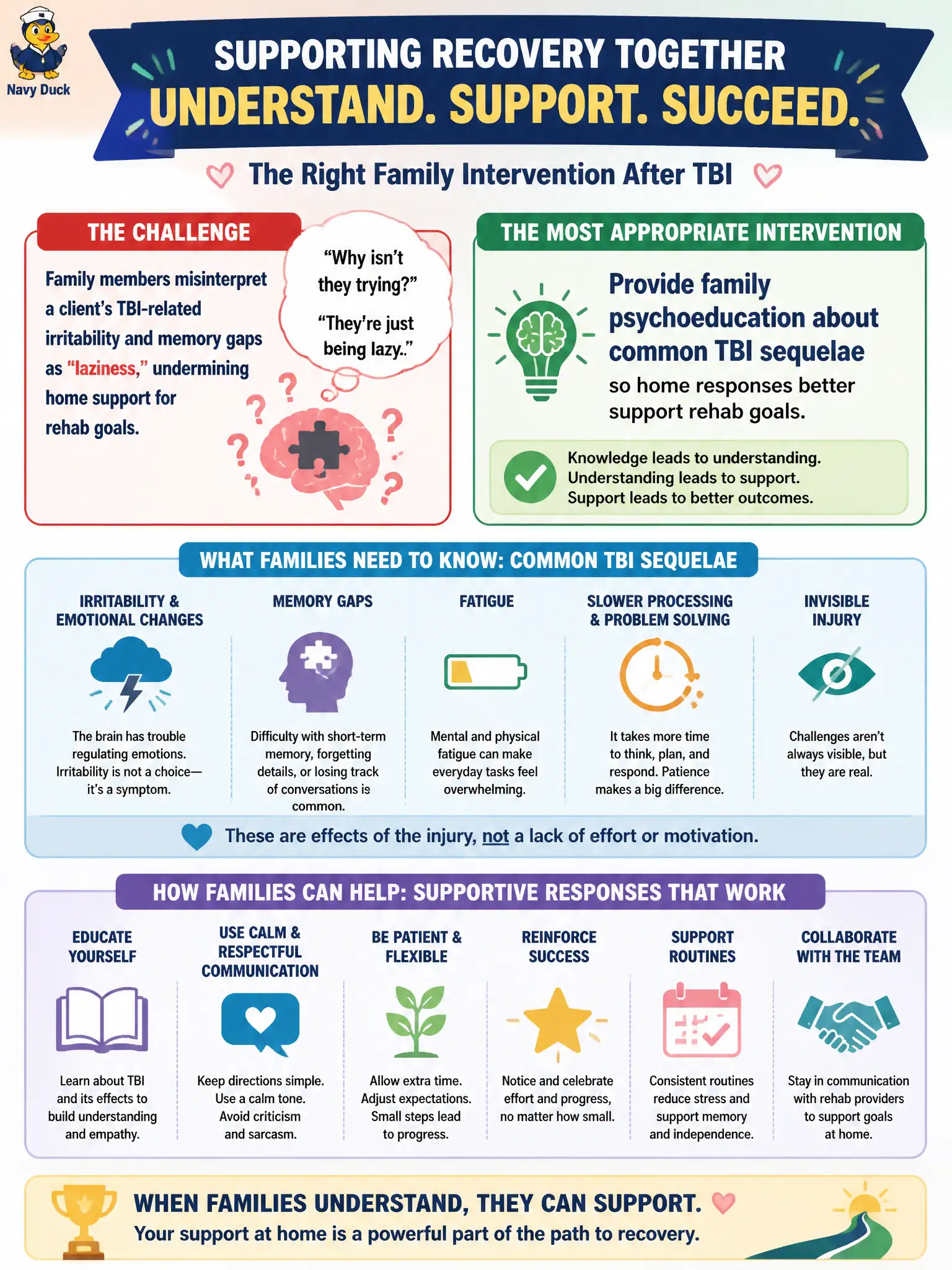
Family members misinterpret a client’s TBI-related irritability and memory gaps as “laziness,” undermining home support for rehab goals. What family intervention is most appropriate?
Select an answer to reveal the explanation.
Short Explanation
Families aren’t mind readers after a brain injury—irritability and memory gaps get misread as attitude. Psychoeducation is the plain-language map of what’s going on, so home support stops fighting the wrong enemy. Teach first; blame later never.
Full Explanation
When family members misinterpret TBI-related irritability and memory gaps as “laziness,” undermining home support, the appropriate intervention is family psychoeducation about common TBI sequelae so home responses better support rehab goals. Civic brain-injury rehab depends on families understanding neurobehavioral change rather than moralizing symptoms that the client cannot simply will away through effort lectures.
Shaming the family for lack of medical knowledge without offering education fails by concept as blame without teaching and often increases defensiveness. Prohibiting any family involvement because education never helps fails against evidence that psychoeducation improves support and reduces misattribution. Agreeing that irritability always equals laziness and abandoning cognitive strategies fails by endorsing the misconception and dropping indicated rehab approaches.
Exam caveat: psychoeducation should be plain-language, repeated, and tied to home strategies—not a one-time medical lecture that families cannot apply. Operational check: teach typical TBI cognitive and emotional sequelae, provide written tips for cueing and de-escalation, involve the client in explaining their experience, and revisit family attributions when home conflict resurges around work goals.