
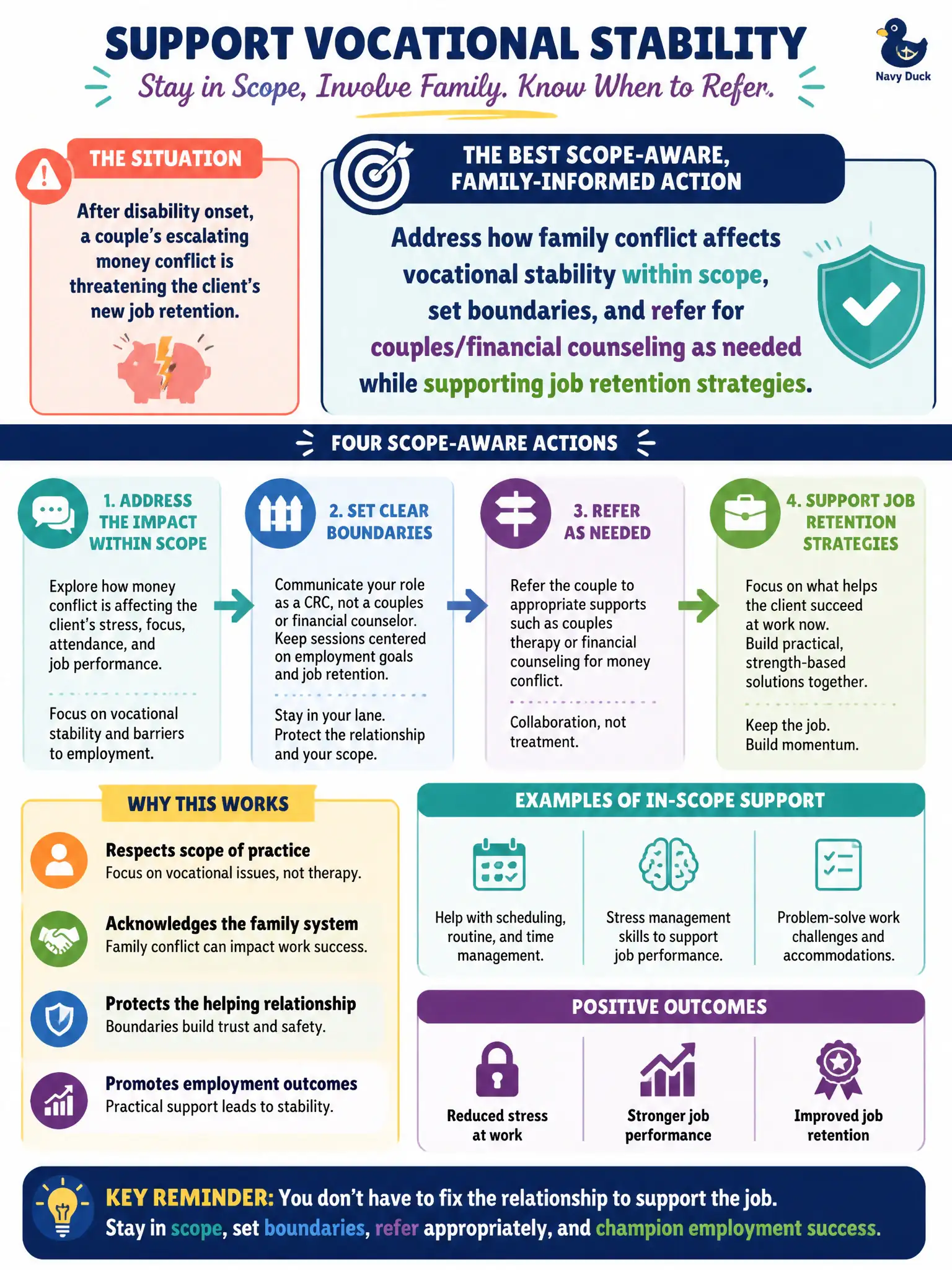
After disability onset, a couple’s escalating money conflict is threatening the client’s new job retention. The CRC is not a couples therapist specialty clinic. What scope-aware family-informed action fits best?
Select an answer to reveal the explanation.
Short Explanation
Money fights at home leak onto the job like a dripping roof—eventually the workplace floor gets wet. Stay in your lane: name the vocational impact, help with retention strategies, and refer out for deeper couples or money counseling when that’s the right door.
Full Explanation
When post-disability money conflict threatens new job retention and the CRC is not a couples specialty clinic, scope-aware practice addresses how family conflict affects vocational stability within scope, sets boundaries, and refers for couples or financial counseling as needed while supporting job retention strategies. Civic job retention is often a household systems issue, not only a worksite skill issue.
Ignoring money conflict because finances never affect retention fails by concept against clear links between home stress and job loss. Beginning long-term psychoanalytic couples therapy beyond competence without referral fails as scope violation. Siding with one partner financially and rewriting the household budget as the sole intervention fails by triangulation and overreach beyond appropriate rehab role.
Exam caveat: discussing vocational impact of conflict is in scope; providing specialty couples therapy may not be—refer when needed. Operational check: name the retention risk with both partners as appropriate, set agenda limits, refer to couples/financial counseling, teach job-retention coping (sleep, conflict cooling-off before shifts), and follow up on referral engagement.