
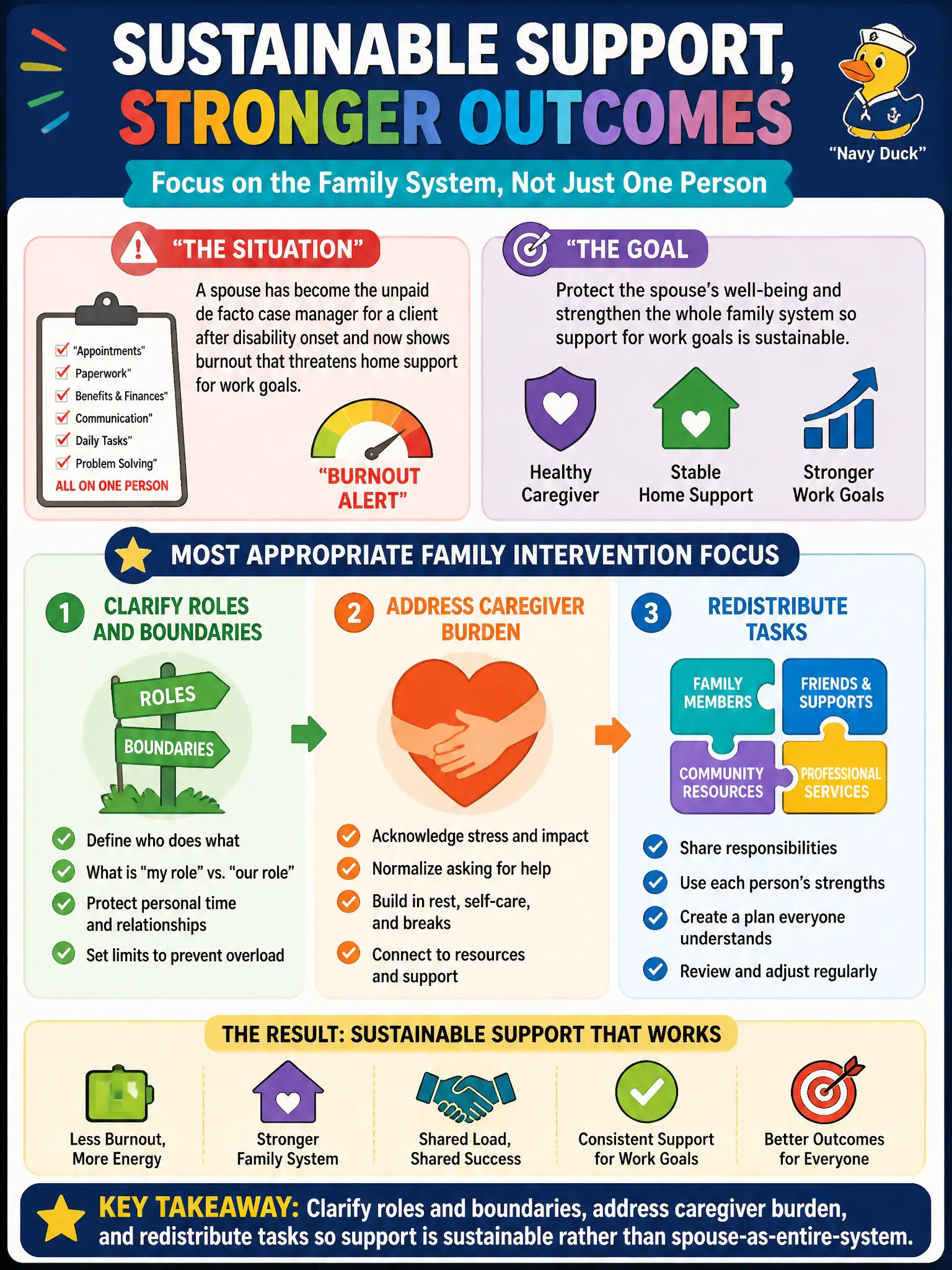
A spouse has become the unpaid de facto case manager for a client after disability onset and now shows burnout that threatens home support for work goals. What family intervention focus is most appropriate?
Select an answer to reveal the explanation.
Short Explanation
When a spouse becomes the entire rehab agency at home, burnout is the bill coming due. Family work redraws roles and boundaries so one person isn’t the unpaid case manager forever. Sustainable support beats heroic collapse.
Full Explanation
When a spouse becomes unpaid de facto case manager after disability onset and shows burnout that threatens home support for work goals, family intervention clarifies roles and boundaries, addresses caregiver burden, and redistributes tasks so support is sustainable rather than spouse-as-entire-system. Civic rehab succeeds when family caregiving is viable and shared with formal supports, not exhausted into collapse that then costs the newly gained job.
Demanding the spouse increase case-management hours because family duty always expands fails by concept as burden escalation that accelerates burnout. Ignoring caregiver burnout because only the identified client’s feelings matter fails as incomplete family systems thinking that undermines the very supports vocational goals need. Terminating vocational services solely because a spouse is tired, without exploring supports or boundaries, fails by ending client opportunity instead of repairing the support system.
Exam caveat: addressing caregiver burden is not shifting the counselor’s job onto the spouse; it is preventing system collapse while keeping vocational aims alive. Operational check: inventory tasks the spouse performs, connect formal case management and community resources, set boundary agreements, schedule caregiver support, and align vocational demands with a sustainable home support plan.