
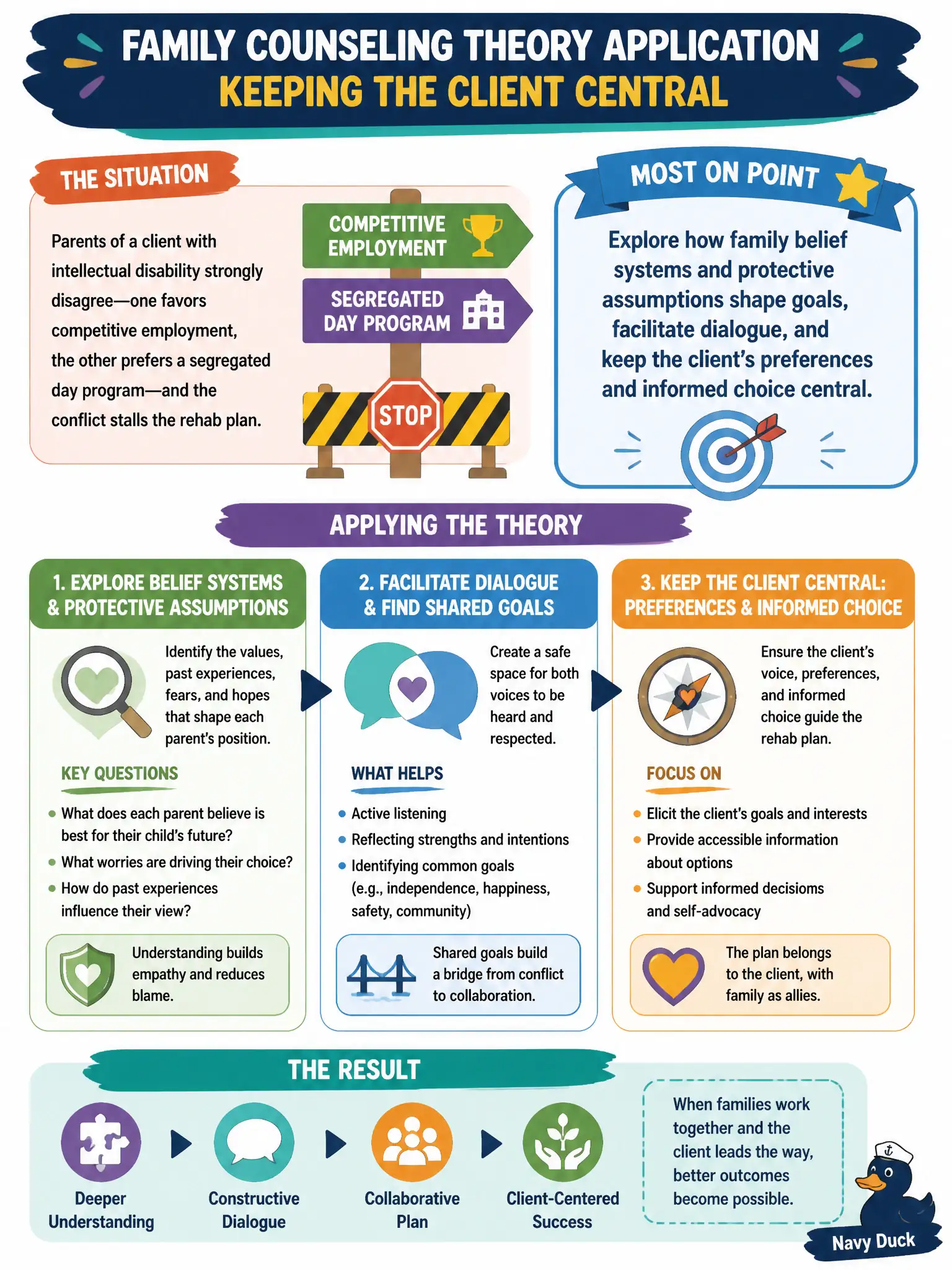
Parents of a client with intellectual disability strongly disagree—one favors competitive employment, the other prefers a segregated day program—and the conflict stalls the rehab plan. What family counseling theory application is most on point?
Select an answer to reveal the explanation.
Short Explanation
Family beliefs are the invisible rulebook under every argument about “day program versus real job.” Name those beliefs, talk them through, and still center the client’s informed choice. Settling the fight by picking the most restrictive option isn’t counseling—it’s conflict avoidance.
Full Explanation
When parents of a client with intellectual disability disagree—one favoring competitive employment, one a segregated day program—and the conflict stalls planning, family counseling theory explores how family belief systems and protective assumptions shape goals, facilitates dialogue, and keeps the client’s preferences and informed choice central. Civic planning cannot be decided solely by which parent argues louder.
Automatically adopting the more restrictive day-program preference to end disagreement quickly fails by concept as conflict avoidance that may override inclusion and client preference. Refusing to meet family because parental beliefs never affect outcomes fails against evidence that family narratives strongly shape rehab trajectories. Assigning the competitive job without discussing beliefs, risks, or the client’s goals fails by ignoring both family system dynamics and informed choice process.
Exam caveat: the client’s preferences remain central even when parents disagree; guardianship status may affect legal decision authority—clarify legal roles. Operational check: map each parent’s protective beliefs, facilitate structured dialogue, elicit the client’s preference with accessible methods, present CIE and other options fairly, and document how informed choice was supported amid family conflict.