
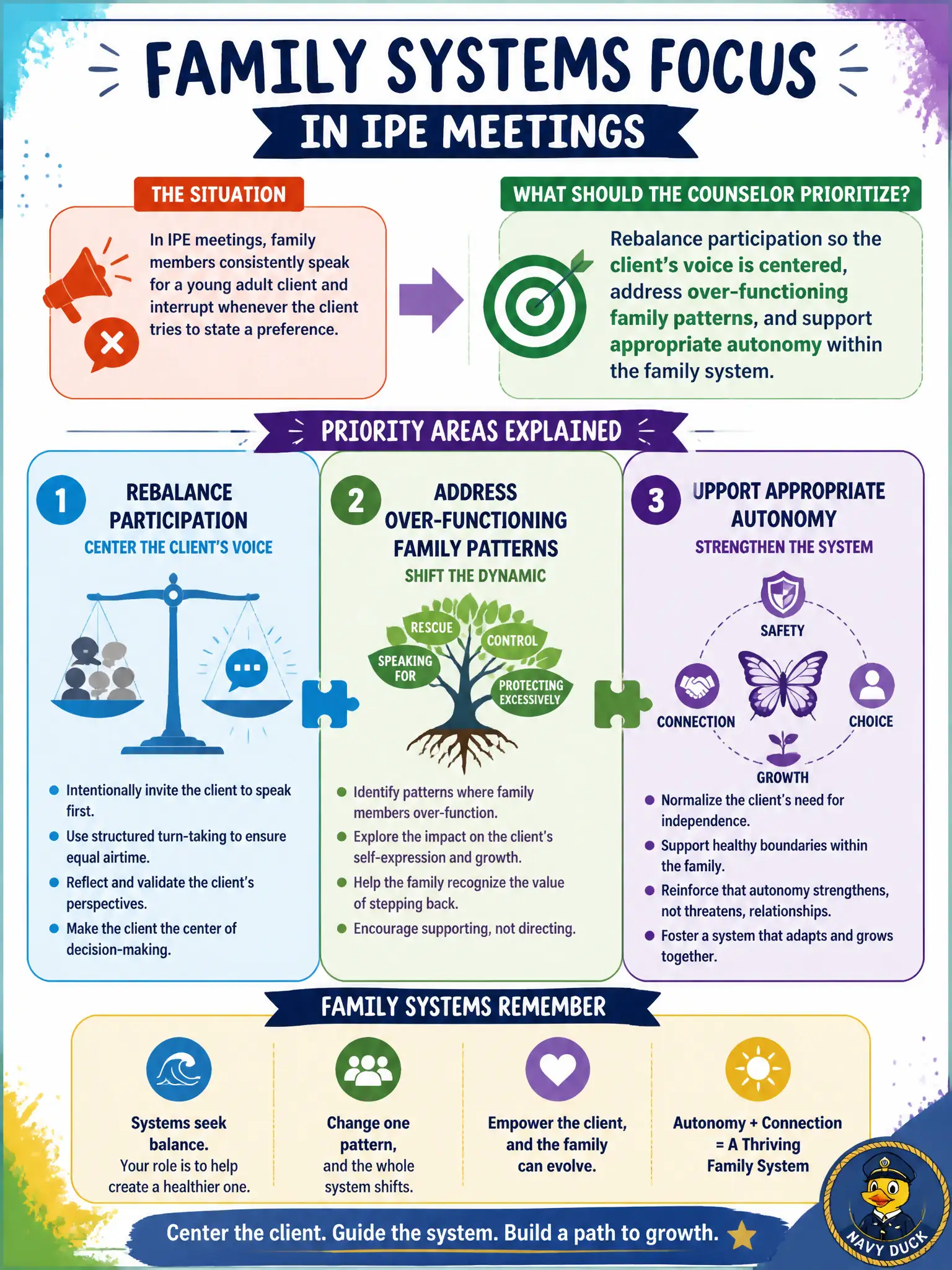
In IPE meetings, family members consistently speak for a young adult client and interrupt whenever the client tries to state a preference. Using family systems concepts, what should the counselor prioritize?
Select an answer to reveal the explanation.
Short Explanation
When family answers every question, the young adult becomes a silent passenger in their own plan. Family systems work rebalances the room—honor caregivers, but put the client’s voice back in the driver’s seat. Speed is not worth stealing autonomy.
Full Explanation
In IPE meetings where family members consistently speak for a young adult and interrupt the client’s preferences, family systems practice rebalances participation so the client’s voice is centered, addresses over-functioning family patterns, and supports appropriate autonomy within the family system. Civic adult VR planning privileges the eligible individual’s informed choice even when families are loving and highly involved in municipal or rural support networks.
Encouraging family to keep speaking for the client so meetings finish faster fails by concept as efficiency that silences the consumer. Removing the young adult from all planning meetings permanently fails by excluding the very person whose plan it is and avoiding necessary system work. Accepting the family’s voice as the only legally relevant preference in adult VR fails because adult planning centers the client’s informed choice absent a legally authorized substitute decision-maker.
Exam caveat: family involvement can remain valued support; the intervention targets over-functioning, not caring engagement. Operational check: set speaking norms at the meeting start, ask the client first, coach family into advisory roles, document the client’s stated preferences on the IPE, and offer family sessions that address autonomy and anxiety about letting go.