
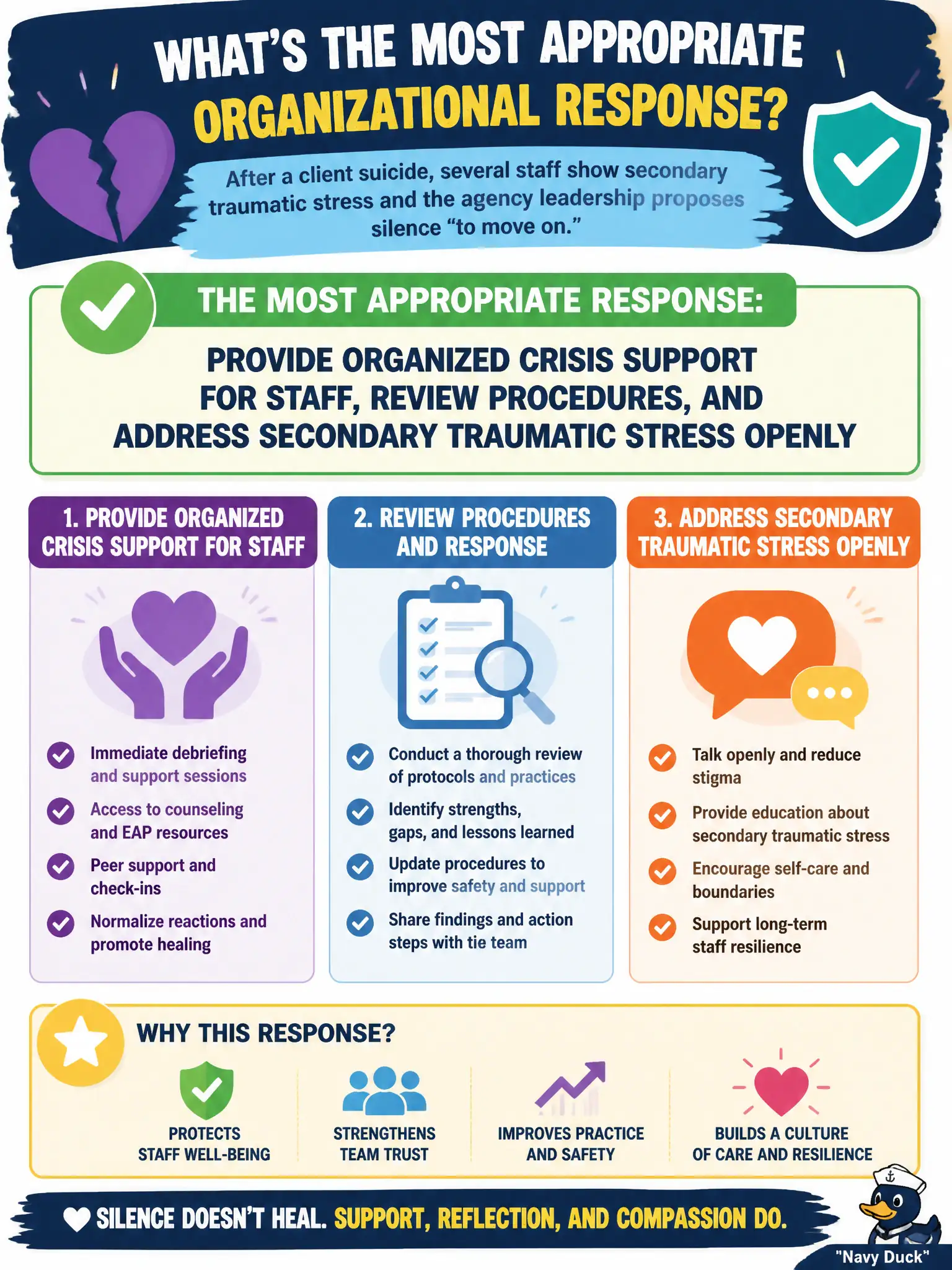
After a client suicide, several staff show secondary traumatic stress and the agency leadership proposes silence 'to move on.' What organizational response is most appropriate?
Select an answer to reveal the explanation.
Short Explanation
When a client dies by suicide, the whole shop feels the blast wave—not just one office. Silence isn't strength; structured support and honest review are. Taking care of staff secondary trauma is part of the agency's crisis system.
Full Explanation
After a client suicide, secondary traumatic stress among staff and a leadership push for silence ‘to move on’ call for organized crisis support, procedure review, and open attention to secondary trauma. Healthy civic agencies protect workers, learn from system gaps, and refuse secrecy that compounds shame and risk. Silence is not resilience.
Enforcing silence and prohibiting staff support meetings suppresses recovery and learning. Blaming individual counselors publicly without systemic review scapegoats people and misses process failures. Requiring immediate caseload increases with no recovery time worsens secondary traumatic stress and error risk.
Healthy organizations treat postvention as both care for people and quality improvement—examining supervision, caseload, and safety protocols without enforced silence.
Exam caveat: postvention after client suicide includes staff support and systemic review, not enforced silence or punitive blame alone.
Operational check: schedule facilitated staff support; offer EAP/trauma resources; review protocols without premature individual blame; temporarily adjust workload while recovery and learning occur. Re-verify length and fidelity of the written plan at the next supervisory case review so civic accountability stays visible.