
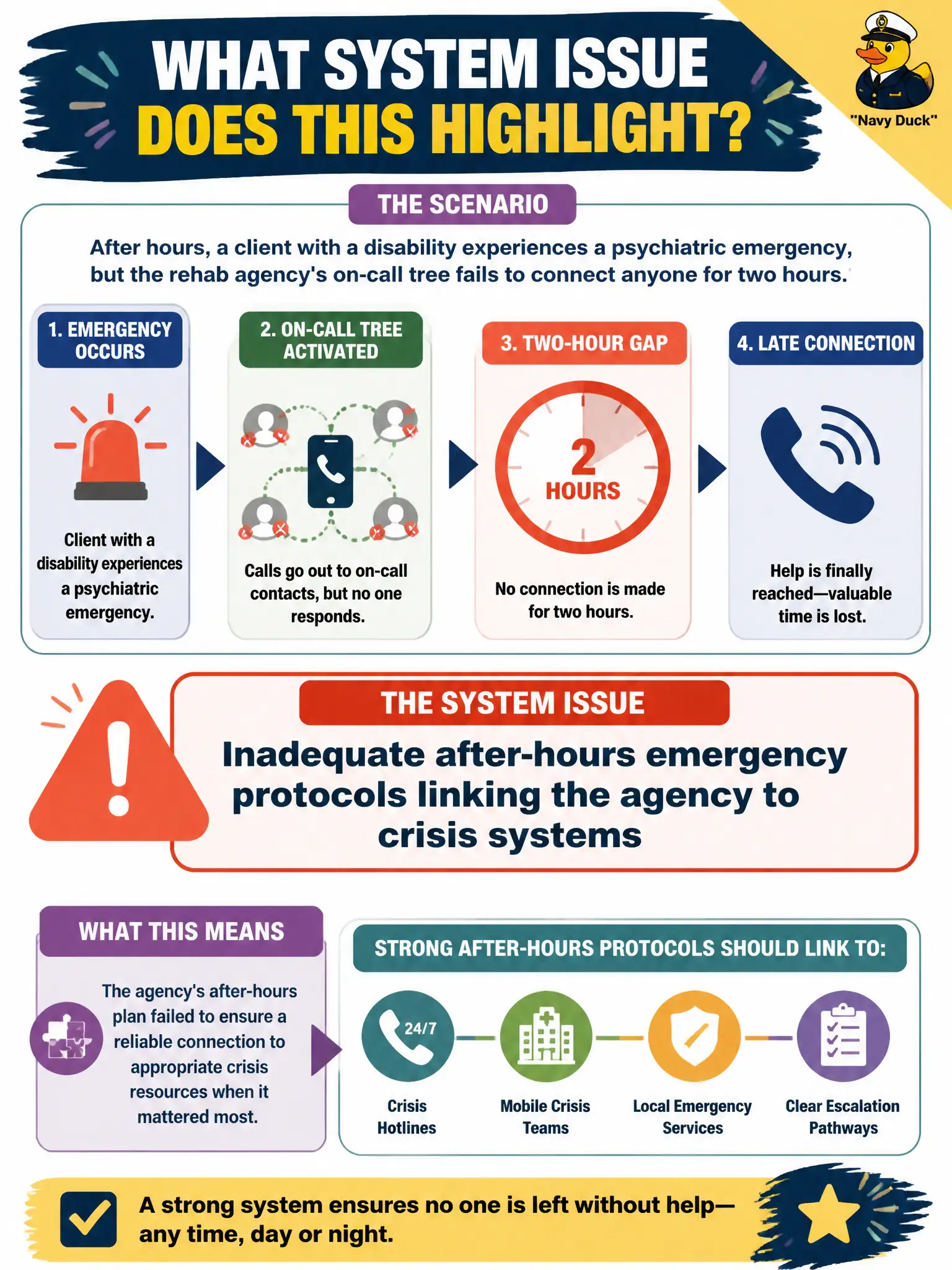
After hours, a client with a disability experiences a psychiatric emergency, but the rehab agency's on-call tree fails to connect anyone for two hours. What system issue does this highlight?
Select an answer to reveal the explanation.
Short Explanation
Emergencies don't clock out at 5 p.m. If the on-call tree goes nowhere, the agency's emergency system has a hole. Ready links to crisis lines, hospitals, and reachable staff are part of the job—not optional paperwork.
Full Explanation
A two-hour failure of the after-hours on-call tree during a psychiatric emergency highlights inadequate emergency protocols linking the rehab agency to crisis systems. Clients with disabilities experience after-hours crises; civic agencies need reliable escalation paths to crisis lines, mobile response, or emergency services—not daytime-only assumptions. The system issue is protocol reliability, not client inconvenience.
Claiming after-hours psychiatric emergencies never involve rehab clients denies caseload reality. Expecting clients to use only email for life-threatening crises is dangerous and inaccessible. Asserting on-call trees are unnecessary if daytime staffing is strong ignores nights, weekends, and holidays when risk still occurs.
Accreditation and risk-management reviews commonly test after-hours response; a two-hour dead tree is a reportable system failure, not a client inconvenience anecdote.
Exam caveat: organizational crisis readiness includes tested after-hours linkage to psychiatric emergency systems.
Operational check: test the on-call tree on nights/weekends; fix broken contacts; publish backup numbers to crisis partners; document response-time standards and retrain staff.