
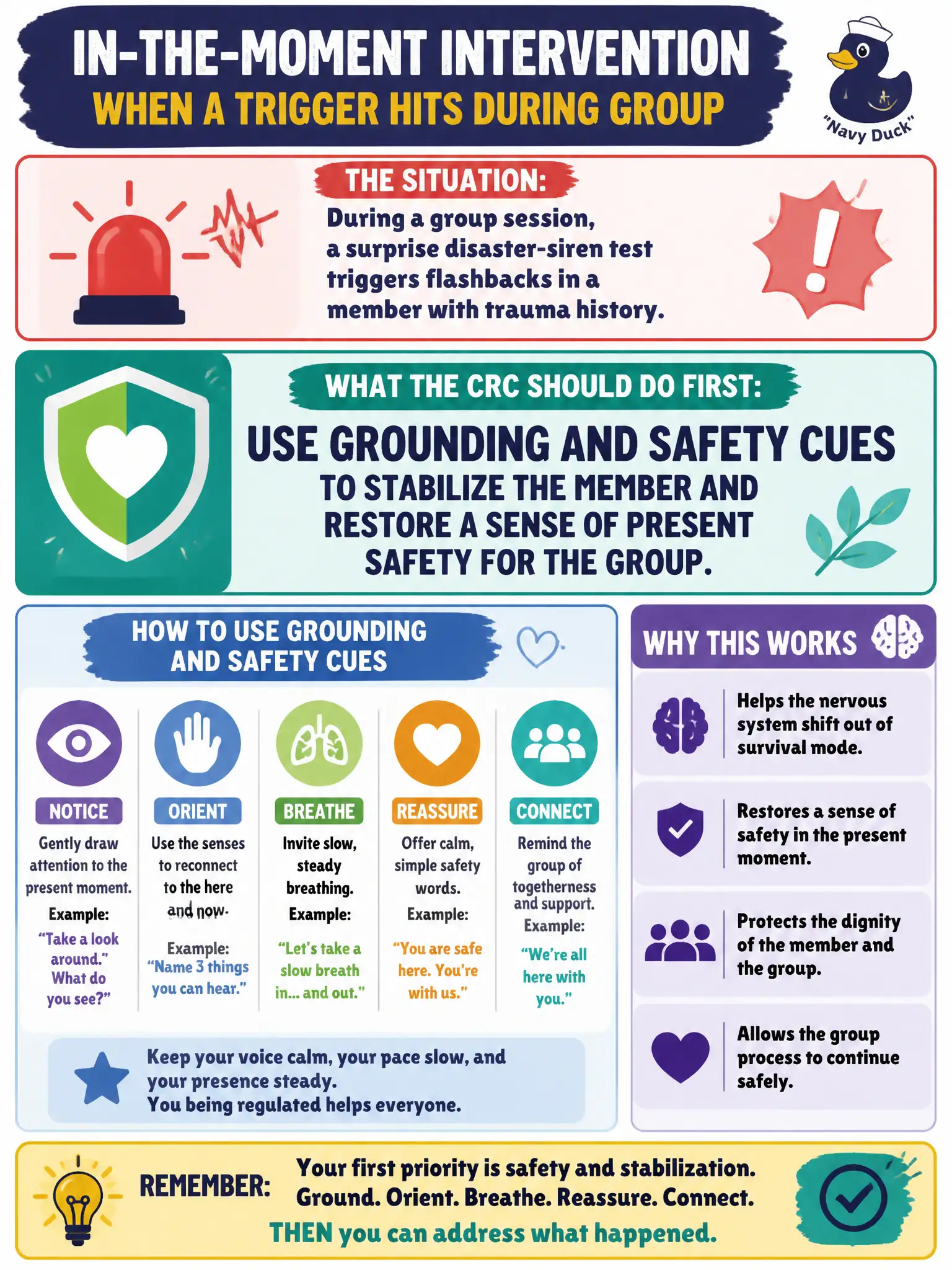
During a group session, a surprise disaster-siren test triggers flashbacks in a member with trauma history. What in-the-moment intervention should the CRC use first?
Select an answer to reveal the explanation.
Short Explanation
A siren can yank someone into the past in a heartbeat. Grounding—here-and-now senses, safety cues—brings the room back to today. Diving into a full trauma dump mid-group usually pours gasoline on the fire.
Full Explanation
When a surprise disaster-siren test triggers flashbacks in a group member with trauma history, the first in-the-moment intervention is grounding and safety cues that stabilize the member and restore present-moment safety for the group. Orienting to here-and-now sensory facts, slowing the agenda, and offering support prevents escalation without forcing trauma narrative. Community psychoeducation groups must be ready for such environmental triggers.
Forcing an immediate full trauma narrative for catharsis can retraumatize and derail group safety. Ignoring the reaction and continuing without acknowledgment models neglect and may intensify isolation. Shaming the member for disrupting the curriculum adds injury and destroys trust.
Psychoeducation groups in community settings should pre-brief environmental triggers (sirens, drills) when possible and keep co-leader capacity for 1:1 stabilization without shaming.
Exam caveat: acute trauma reactions in group call for grounding/stabilization first, not forced processing, ignoring, or shame.
Operational check: pause content; use grounding and present-safety cues; check the member’s preference for brief support versus stepping out with a co-leader; resume only when the group climate is stable; debrief trigger-response plans afterward.