
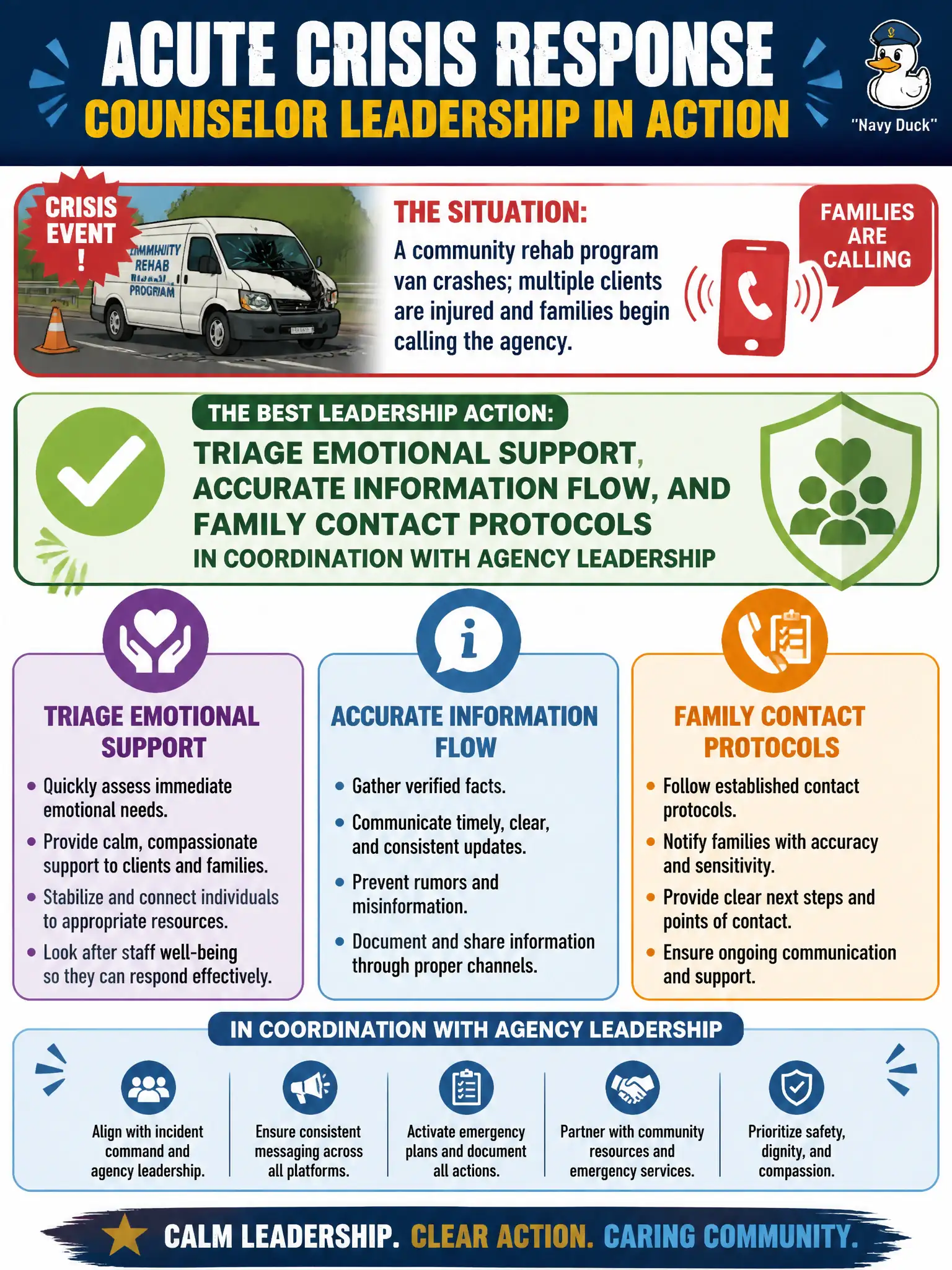
A community rehab program van crashes; multiple clients are injured and families begin calling the agency. What counselor leadership action best fits acute crisis response?
Select an answer to reveal the explanation.
Short Explanation
When several clients are hurt at once, chaos wants the microphone. Triage support, get facts straight, and run a clear family-contact protocol with leadership. Guesswork promises and radio silence both make the crisis worse.
Full Explanation
After a community rehab program van crash with multiple injured clients and incoming family calls, counselor leadership in acute crisis centers on triage of emotional support, accurate information flow, and family contact protocols coordinated with agency leadership. Consistent messaging, verified facts, and organized support reduce secondary chaos and protect public trust in the nonprofit or municipal program.
Refusing all family contact and leaving messaging to unverified social media invites rumor and harm. Focusing only on unrelated case notes while ignoring the incident abandons crisis leadership. Promising medical outcomes the counselor cannot verify may calm callers briefly but destroys credibility when facts emerge.
Nonprofit and municipal agencies that rehearse crisis communication trees before incidents protect families and staff from rumor-driven secondary trauma after vehicle crashes or other mass-impact events.
Exam caveat: agency-level crisis response emphasizes coordinated triage and accurate communication over silence, rumor channels, or false reassurance.
Operational check: join the agency crisis protocol; establish a single verified information channel; assign emotional-support and family-contact roles; document what is known versus unknown; avoid speculative medical promises.