
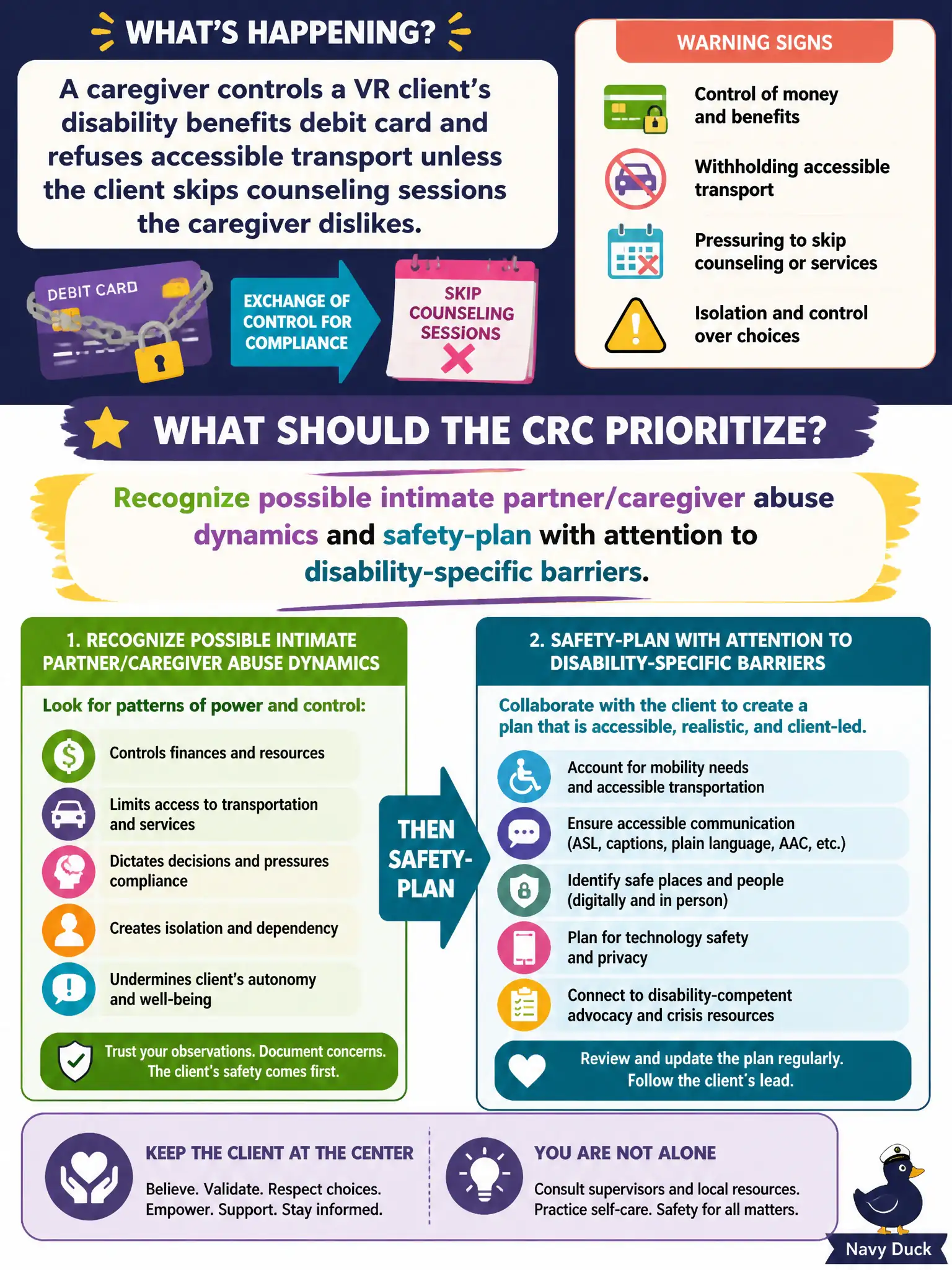
A caregiver controls a VR client's disability benefits debit card and refuses accessible transport unless the client skips counseling sessions the caregiver dislikes. What should the CRC prioritize?
Select an answer to reveal the explanation.
Short Explanation
When someone holds the money and the ride hostage, that's control—not helpful caregiving. Disability can make leaving harder, so safety planning has to account for benefits and transport traps. Name the risk and plan carefully with the client.
Full Explanation
When a caregiver controls a VR client’s disability benefits debit card and withholds accessible transport unless the client skips disliked counseling sessions, the pattern suggests possible intimate partner/caregiver abuse with disability-specific barriers—financial control, mobility dependence, and service interference. The CRC prioritizes recognizing that dynamic and safety-planning with attention to those barriers, using appropriate reporting and protective pathways consistent with ethics and law. Civic rehab counselors frequently encounter caregiver control tied to benefits and transport.
Ignoring the dynamic because benefits management is ‘never’ a counseling issue abandons a core safety presentation. Siding with the caregiver without assessing the client’s safety preferences colludes with control. Transferring benefits control permanently to the counselor personally creates dual-relationship and boundary problems rather than proper protective action.
Exam caveat: disability-specific abuse often involves benefits, transport, and care dependence; safety planning must address those levers.
Operational check: meet with the client privately; assess coercion, fear, and preferences; safety-plan around benefits access and transport; consult mandatory reporting/supervision channels as required; document carefully.