
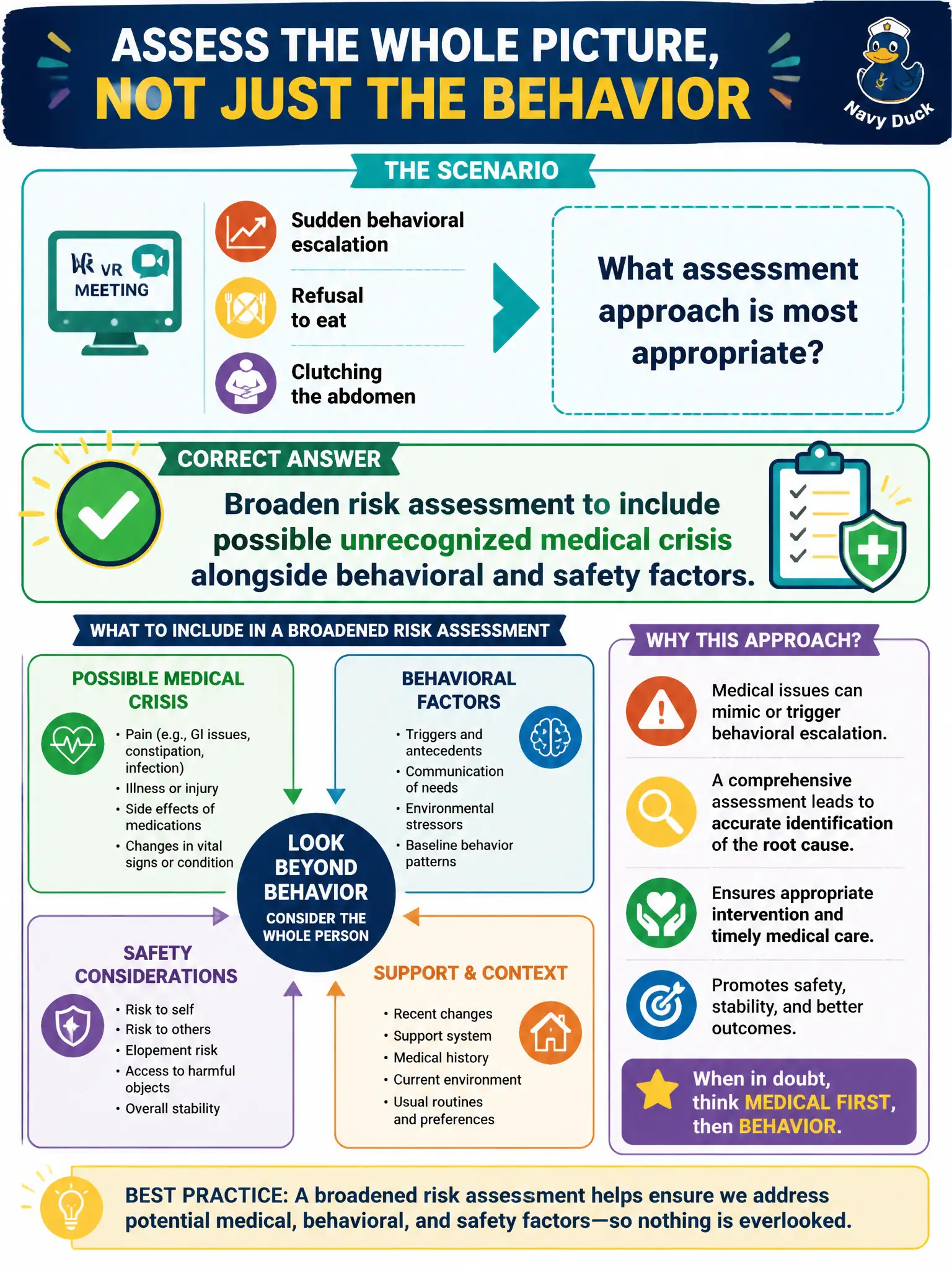
A client with a developmental disability shows sudden behavioral escalation, refusal to eat, and clutching the abdomen during a VR meeting. What assessment approach is most appropriate?
Select an answer to reveal the explanation.
Short Explanation
Sometimes the 'behavior' is the body's alarm bell—pain without easy words. Sudden escalation plus physical clues means look for medical causes, not just motivational lectures. Broad assessment keeps vulnerable clients safer.
Full Explanation
Sudden behavioral escalation, refusal to eat, and clutching the abdomen in a client with a developmental disability warrant broadening risk assessment to include possible unrecognized medical crisis alongside behavioral and safety factors. Pain and acute illness often present behaviorally when communication is limited. Public VR counselors protect clients by ruling out medical drivers rather than forcing a résumé through a potential emergency.
Assuming the behavior is only attention-seeking and continuing the résumé risks missing appendicitis, obstruction, or other acute illness. Immediately discharging for ‘noncompliance’ without evaluation punishes distress and skips duty of care. Interpreting all escalation as purely vocational anxiety with no medical rule-out is an unsafe diagnostic leap.
Developmental disability service systems teach that behavior is communication; abrupt change plus abdominal guarding is a medical-rule-out cue before any compliance framing.
Exam caveat: sudden behavioral change plus somatic cues in developmental disability settings should trigger medical rule-out within a broad risk assessment.
Operational check: pause vocational tasks; assess pain, vitals/observable distress, and safety; arrange urgent medical evaluation as indicated; document medical-behavioral differential and follow-up.