
Community emergency operations plans omit transport of durable medical equipment during evacuations. How should the CRC respond within community emergency systems?
Select an answer to reveal the explanation.
Short Explanation
Leaving the wheelchair or oxygen concentrator behind isn't a minor packing error—it's a survival problem. The CRC should push community emergency partners to plan for DME transport. Quiet acceptance of the omission keeps people unsafe.
Full Explanation
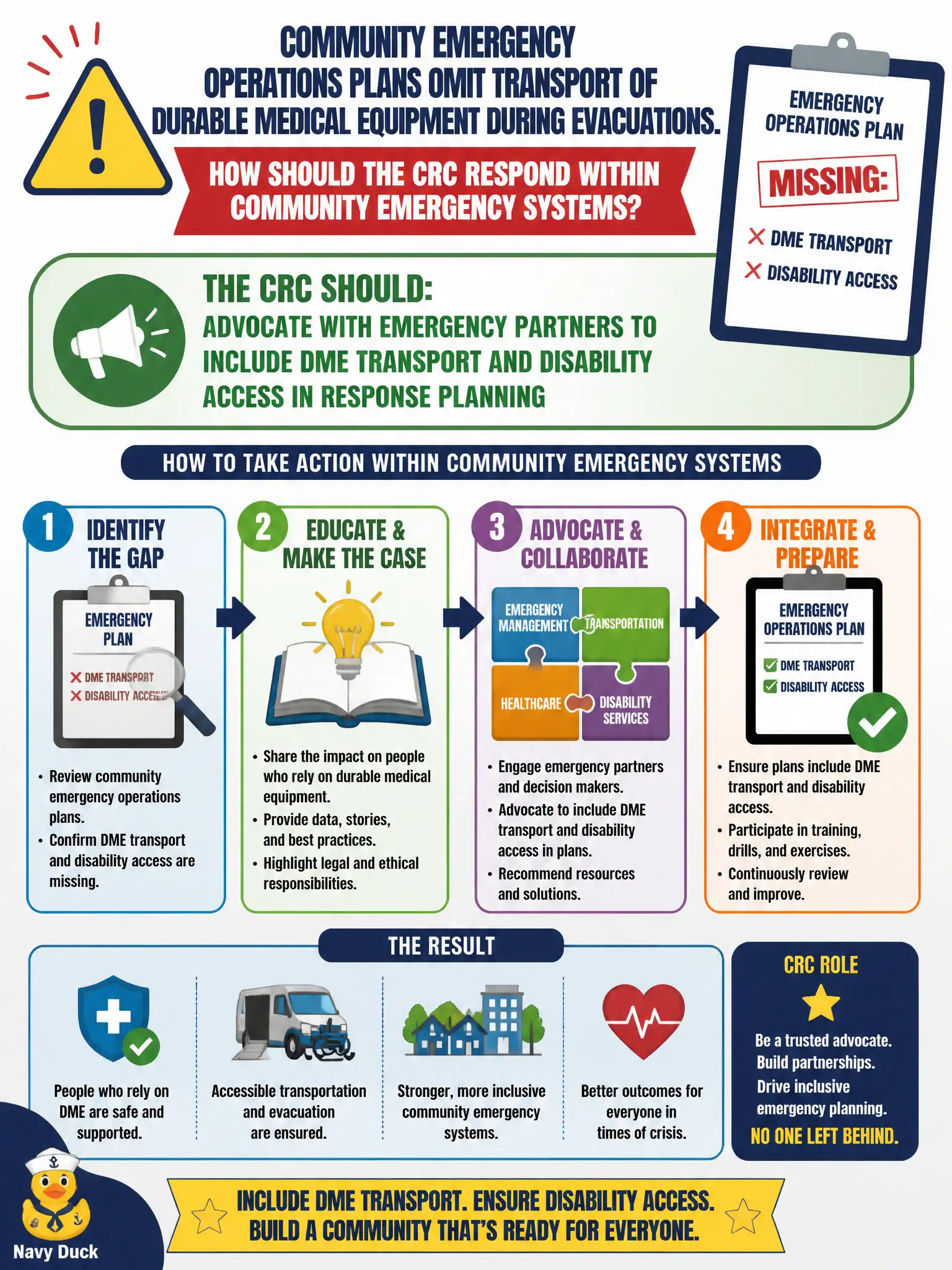
When community emergency operations plans omit transport of durable medical equipment during evacuations, the CRC should advocate with emergency partners to include DME transport and disability access in response planning. Wheelchairs, oxygen, and related devices are not optional luggage; leaving them behind can convert evacuation into secondary medical crisis. Civic advocacy inside emergency systems is appropriate rehabilitation counseling practice.
Accepting omission because medical equipment is never relevant in disasters contradicts lived disability risk. Advising clients to abandon necessary equipment during every evacuation endangers health. Limiting advocacy to private notes that never reach emergency planners fails to change the system that creates harm.
Disability stakeholders on local emergency planning committees strengthen whole-community resilience; CRC advocacy belongs in that civic infrastructure conversation, not only in case notes.
Exam caveat: disability-competent disaster response includes DME and access advocacy with emergency partners, not only individual counseling notes.
Operational check: raise DME transport and accessible evacuation gaps in the next emergency-planning meeting; propose checklist language; track whether revised EOPs include disability access items.