
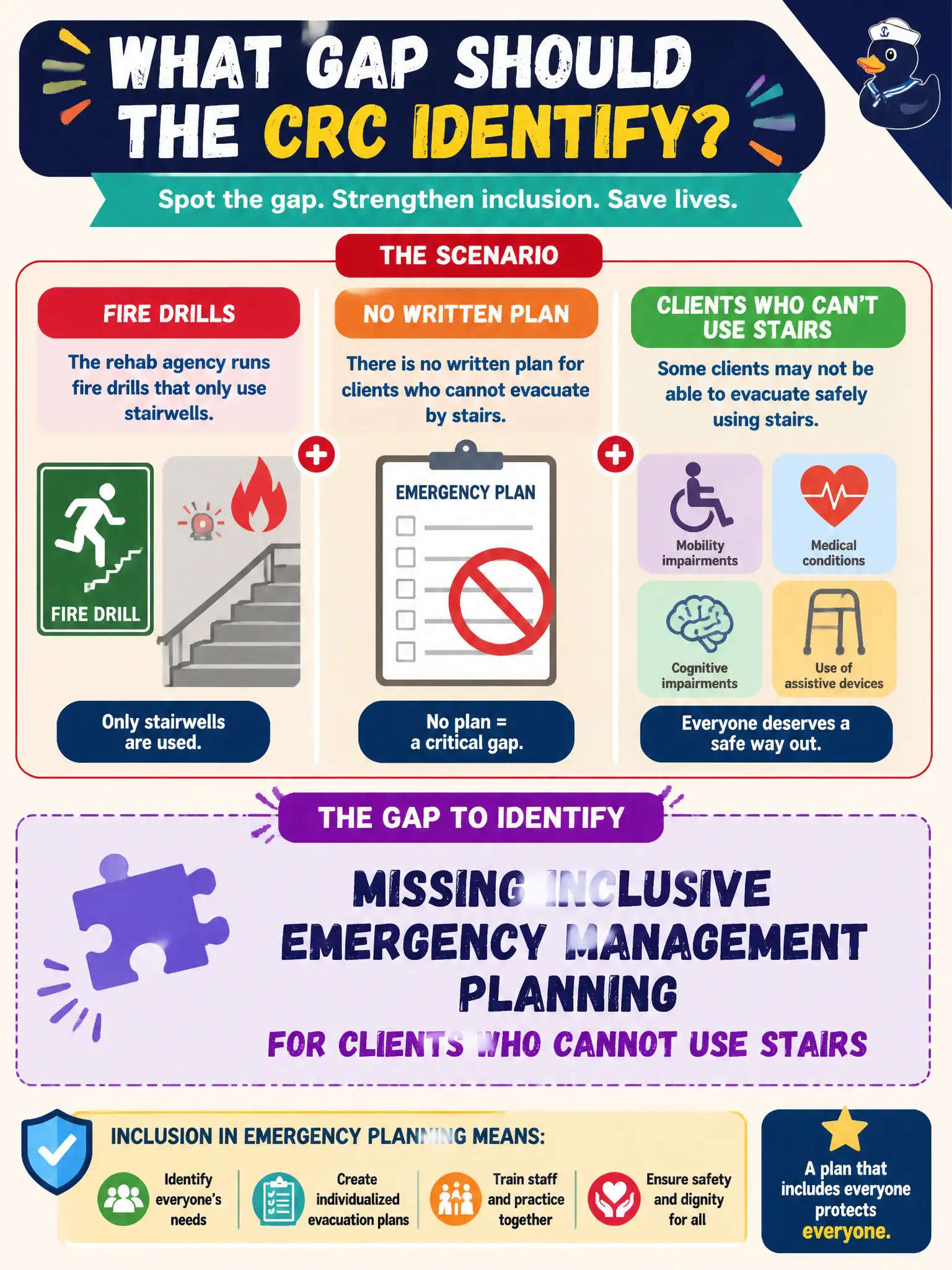
A rehab agency runs fire drills that only use stairwells, with no written plan for clients who cannot evacuate by stairs. What gap should the CRC identify?
Select an answer to reveal the explanation.
Short Explanation
If the only exit is stairs, wheelchair users are left inventing their own escape plan mid-alarm. Inclusive emergency management writes those routes down before the drill. Gaps on paper become dangers on fire day.
Full Explanation
Fire drills that use only stairwells with no written plan for clients who cannot evacuate by stairs reveal missing inclusive emergency management. Community rehab and public agencies must plan alternate evacuation, refuge, and assistance procedures so people with mobility disabilities are not left behind during drills or real events. Identifying that gap is a safety and equity duty, not optional courtesy.
Calling inclusive planning an overinvestment that should be deleted treats disability access as disposable. Labeling inclusion of people with disabilities in drills unnecessary erases their presence in the building. Preferring elevator-only policies with no alternatives needed fails when elevators are offline in fire conditions.
Inclusive drill planning also models for clients that their safety counts equally in public buildings—an advocacy lesson that transfers to workplace emergency procedures later.
Exam caveat: inclusive emergency planning for non-stair evacuation is a recurring disability-and-crisis theme on CRC-style items.
Operational check: inventory clients/staff who cannot use stairs; write alternate evacuation/refuge procedures; practice them in drills; coordinate with building safety and local emergency partners.