
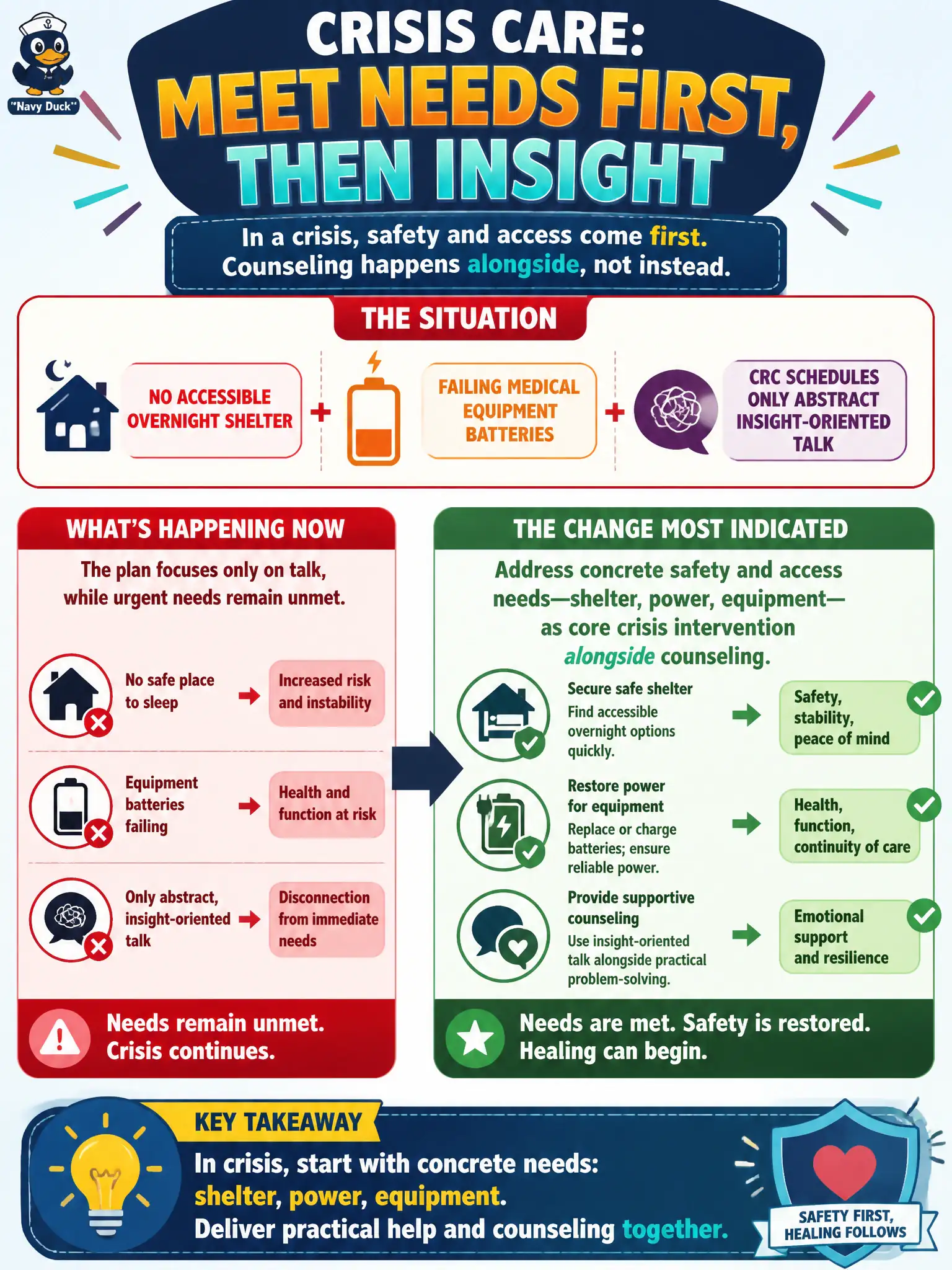
A client in crisis has no accessible overnight shelter and failing medical equipment batteries, while the CRC schedules only abstract insight-oriented talk. What change is most indicated?
Select an answer to reveal the explanation.
Short Explanation
You can't process childhood themes on a park bench with a dead ventilator battery. Crisis work for people with disabilities includes the practical stuff—shelter, power, access—not only abstract talk. Fix the leaking roof while you counsel.
Full Explanation
A client in crisis without accessible overnight shelter and with failing medical-equipment batteries needs concrete safety and access actions—shelter, power, equipment—as core crisis intervention alongside counseling. Abstract insight-oriented talk alone mismatches imminent disability-related risk. Effective CRC practice in civic settings blends emotional support with resource linkage when basic survival infrastructure is failing.
Continuing insight work exclusively until housing resolves itself ignores time-critical medical and shelter risk. Refusing concrete help because CRCs never address basic needs invents a false professional boundary contrary to crisis and rehab standards. Discharging the client for presenting with practical problems punishes the very crisis presentation that requires intervention.
Emergency managers and independent-living centers are natural civic partners when shelter and power for life-sustaining equipment fail; counselors should know those referral paths before the next storm.
Exam caveat: for people with disabilities in crisis, concrete access needs are part of the intervention, not a distraction from ‘real’ counseling.
Operational check: prioritize accessible shelter and power/charging for medical devices; activate agency emergency resources; document safety steps; then resume insight work when acute risk is contained.