
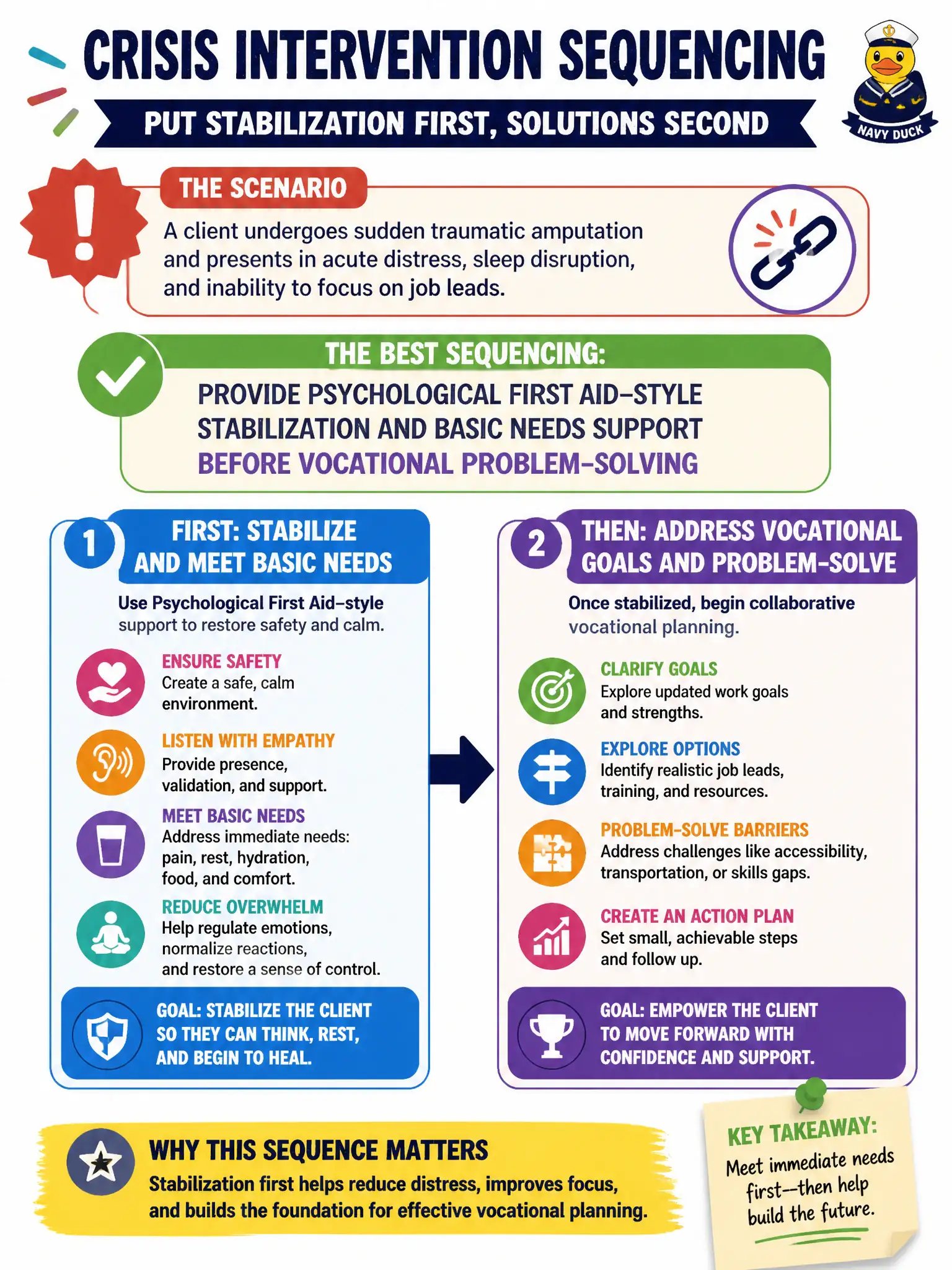
A client undergoes sudden traumatic amputation and presents in acute distress, sleep disruption, and inability to focus on job leads. What sequencing best reflects crisis intervention principles?
Select an answer to reveal the explanation.
Short Explanation
After a sudden amputation, the house is on fire—put out the flames before rearranging the furniture. Stabilization and basic supports come first; job leads wait until the client can think straight. Crisis first, career strategy second.
Full Explanation
Sudden traumatic amputation with acute distress, sleep disruption, and inability to focus calls for crisis sequencing: psychological first aid–style stabilization and basic needs support before intensive vocational problem-solving. Restoring safety, orientation, and practical supports creates the cognitive bandwidth later job leads require. Public rehab programs serve newly injured clients better when they do not leapfrog acute crisis care.
Pushing intensive job-search quotas before addressing acute distress typically fails and harms engagement. Canceling all counseling contact until grief is completely finished abandons the client during the highest-need window. Focusing exclusively on prosthetic brand comparisons as the only intervention narrows care to equipment while ignoring psychological crisis.
Hospital-to-community handoffs after traumatic amputation work best when VR staff coordinate with acute social work on housing, benefits start-up, and grief supports before résumé quotas resume.
Exam caveat: crisis intervention places stabilization before complex vocational problem-solving after sudden traumatic injury.
Operational check: deliver psychological first aid elements and practical supports; screen suicide/safety risk; defer intensive placement quotas until acute distress and sleep allow meaningful planning.