
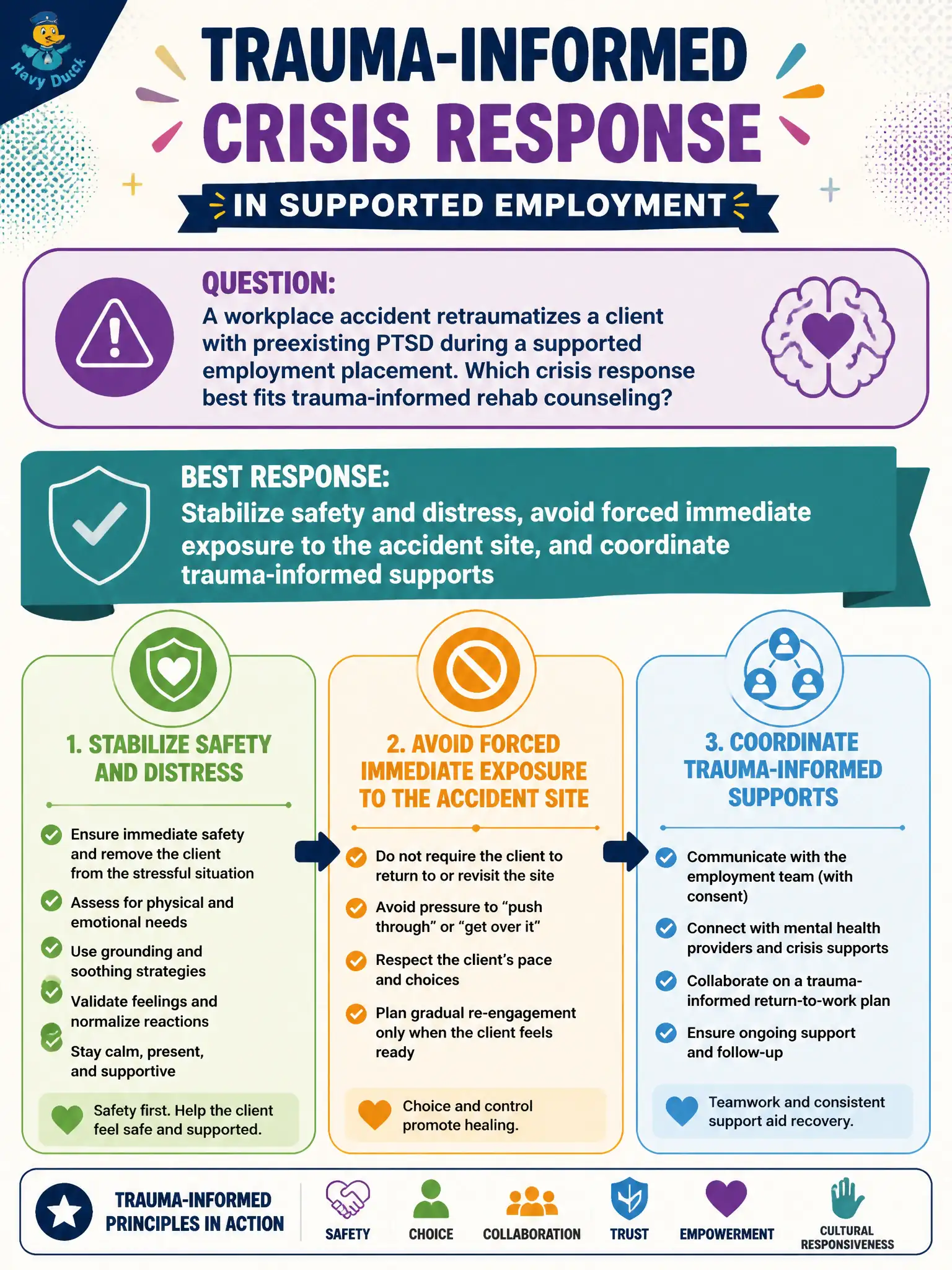
A workplace accident retraumatizes a client with preexisting PTSD during a supported employment placement. Which crisis response best fits trauma-informed rehab counseling?
Select an answer to reveal the explanation.
Short Explanation
A new accident can yank an old PTSD trigger like a fire alarm. First stabilize—safety, grounding, supports—before anyone insists on marching back to the scene. Trauma-informed rehab paces return-to-work with care, not sink-or-swim exposure.
Full Explanation
When a workplace accident retraumatizes a client with preexisting PTSD during supported employment, trauma-informed crisis response stabilizes safety and distress, avoids forced immediate re-exposure to the accident site, and coordinates appropriate trauma supports before pacing any return-to-work decisions. Integrating PTSD history with vocational judgment protects the client and the placement relationship in community employment programs.
Requiring same-day return to the exact accident location without supports risks symptom escalation and models coercion rather than collaboration. Terminating all employment services permanently after any trauma reaction abandons recovery and accommodation pathways. Telling the client PTSD is irrelevant to vocational counseling splits clinical reality from rehab practice.
Supported employment vendors under public contracts should pause production quotas while trauma supports engage, then renegotiate graded exposure to the worksite with the client’s consent.
Exam caveat: stabilize and coordinate before forced exposure; trauma-informed pacing is preferred over ‘get back on the horse’ immediacy.
Operational check: ensure immediate safety; use grounding and distress reduction; link to trauma-informed care; jointly plan graded return only after stabilization criteria are met.