
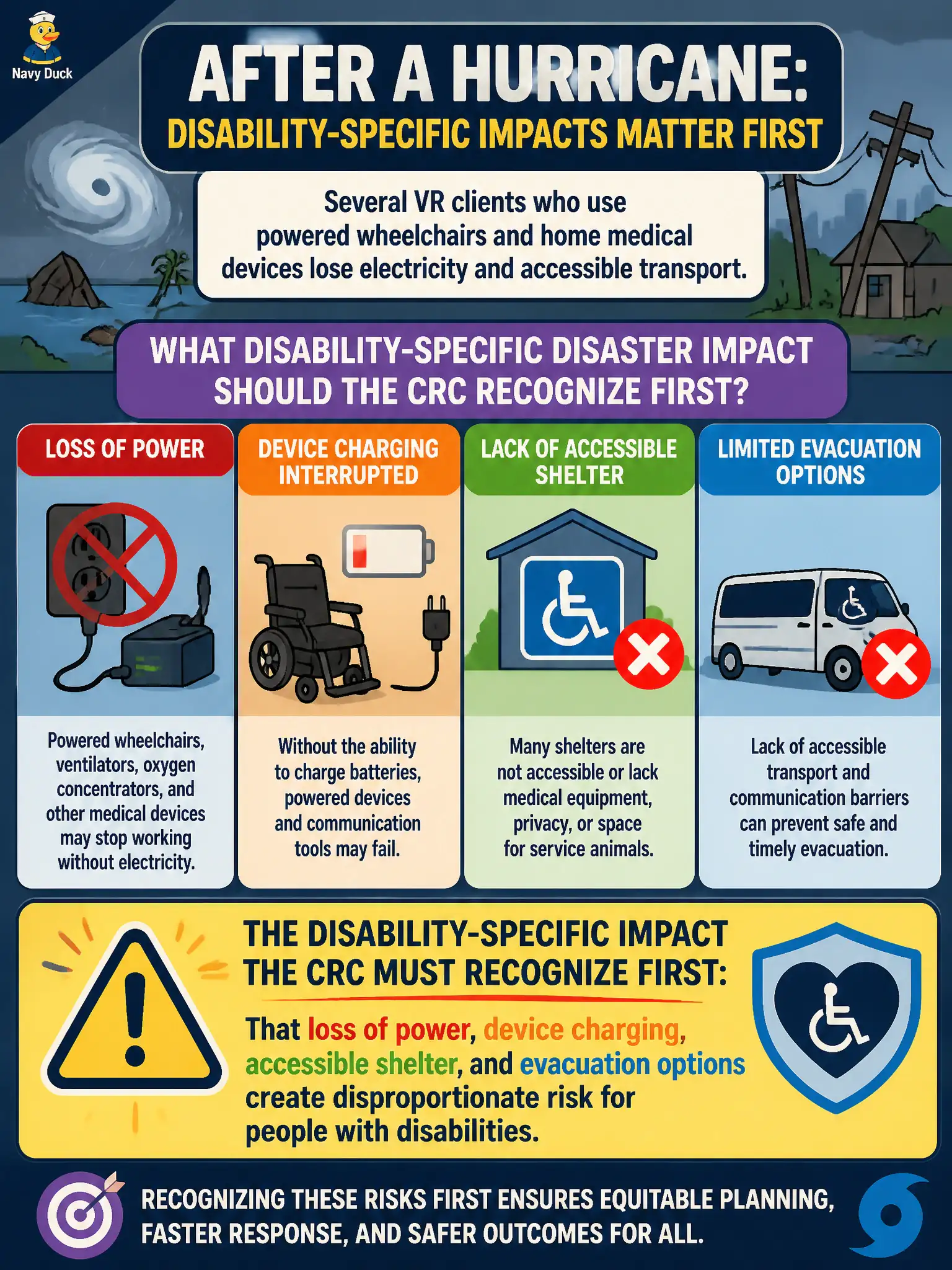
After a hurricane, several VR clients who use powered wheelchairs and home medical devices lose electricity and accessible transport. What disability-specific disaster impact should the CRC recognize first?
Select an answer to reveal the explanation.
Short Explanation
When the grid dies, a powered chair and a CPAP aren't luxuries—they're lifelines. Disasters hit people with disabilities harder through power loss, inaccessible shelters, and broken transport. The CRC has to see that differential impact before pushing 'business as usual' job tasks.
Full Explanation
After a hurricane, loss of electricity, device charging, accessible shelter, and evacuation transport creates disproportionate risk for clients who use powered wheelchairs and home medical devices. Disability-specific disaster impact is not identical to general community disruption; rehab counselors in civic emergency contexts must recognize that differential vulnerability first so safety linkage and temporary service adjustments follow. Public VR caseloads often include exactly these technology-dependent clients.
Assuming disasters affect everyone identically so disability planning is unnecessary erases known access and power dependencies. Claiming only homeowners without disabilities need emergency priority inverts equity. Ignoring disaster effects to resume résumés unchanged abandons crisis-relevant duty of care.
Exam caveat: crisis/disaster items for people with disabilities emphasize disproportionate infrastructure and access risks, especially power and mobility device dependence.
Operational check: triage clients by device/power dependence and accessible shelter needs; link to emergency partners for charging, transport, and inclusive shelter; document temporary plan changes until utilities and access stabilize.