
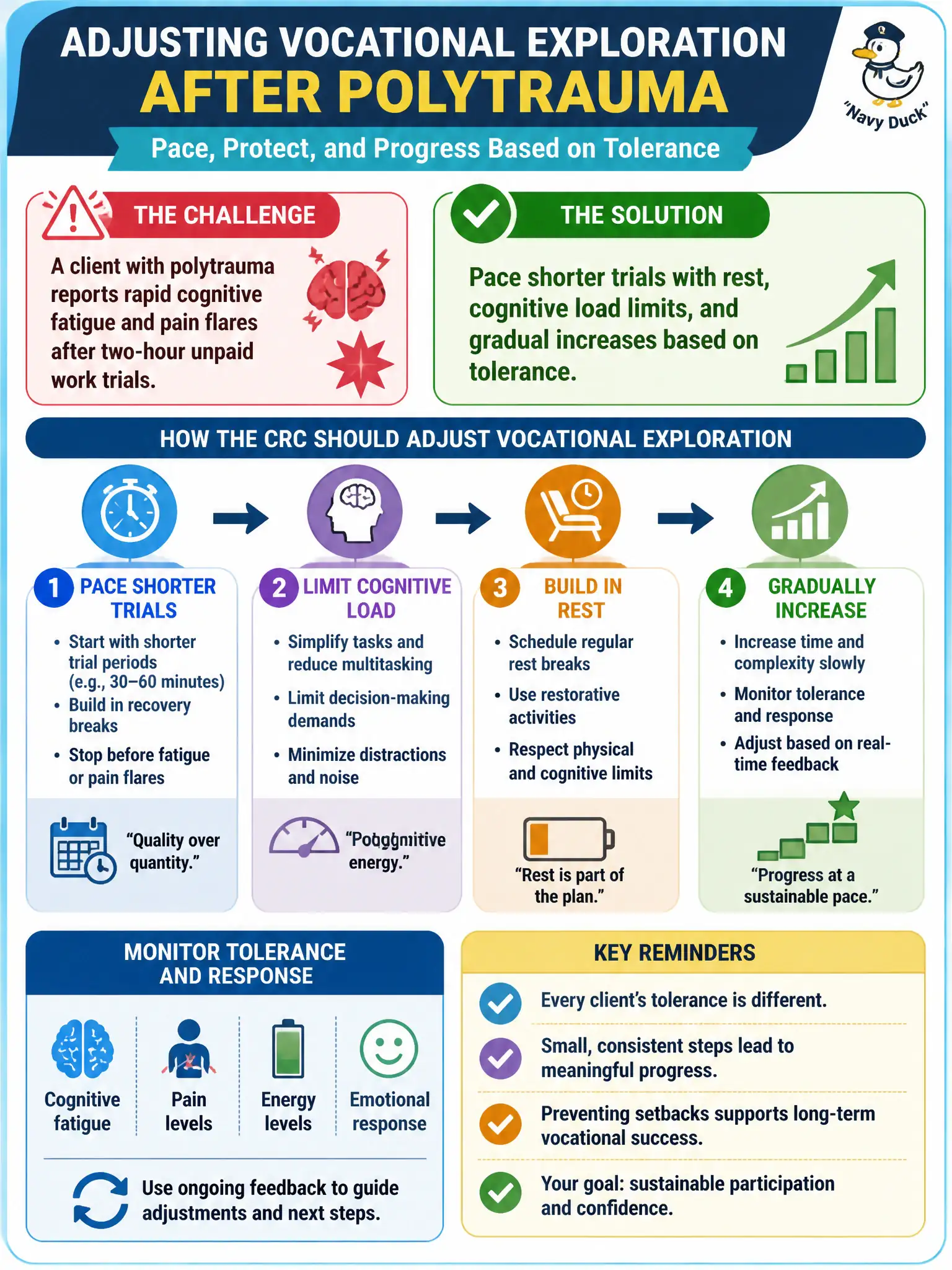
A client with polytrauma reports rapid cognitive fatigue and pain flares after two-hour unpaid work trials. How should the CRC adjust vocational exploration?
Select an answer to reveal the explanation.
Short Explanation
Think of cognitive energy like a phone battery that drains faster after trauma injuries. Shorter, paced trials with rest beats forcing marathon shifts that crash the system. Build tolerance gradually instead of calling fatigue a character flaw.
Full Explanation
Rapid cognitive fatigue and pain flares after two-hour unpaid trials signal that current capacity is below continuous full-shift demand. Polytrauma-informed exploration paces shorter trials, inserts rest, limits cognitive load, and increases gradually based on tolerance and medical guidance. That graded approach protects safety and confidence in public VR work-trial designs.
Extending trials immediately to eight-hour shifts to ‘build toughness’ often worsens symptoms and undermines engagement. Eliminating all work trials and relying only on paper interest surveys removes ecological data needed for realistic matching. Attributing fatigue solely to laziness and documenting noncompliance mislabels medical residuals as moral failure.
Veteran-serving and public VR work trials should treat symptom-contingent pacing as evidence-based accommodation design, with documented medical alignment rather than toughness narratives.
Exam caveat: pacing and graded exposure beat abrupt full-shift demands when polytrauma fatigue and pain are reported.
Operational check: redesign trials to shorter blocks with scheduled rest; track symptom ratings before/after; adjust length only after tolerance is documented with the care team.