
A polytrauma veteran with TBI, lower-limb amputation, and PTSD begins public VR services focused only on 'finding any warehouse job this week.' What planning approach should the CRC favor?
Select an answer to reveal the explanation.
Short Explanation
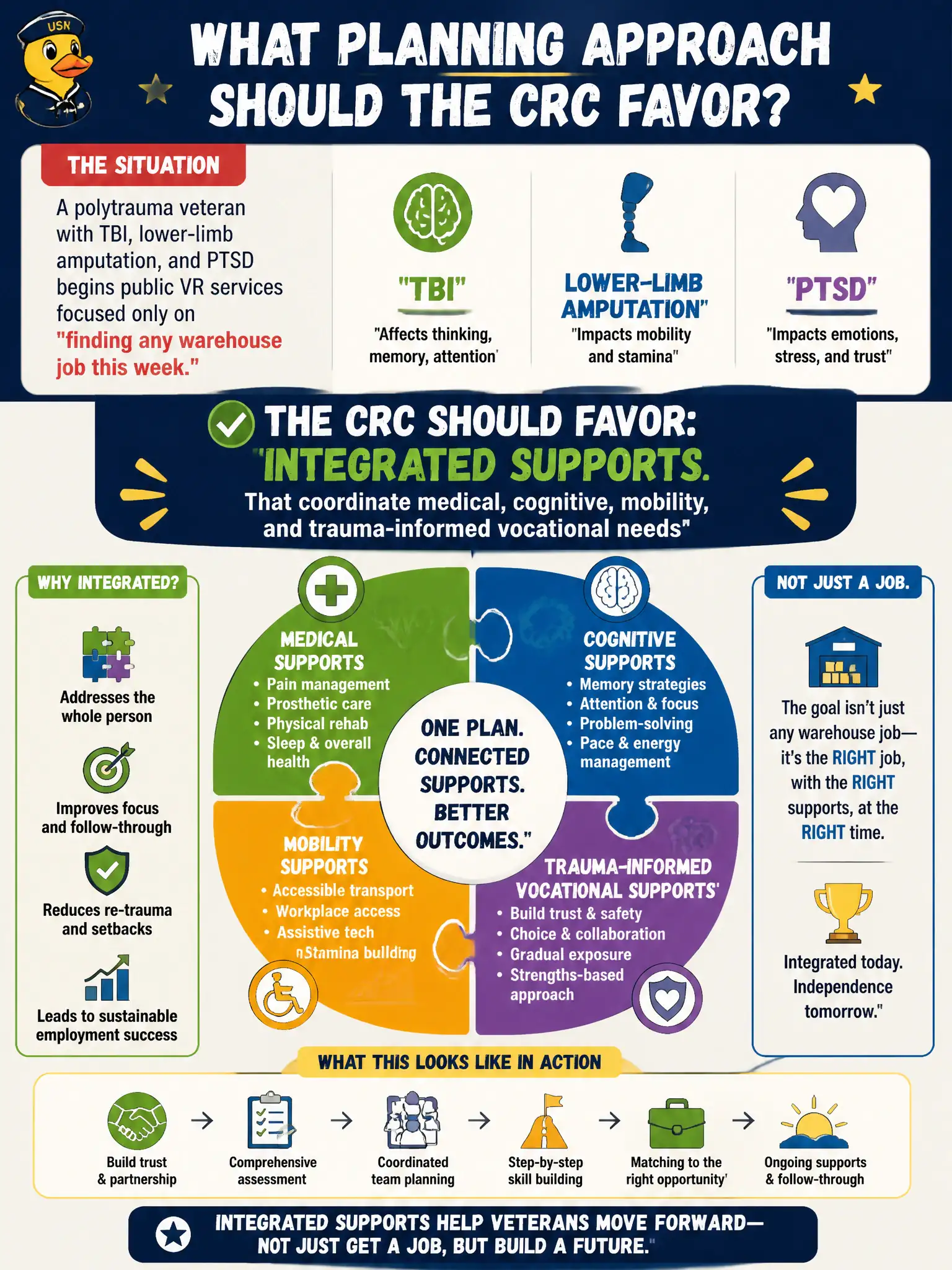
Polytrauma is a multi-lane highway, not a single speed bump. TBI, amputation, and PTSD each change stamina, cognition, and triggers—so the plan has to weave those together. Chasing any warehouse slot this week without that coordination sets the client up to fail.
Full Explanation
Polytrauma—TBI, lower-limb amputation, and PTSD together—demands integrated supports that coordinate medical, cognitive, mobility, and trauma-informed vocational needs rather than a one-week ‘any warehouse job’ rush. Cognitive load, pain, stamina, mobility access, and trauma triggers interact with job demands and accommodations. County VR and veteran-serving community programs serve clients better with coordinated planning across specialists than with single-issue placement pressure.
Single-issue placement pressure that ignores concussion and PTSD effects predicts failed trials and secondary harm. Deferring all services until every medical condition is fully resolved forever can strand clients in indefinite limbo contrary to concurrent rehab practice. Referring out of VR solely because multiple diagnoses exist confuses complexity with ineligibility.
Exam caveat: polytrauma items reward integrated, multi-domain planning over rushed unidimensional placement or premature case closure.
Operational check: inventory cognitive, mobility, pain, and PTSD constraints with the treatment team; set paced vocational goals with accommodations; schedule interdisciplinary check-ins before expanding job demands.