
In session, a client expresses credible homicidal threats with intent toward a named former supervisor and describes feasible access. Beyond documenting carefully, what counselor-level response is most appropriate?
Select an answer to reveal the explanation.
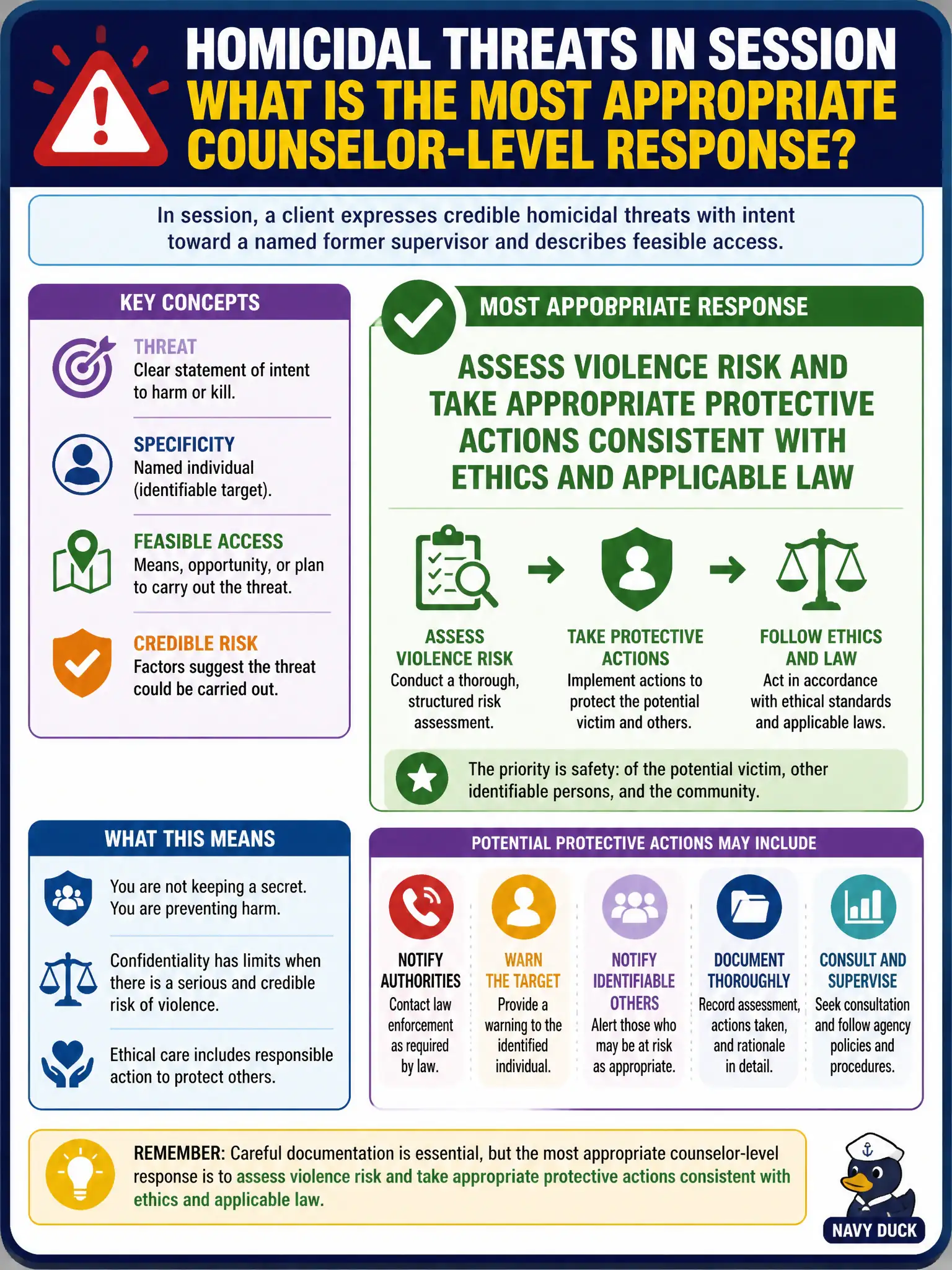
Short Explanation
A named target plus a believable plan is not 'venting to ignore.' Assess the risk seriously and take the protective steps your ethics and local law require. Looking away to finish a résumé worksheet is not rehab counseling.
Full Explanation
Credible homicidal threats with intent toward a named former supervisor and feasible access trigger violence-risk assessment and protective actions consistent with ethics and applicable duty-to-protect/warn law. Vocational counseling does not exempt the CRC from those obligations; careful documentation accompanies assessment, consultation, and notifications as required while privacy yields where imminent harm standards apply. Public and nonprofit rehab settings must treat such disclosures as clinical emergencies, not résumé side notes.
Ignoring the threat because vocational counseling supposedly excludes duty-related actions invents a false specialty carve-out. Continuing job-search coaching without assessing violence risk prioritizes placement optics over third-party safety. Joking to reduce tension and changing the subject permanently models avoidance and leaves risk unexamined.
Exam caveat: identifiable third-party threats with intent and means engage protective duties; ‘stay in the vocational lane’ is not a valid exemption.
Operational check: assess immediacy, specificity, and access; consult supervisor/legal as required; take mandated protective steps; document rationale and actions; only then revisit vocational work under clarified safety conditions.