
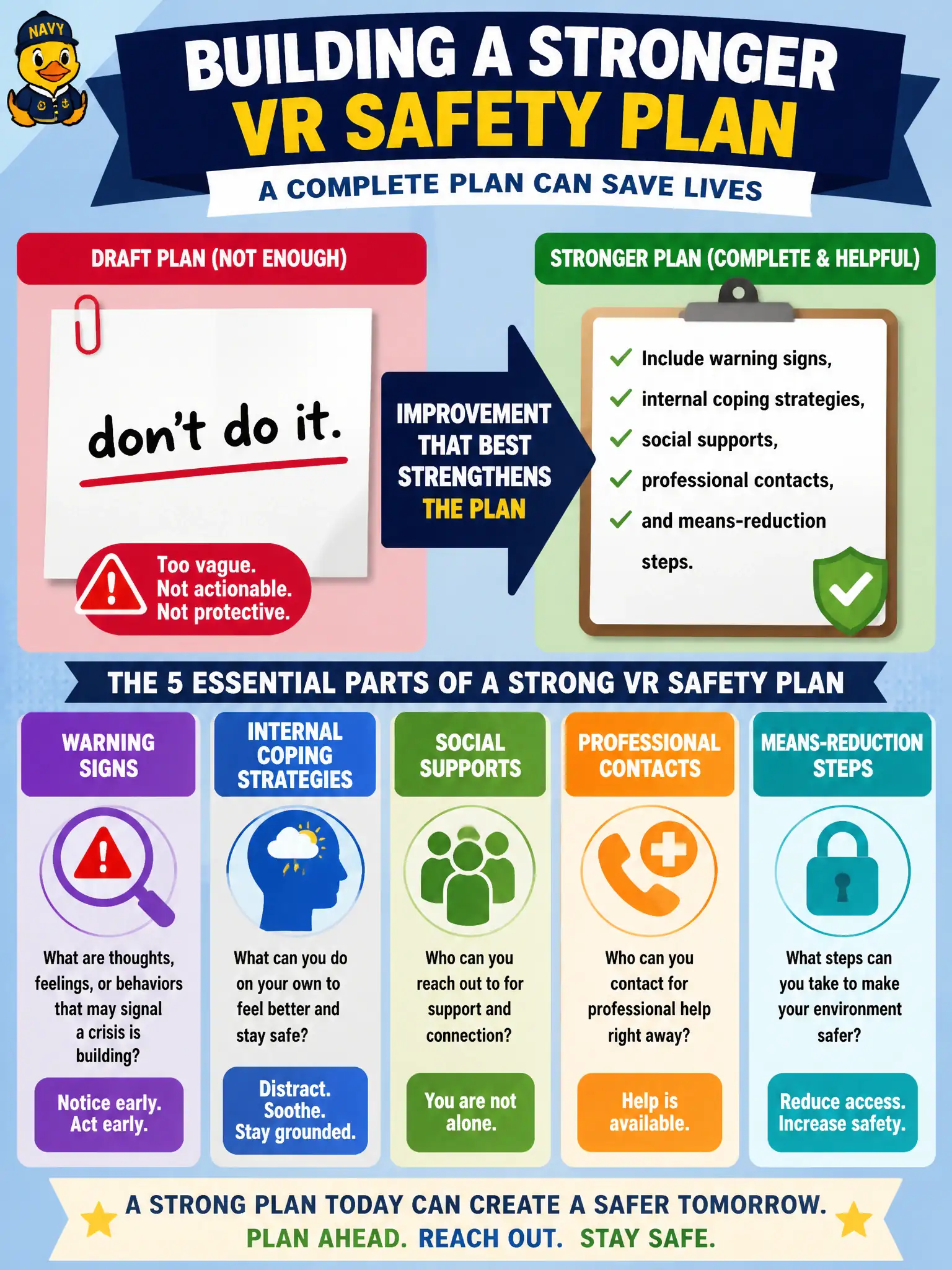
A draft safety plan for a VR client in distress lists only the instruction 'don't do it.' Which improvement best strengthens the plan?
Select an answer to reveal the explanation.
Short Explanation
A safety plan that just says 'don't' is like a fire escape that only says 'don't burn'—useless in the smoke. You want warning signs, coping moves, people to call, professional contacts, and ways to lock down means. Specific beats slogans when crisis hits.
Full Explanation
A safety plan that only says ‘don’t do it’ lacks actionable steps when distress escalates. Strong plans identify personal warning signs, internal coping strategies, social supports, professional contacts, means-reduction steps, and reasons for living, written in the client’s language and accessible during crisis. Rehabilitation counselors in civic agencies collaborate on those concrete elements rather than slogans.
Adding more motivational slogans without concrete steps repeats the same emptiness with friendlier wording. Replacing the plan with a single crisis-line number and no personal coping list removes individualized tools clients actually use between calls. Requiring a promise never to feel suicidal again is unrealistic and can shame disclosure instead of preparing for risk.
Community crisis protocols increasingly expect written, client-held plans that a mobile crisis team or family supporter can follow without decoding slogans, so specificity is an equity and safety issue.
Exam caveat: CRC safety-planning items favor multi-component, client-specific plans over prohibitions, slogans, or single-resource lists.
Operational check: rebuild the plan with warning signs, coping moves, people to call, professional contacts, and environmental safety steps; verify the client can locate the plan after hours; review it at the next session.