
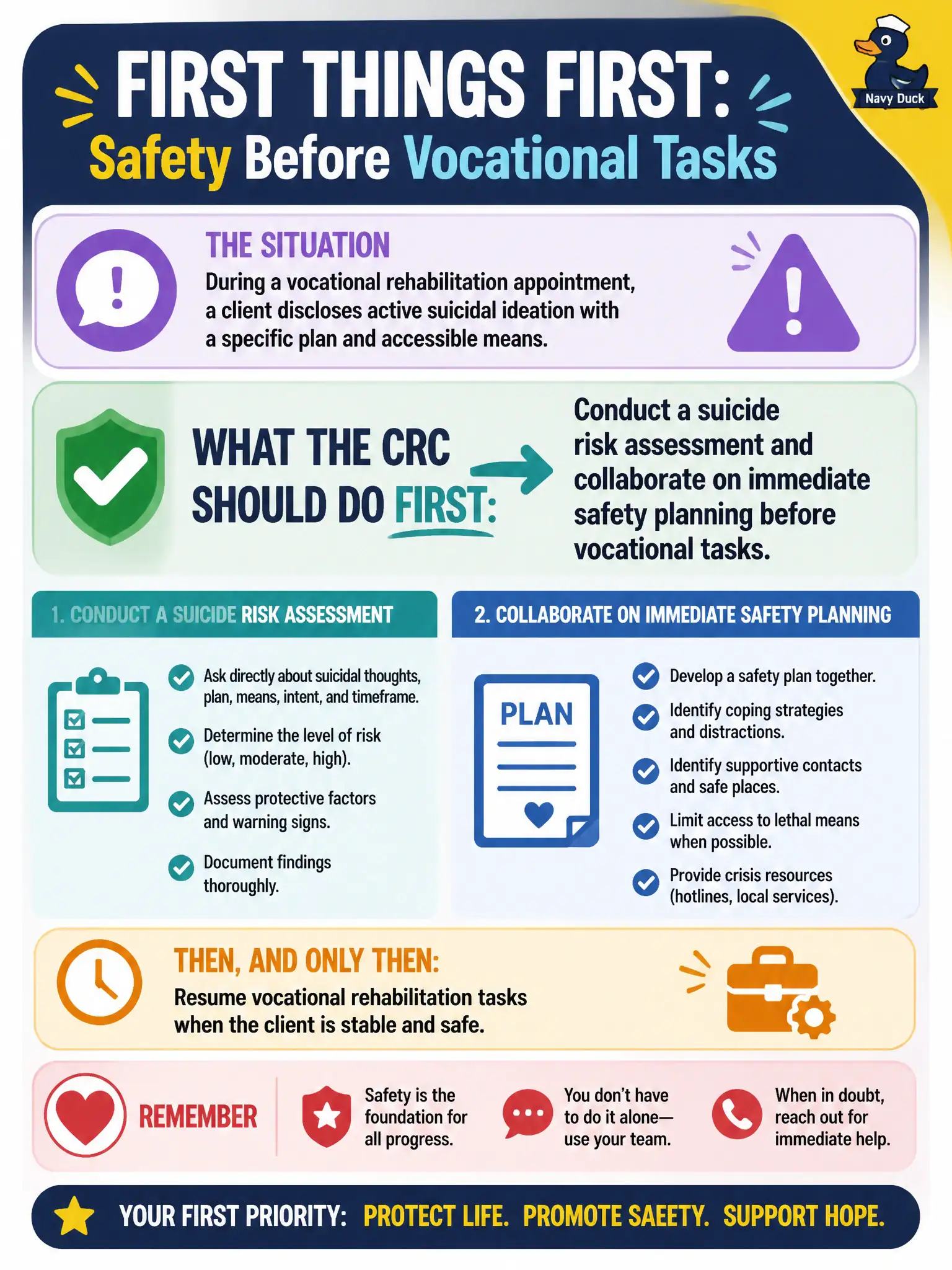
During a vocational rehabilitation appointment, a client discloses active suicidal ideation with a specific plan and accessible means. What should the CRC do first?
Select an answer to reveal the explanation.
Short Explanation
When someone names a plan and the means to act, the job search goes on pause—safety is the work. Assess risk, reduce means when possible, and build a concrete safety plan before résumés. Vocational goals matter, but they wait behind survival.
Full Explanation
Active suicidal ideation with a specific plan and accessible means elevates safety above vocational tasks. The CRC’s first duty is suicide risk assessment and collaborative immediate safety planning—means reduction, supports, crisis contacts—before job-application work continues. In public VR and community rehab appointments, that sequencing protects life, meets ethical standards, and preserves the trusting relationship needed for later employment goals.
Completing remaining job-application tasks before addressing mood subordinates imminent risk to paperwork and is clinically inappropriate. Ending the appointment and emailing generic crisis-line flyers later that week delays assessment and abandons collaborative planning. Arguing that employment will automatically resolve suicidal thoughts confuses long-term protective factors with acute safety management.
Exam caveat: crisis items place assessment and safety planning before ordinary vocational activity whenever plan and means are present.
Operational check: pause the placement agenda; complete a structured risk assessment; document ideation, plan, means, intent, and protective factors; finalize a written safety plan and needed referrals before resuming VR tasks.