
A client in early recovery from a substance use disorder wants job placement while still building sobriety supports. What best reflects EBP SUD counseling coordinated with vocational goals?
Select an answer to reveal the explanation.
Short Explanation
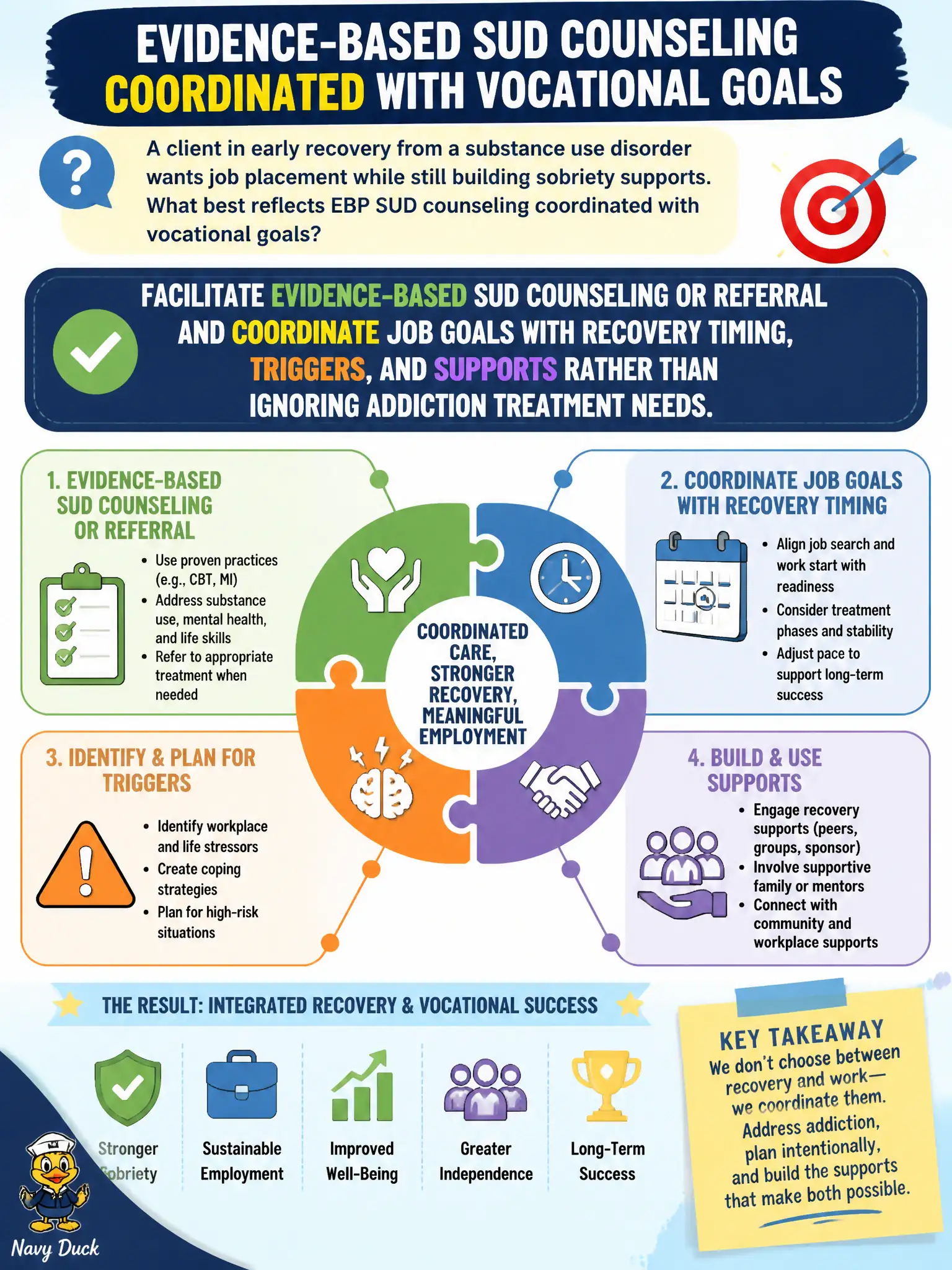
Early recovery and job dreams can share a calendar—they just need coordination. EBP SUD counseling (or a real referral) plus smart job timing beats “nightlife tonight, worry later” and also beats “come back in ten years.” Recovery supports and work goals talk to each other.
Full Explanation
In early SUD recovery with a concurrent job-placement wish, EBP-aligned practice facilitates evidence-based SUD counseling or referral and coordinates job goals with recovery timing, triggers, and supports rather than ignoring addiction treatment needs. Civic employment success in early recovery depends on integrating recovery capital with vocational pacing so work supports—not sabotages—sobriety.
Placing immediately into high-risk nightlife work with no recovery supports fails by concept as trigger-rich placement without treatment coordination. Refusing all vocational discussion until a decade of continuous abstinence fails as an arbitrary, exclusionary timeline disconnected from individualized recovery. Treating SUD history as permanently disqualifying for any competitive employment fails against recovery and employment evidence used in contemporary rehab practice.
Exam caveat: coordination does not mean identical timelines for every client; it means intentional alignment of job risk with recovery supports. Operational check: engage EBP SUD care, map workplace triggers, stage job types and hours, involve peer recovery supports as appropriate, and revisit placement intensity at recovery milestones rather than ignoring addiction treatment needs.