
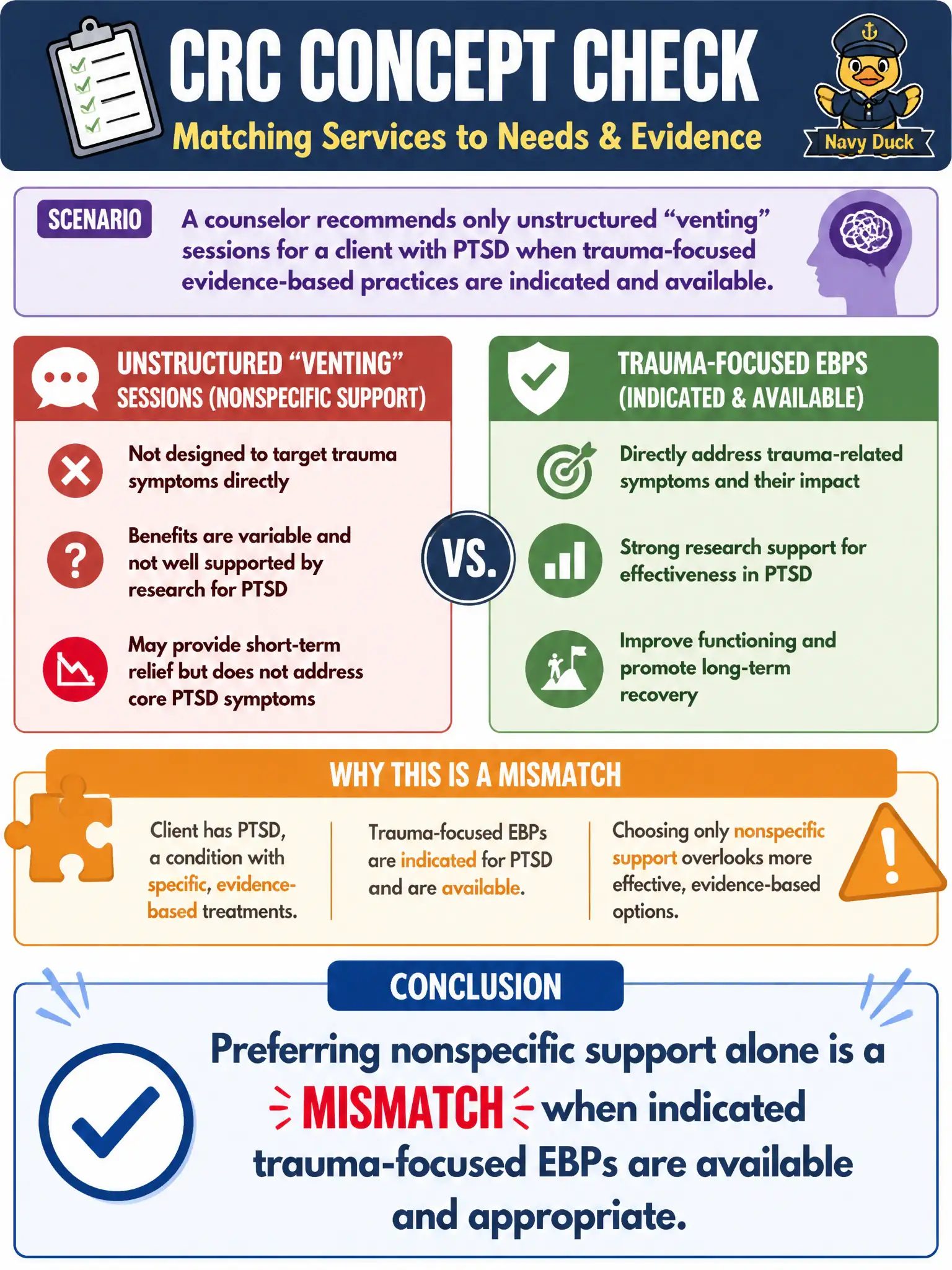
A counselor recommends only unstructured “venting” sessions for a client with PTSD when trauma-focused evidence-based practices are indicated and available. What should a CRC candidate conclude?
Select an answer to reveal the explanation.
Short Explanation
Venting can feel good, like chatting after a tough day—but PTSD often needs a structured, evidence-based playbook when it’s indicated and available. Warm support helps; it isn’t a full substitute for trauma-focused EBP.
Full Explanation
If a counselor recommends only unstructured “venting” when trauma-focused evidence-based practices are indicated and available for PTSD, the CRC candidate should conclude that preferring nonspecific support alone is a mismatch. Civic duty of care includes offering indicated EBPs rather than defaulting to unstructured support because it feels easier or more familiar.
Claiming unstructured venting is always superior to structured trauma-focused protocols fails by concept against the evidence hierarchy for PTSD treatment. Saying PTSD counseling content is outside all rehab concern when a job goal exists fails because trauma symptoms often block vocational progress and require coordinated care. Declaring EBP availability irrelevant if the client enjoys unstructured sessions fails by elevating preference for comfort over informed treatment matching when indicated care is available.
Exam caveat: client preference and cultural fit still matter after informed consent about options; the error is never offering indicated EBPs. Operational check: explain trauma-focused options, assess readiness and contraindications, refer or deliver within competence, and use supportive counseling as adjunct—not as the sole modality when EBPs are indicated and accessible.