
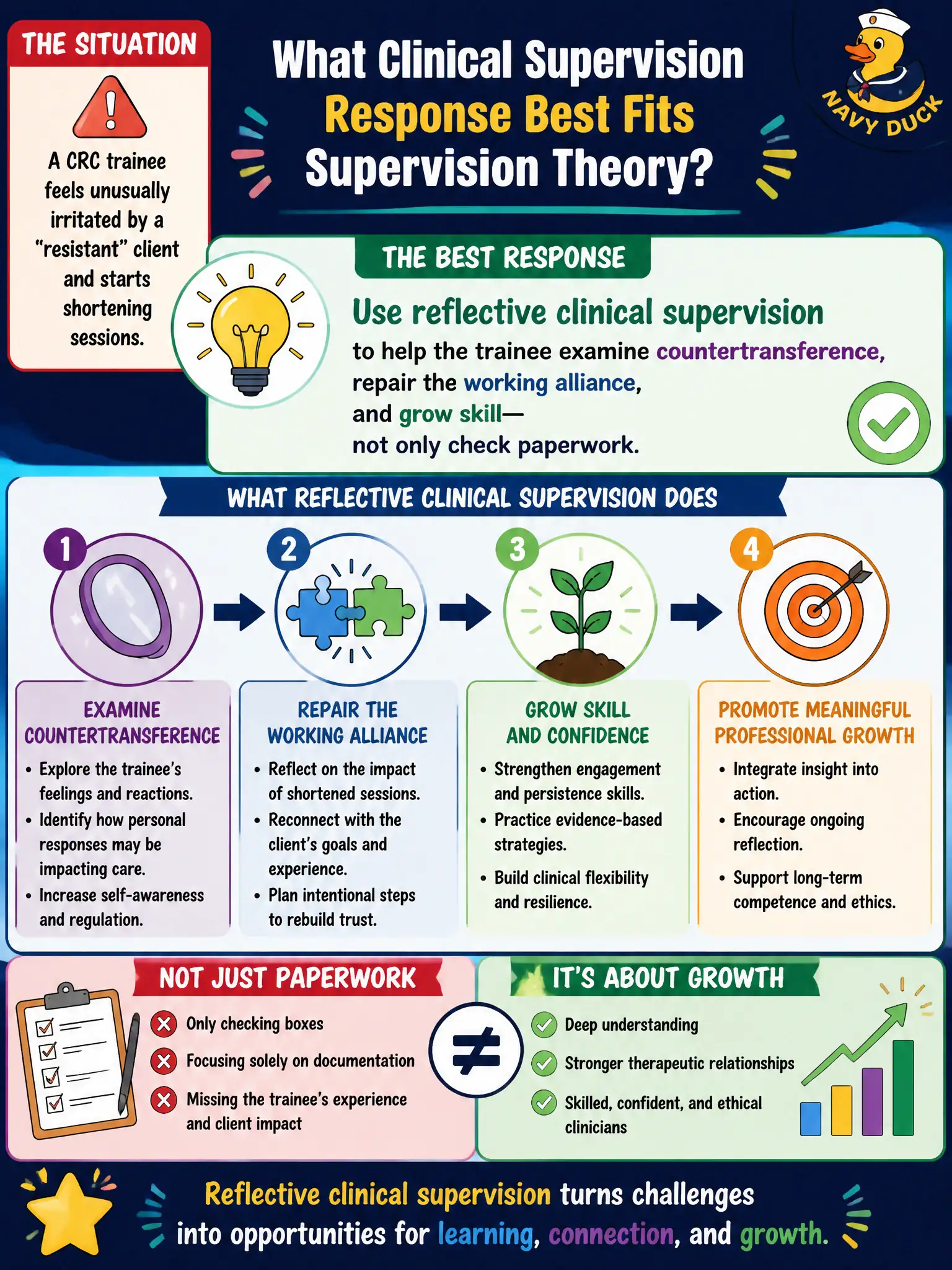
A CRC trainee feels unusually irritated by a “resistant” client and starts shortening sessions. What clinical supervision response best fits supervision theory?
Select an answer to reveal the explanation.
Short Explanation
When a client gets under your skin, that’s a supervision moment—not a secret to stuff in a drawer. Reflective supervision helps unpack countertransference so the alliance can heal. File audits alone don’t teach that muscle.
Full Explanation
When a CRC trainee feels unusually irritated by a “resistant” client and shortens sessions, clinical supervision theory calls for reflective supervision that helps the trainee examine countertransference, repair the working alliance, and grow skill—not only check paperwork. Civic training systems protect clients by making counselor reactions discussable rather than hidden.
Telling the trainee to hide all emotional reactions and never discuss them fails by concept because unexamined countertransference drives harmful behavior. Replacing supervision with only a spreadsheet audit of signed forms fails as administrative monitoring mistaken for clinical supervision. Instructing harsh confrontation to “break resistance” without processing fails by modeling coercive practice and skipping reflective learning.
Exam caveat: paperwork compliance still matters administratively, but it is not a substitute for clinical supervision of the counseling process. Operational check: invite the trainee to describe thoughts/feelings about the client, link shortened sessions to countertransference hypotheses, plan alliance repair, observe or review a session, and document a skill-focused supervision goal.