
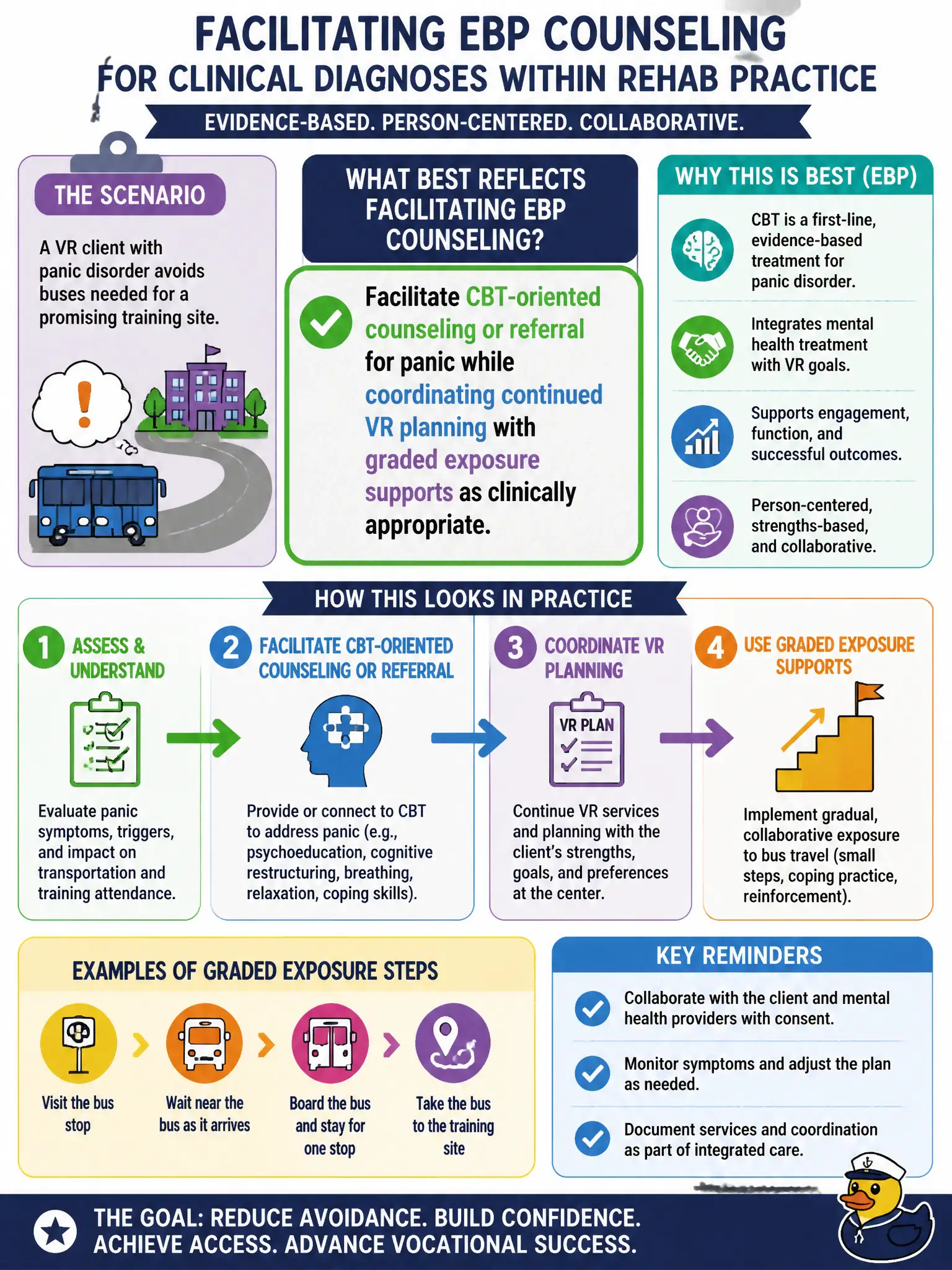
A VR client with panic disorder avoids buses needed for a promising training site. What best reflects facilitating EBP counseling for clinical diagnoses within rehab practice?
Select an answer to reveal the explanation.
Short Explanation
Panic that blocks the bus isn’t a “get a different app” problem—it’s clinical. Keep VR alive with smart supports, and get CBT-style help (or a solid referral) running in parallel. Progress on anxiety and progress on goals can travel together.
Full Explanation
A VR client with panic disorder who avoids buses needed for a promising training site needs EBP facilitation: CBT-oriented counseling or referral for panic while coordinating continued VR planning with graded exposure supports as clinically appropriate. Civic access to training depends on treating anxiety as a clinical-vocational barrier, not only rearranging logistics or abandoning goals when avoidance appears.
Dropping all vocational services until panic disappears spontaneously with no clinical plan fails by concept as passive waiting without treatment. Treating bus avoidance only as transportation logistics and never addressing anxiety treatment fails by missing the clinical driver of the avoidance. Advising that panic disorder makes all training sites inappropriate forever fails as an absolute exclusion contrary to the treatable-anxiety frame used in rehab counseling.
Exam caveat: counselors facilitate or refer within competence; severe panic may need specialty CBT/exposure providers while VR continues coordinated planning. Operational check: initiate CBT or referral, design graded bus exposure with clinical input, consider interim travel supports, keep the training goal active on the plan, and measure avoidance reduction alongside vocational milestones.