
A counselor serves a client with significant psychiatric disability who wants competitive work. Which evidence-based vocational approach best matches supported employment principles?
Select an answer to reveal the explanation.
Short Explanation
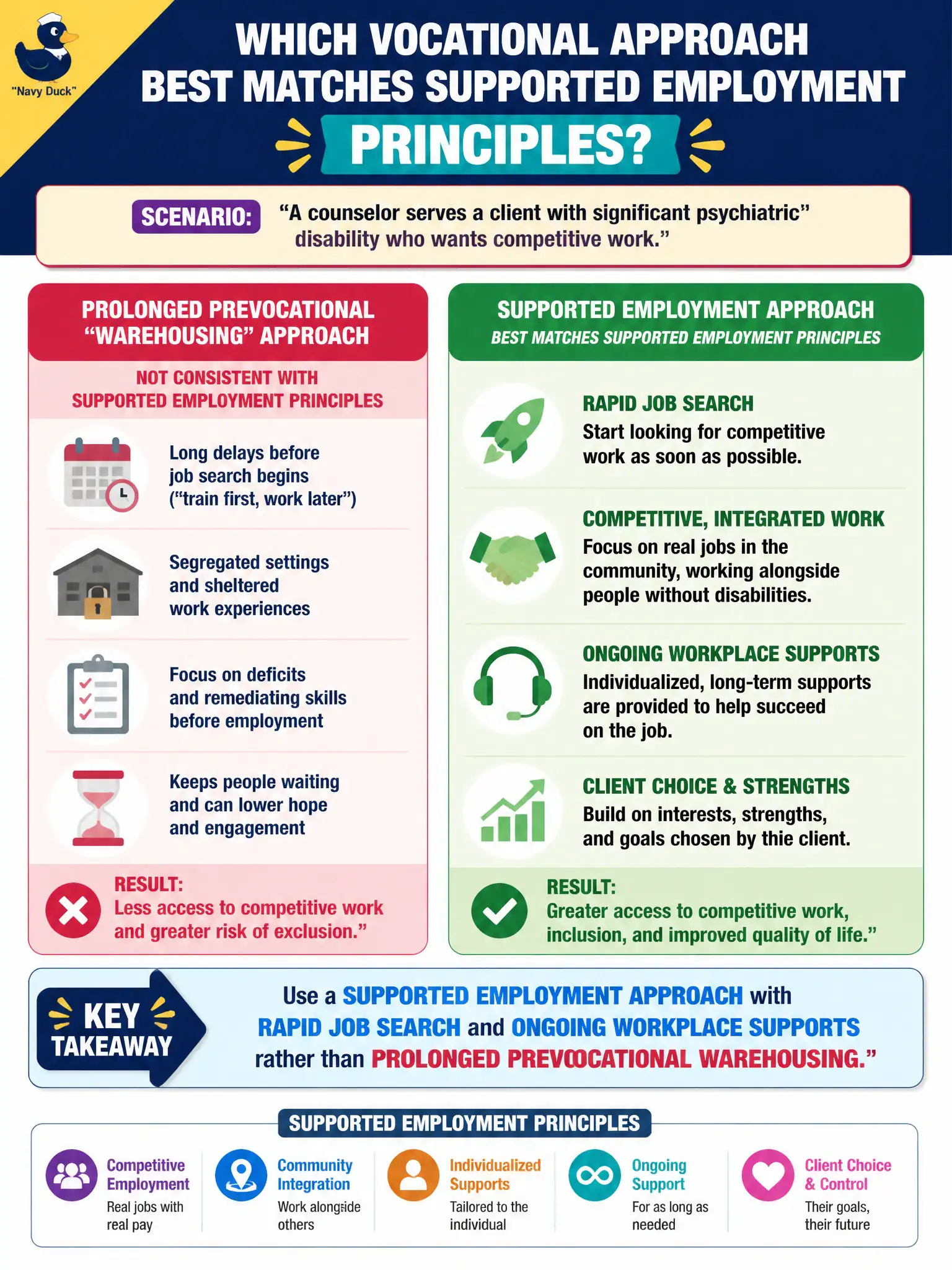
Supported employment says get into a real job sooner, then support on the job—not warehouse people in endless “prep.” Waiting for perfect symptom-free years is the old prevocational trap. Rapid search plus workplace supports is the EBP move.
Full Explanation
For a client with significant psychiatric disability who wants competitive work, evidence-based supported employment principles favor rapid job search and ongoing workplace supports rather than prolonged prevocational warehousing. Civic employment policy for psychiatric disability has strong evidence that real jobs with supports outperform endless unpaid readiness training in segregated settings.
Requiring years of unpaid sheltered workshop “readiness” before any community search fails by concept as prevocational delay contrary to supported employment. Banning competitive employment for only permanent facility-based day programs fails as a segregationist default that denies CIE opportunity. Delaying placement until zero symptoms for twelve months with no supports planned fails because zero-symptom prerequisites and support-free plans contradict SE practice and recovery realities.
Exam caveat: rapid job search is client-preference driven and still includes assessment; it is not reckless placement without safety planning. Operational check: begin job development aligned with preferences quickly, arrange follow-along supports, coordinate with mental health providers, avoid lengthy unpaid workshop readiness as a mandatory gate, and measure job starts and retention rather than hours of prevocational delay.