
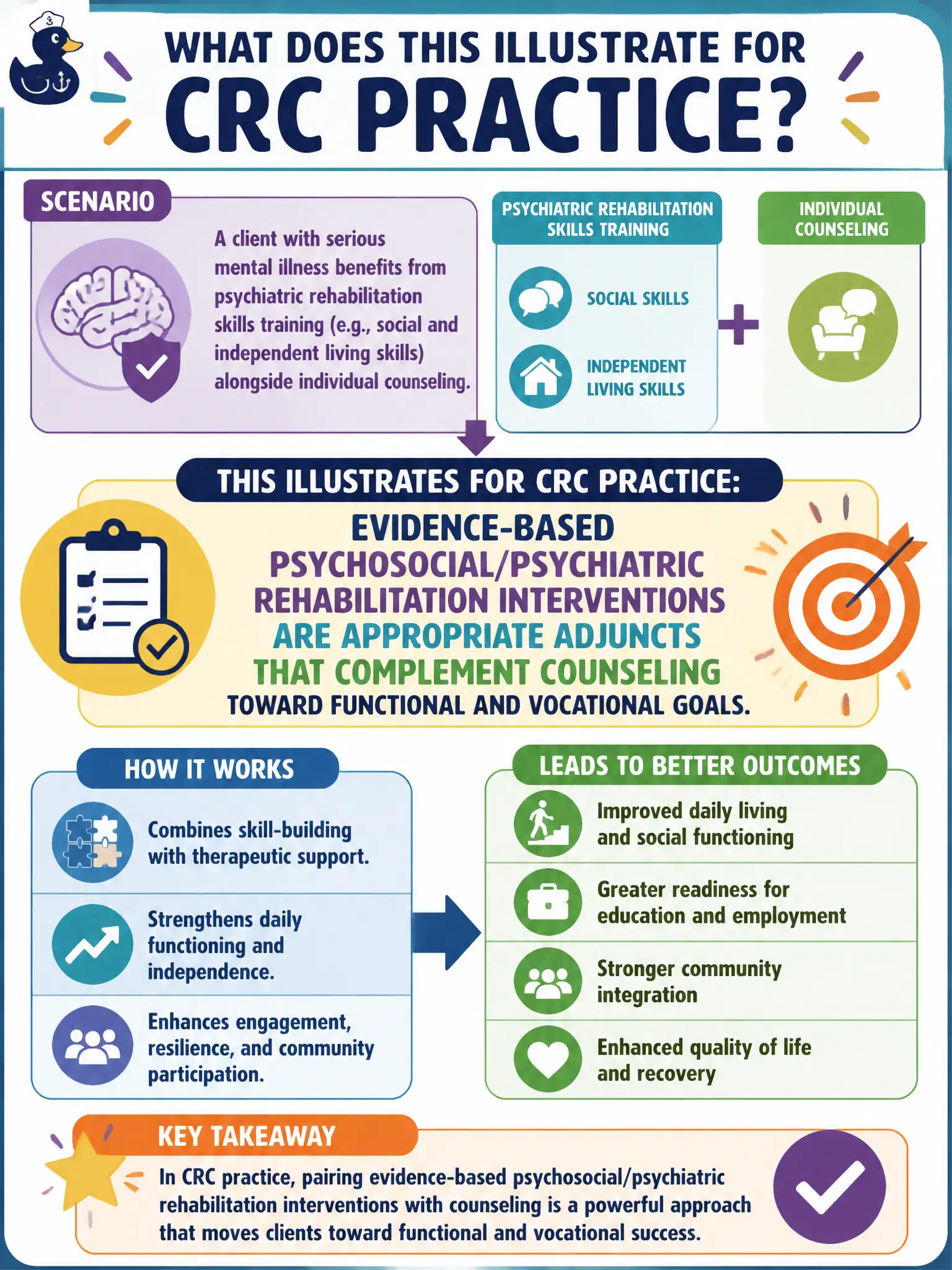
A client with serious mental illness benefits from psychiatric rehabilitation skills training (e.g., social and independent living skills) alongside individual counseling. What does this illustrate for CRC practice?
Select an answer to reveal the explanation.
Short Explanation
Counseling opens the door; skills training helps walk through it. For serious mental illness, psychiatric rehab skills—social, living, coping—sit beside counseling, not instead of it. Think toolkit plus relationship, not one or the other.
Full Explanation
When a client with serious mental illness benefits from psychiatric rehabilitation skills training—such as social and independent living skills—alongside individual counseling, CRC practice recognizes evidence-based psychosocial and psychiatric rehabilitation interventions as appropriate adjuncts that complement counseling toward functional and vocational goals. Civic recovery systems combine relational counseling with structured skills practice rather than choosing only one.
Claiming only insight-oriented talk therapy is evidence-informed and skills training has no role fails by concept because psychiatric rehab evidence includes skills and community-function interventions. Saying psychosocial skills training replaces any need for counseling relationship or alliance fails because alliance and counseling process still matter. Asserting serious mental illness always precludes competitive employment planning fails against supported employment and recovery evidence.
Exam caveat: adjunct means coordinated with counseling and psychiatry as indicated, not a stand-alone cure-all. Operational check: assess functional skill gaps, refer or deliver skills modules matched to goals, keep individual counseling for meaning and motivation, and link skill gains to concrete vocational or independent-living milestones.