
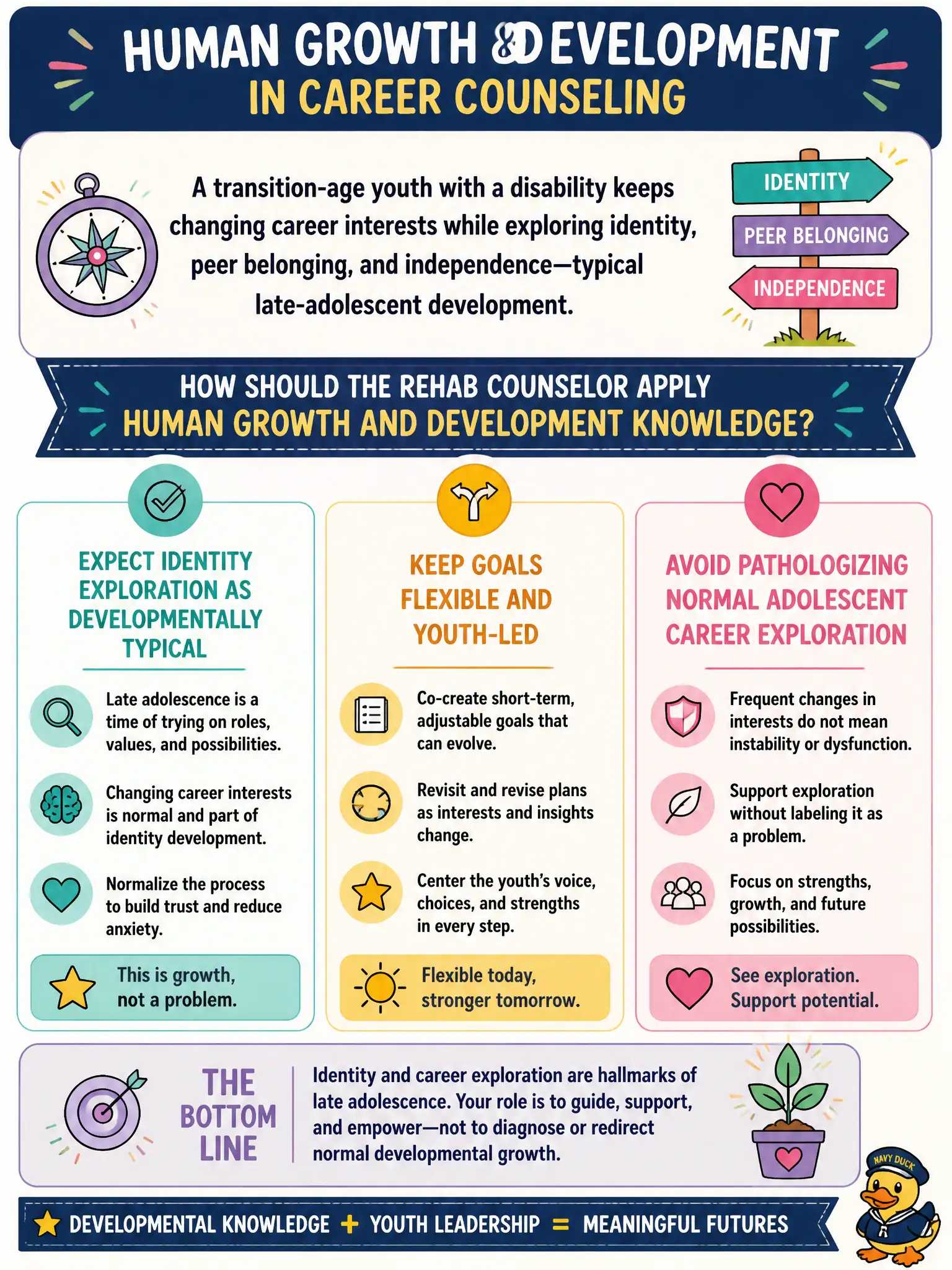
A transition-age youth with a disability keeps changing career interests while exploring identity, peer belonging, and independence—typical late-adolescent development. How should the rehab counselor apply human growth and development knowledge?
Select an answer to reveal the explanation.
Short Explanation
Teens try on hats—that’s development, not defiance. Identity shopping in late adolescence is normal, disability or not. Keep goals youth-led and flexible instead of locking year-one job titles in concrete.
Full Explanation
For a transition-age youth exploring identity, peer belonging, and shifting career interests, human growth and development knowledge leads counselors to expect identity exploration as developmentally typical, keep goals flexible and youth-led, and avoid pathologizing normal adolescent career exploration. Civic transition systems fail youth when they freeze first job titles as lifelong mandates or treat curiosity as noncompliance with an adult paperwork culture.
Treating every interest change as noncompliance and freezing the IPE to the first stated job title forever fails by concept because adolescent exploration is developmental, not defiance. Requiring a lifelong occupation choice before any community work experience fails by demanding premature foreclosure that blocks learning from real tryouts. Ignoring developmental stage and using only adult mid-career scripts fails as developmentally mismatched counseling that misses peer and identity tasks.
Exam caveat: flexibility is not endless aimlessness—youth-led goals still need structure, tryouts, and review dates. Operational check: normalize exploration in family and school meetings, write time-limited exploratory objectives, use community experiences as data, revise the IPE as identity and skills clarify, and document developmental rationale so auditors do not misread exploration as drift.