
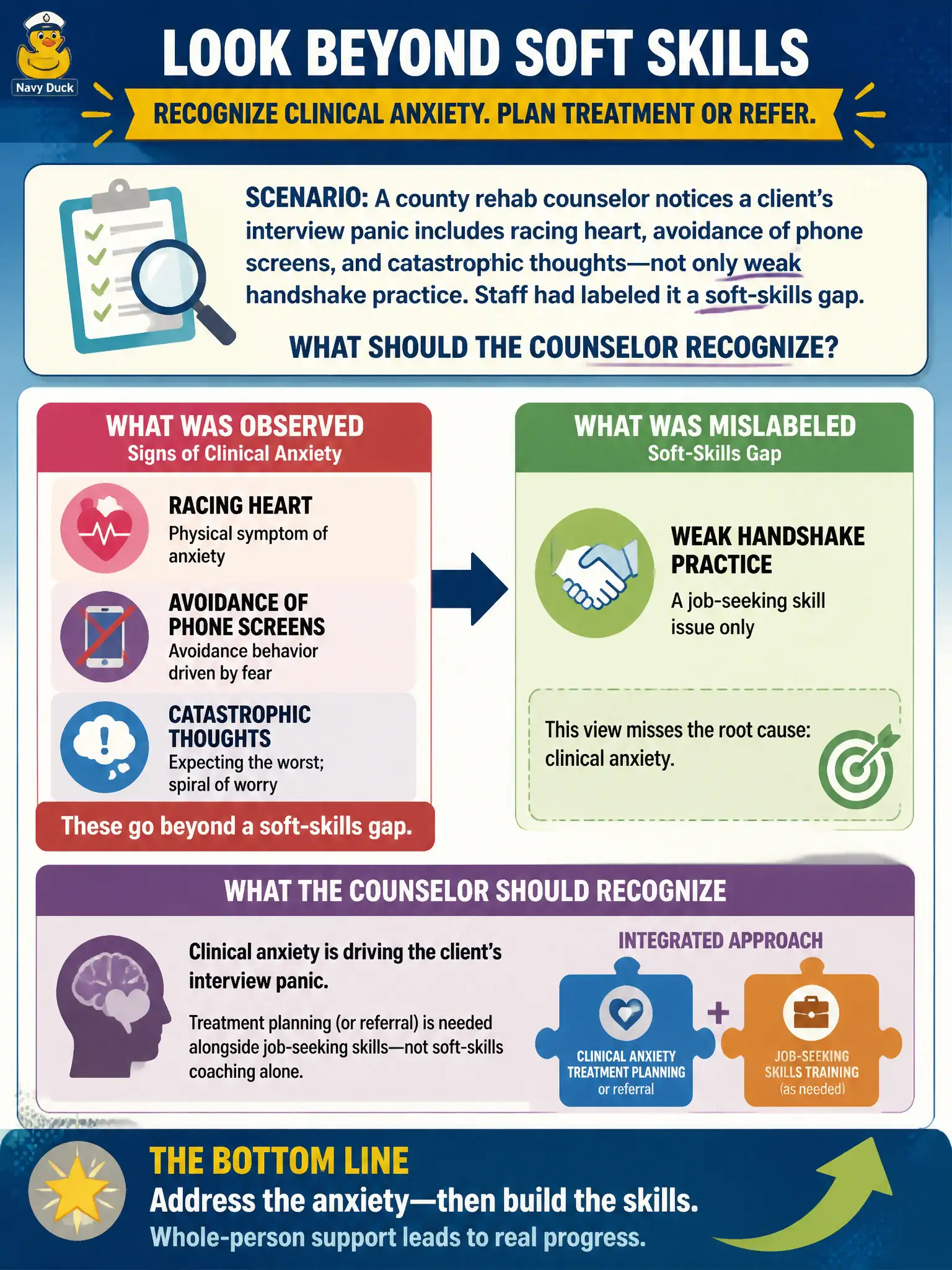
A county rehab counselor notices a client’s interview panic includes racing heart, avoidance of phone screens, and catastrophic thoughts—not only weak handshake practice. Staff had labeled it a soft-skills gap. What should the counselor recognize?
Select an answer to reveal the explanation.
Short Explanation
Soft skills are the polish; panic is the engine light. When body alarm, avoidance, and catastrophe thinking show up, that’s clinical anxiety territory—not just “practice your handshake.” Pair skills coaching with real treatment planning or a solid referral.
Full Explanation
When interview panic includes racing heart, phone-screen avoidance, and catastrophic thoughts—not merely a weak handshake—the counselor should recognize that clinical anxiety treatment planning or referral may be needed alongside job-seeking skills, not soft-skills coaching alone. County rehab teams sometimes mislabel anxiety disorders as etiquette gaps; civic practice requires differential attention so clients receive appropriate care.
Assuming interview anxiety is always cured by one more mock interview script with no clinical follow-up fails by concept because rehearsal alone may not treat panic physiology and catastrophic cognition. Declaring the client permanently unemployable because of interview anxiety fails as an overgeneralized vocational death sentence. Claiming only etiquette videos are appropriate and that clinical assessment violates rehab scope fails because recognizing and referring for clinical anxiety is within counselor competence boundaries.
Exam caveat: not every nervous interview needs specialty care—severity, avoidance, and autonomic symptoms guide the clinical threshold. Operational check: screen for panic and avoidance patterns, offer or refer for anxiety treatment, continue skills coaching in parallel, and pace live interviews with graded exposure rather than sink-or-swim mock scripts alone.