
A state VR client with PTSD starts night-shift warehouse tryouts and reports flashbacks tied to loud pallet jacks and dark aisles. What is the counselor’s best next move in treatment and vocational planning?
Select an answer to reveal the explanation.
Short Explanation
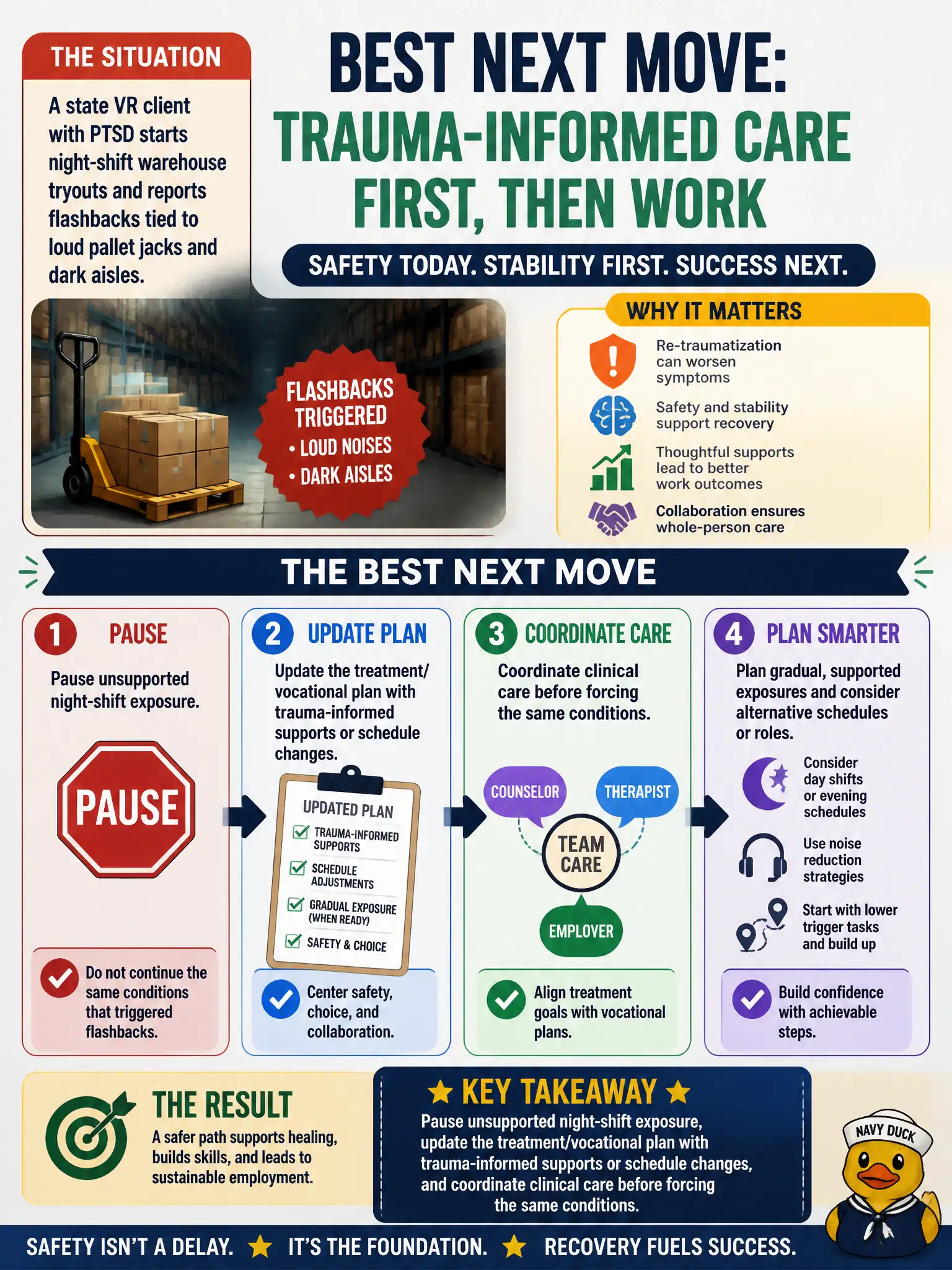
Think of a sprained ankle on a rocky trail—you don’t yell “keep running.” PTSD triggers at night are a signal to adjust the path, not punish the client. Slow the unsupported tryout, add trauma-informed supports, and keep clinical care in the plan.
Full Explanation
When a state VR client with PTSD experiences flashbacks tied to loud pallet jacks and dark aisles during night-shift warehouse tryouts, the counselor’s best next move is to pause unsupported night-shift exposure, update the treatment and vocational plan with trauma-informed supports or schedule changes, and coordinate clinical care before forcing the same conditions. Civic VR must not treat trauma triggers as soft-skills defects to be overridden for placement speed.
Insisting on two more unsupported night shifts so “exposure therapy” happens on the job without counseling adjustments fails by concept because unmanaged exposure can retraumatize and is not a substitute for planned, clinically guided trauma work. Closing the vocational case because PTSD always bars warehouse work fails as an absolute vocational exclusion that ignores accommodations, schedule changes, and clinical coordination. Telling the employer to ignore triggers and treat distress as a motivation problem fails by misattributing trauma responses to soft-skills deficits.
Exam caveat: some graded workplace exposure may later be appropriate with clinical collaboration; the tested error is unsupported forcing of triggering conditions. Operational check: pause the night tryout, document triggers, consult the trauma clinician with releases, consider day-shift or quieter tasks, add supports, and only resume comparable exposure under a shared trauma-informed plan.