
A client with major depression needs a rehab-compatible treatment plan linking therapy, medication follow-up, and job-search pacing. Which planning approach is most appropriate?
Select an answer to reveal the explanation.
Short Explanation
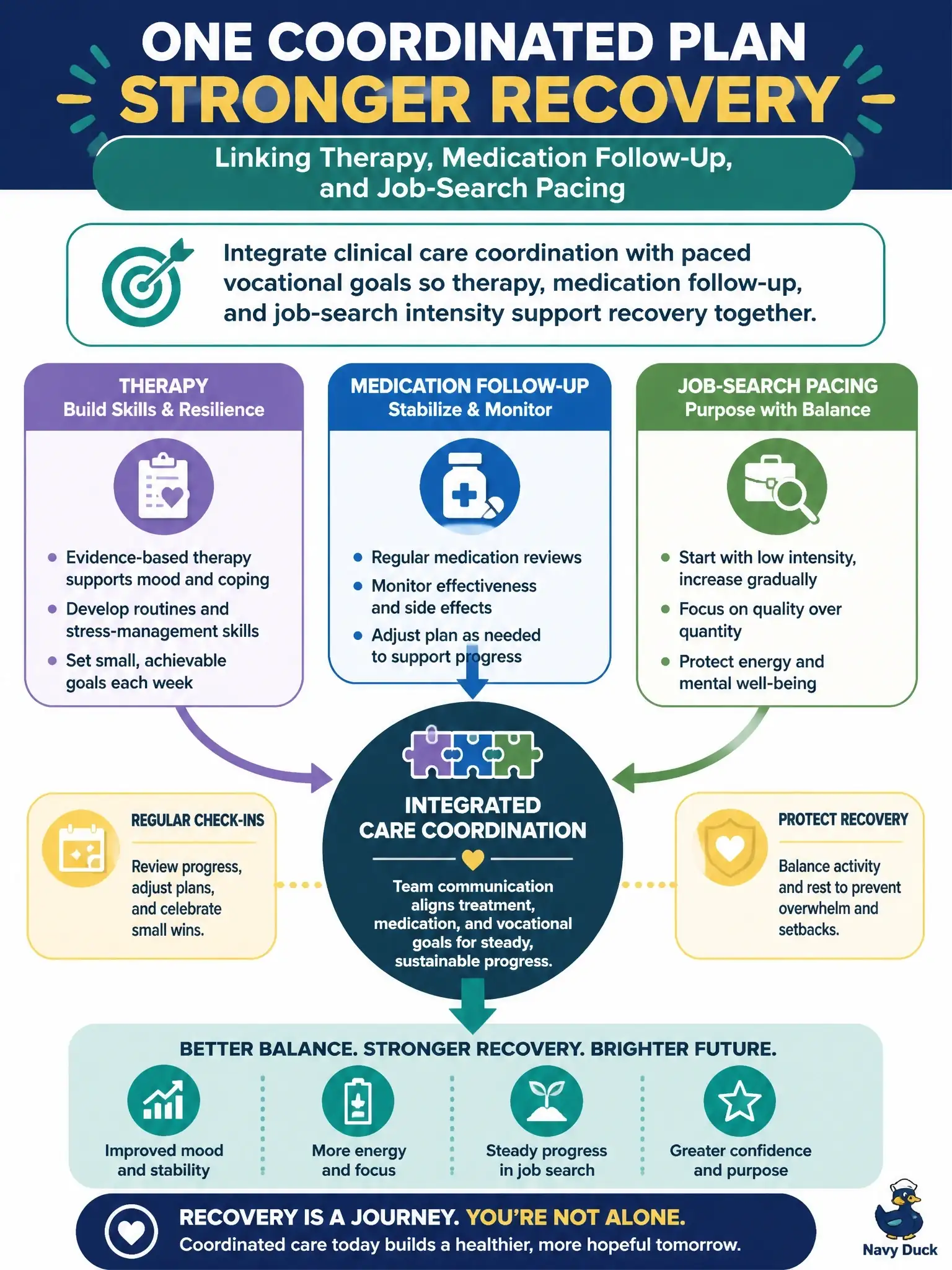
Depression rehab isn't a relay where therapy runs first and job search never gets the baton. You need one plan that links counseling, medication follow-up, and a job-search pace the client can actually sustain — same team, same map.
Full Explanation
For major depression, a rehab-compatible treatment plan integrates clinical care coordination with paced vocational goals so therapy, medication follow-up, and job-search intensity support recovery together. Civic rehabilitation recognizes that untreated depression undermines search persistence, interview performance, and early job retention, while thoughtfully paced work goals can support recovery, structure, and hope.
Focusing only on cold-calling employers while postponing all clinical care indefinitely fails by concept as vocational activity without needed treatment for a clinical condition. Requiring stopping all antidepressants before any job search may begin fails as a dangerous and clinically unsupported gate that confuses medication with impairment. Writing separate unrelated plans with no communication among providers fails because fragmented care undermines both recovery and employment.
Exam caveat: medication decisions belong to prescribing clinicians; counselors coordinate pacing and do not unilaterally start or stop medications. Operational check: obtain releases, align therapy and prescribing follow-up with a realistic search schedule, reduce intensity during severe episodes, resume graded goals as symptoms improve, and document a shared plan linking symptom monitoring to vocational pacing.