
A counselor missed an important cultural holiday the client had flagged, and the alliance ruptures. What best demonstrates alliance repair?
Select an answer to reveal the explanation.
Short Explanation
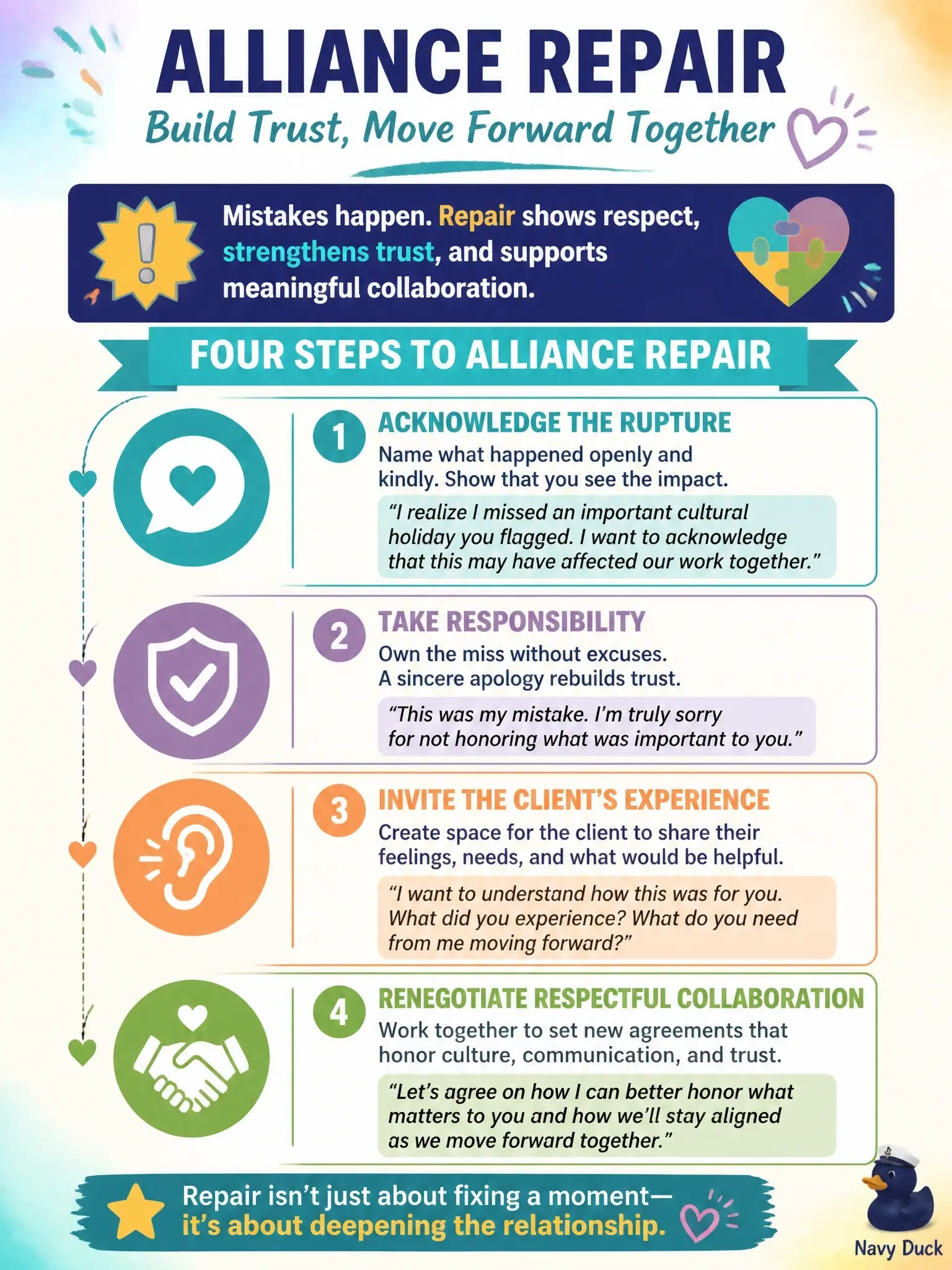
Missing a holiday the client warned you about is like forgetting a friend's birthday after they circled it on your calendar—the relationship takes a ding. Repair means owning it, hearing the hurt, and rebuilding respect, not pretending nothing happened.
Full Explanation
Missing an important cultural holiday the client had flagged can rupture the alliance. The best demonstration of repair is the approach that acknowledges the rupture, takes responsibility for the miss, invites the client's experience, and renegotiates respectful collaboration. Civic multicultural competence includes repairing cultural harms rather than denying them or punishing the client for naming the injury. The denial-and-continuation approach fails because it invalidates the client's cultural concern, deepens the rupture, and signals cultural disregard. The blaming-and-ending-services approach fails because it is defensive abandonment after the counselor's miss. The silent-transfer approach fails because transfer without repair often repeats distrust rather than resolving the relationship injury. Exam caveat: sincere repair does not require perfect cultural knowledge going forward—it requires accountability, learning, and changed behavior. Operational check: apologize specifically, ask how the miss landed culturally, record preferred observances in the chart with client consent, adjust scheduling practices, and confirm the client wants to continue before any transfer discussion.