
A client says they 'should' look for work but shows no plan. Which motivational interviewing approach fits best?
Select an answer to reveal the explanation.
Short Explanation
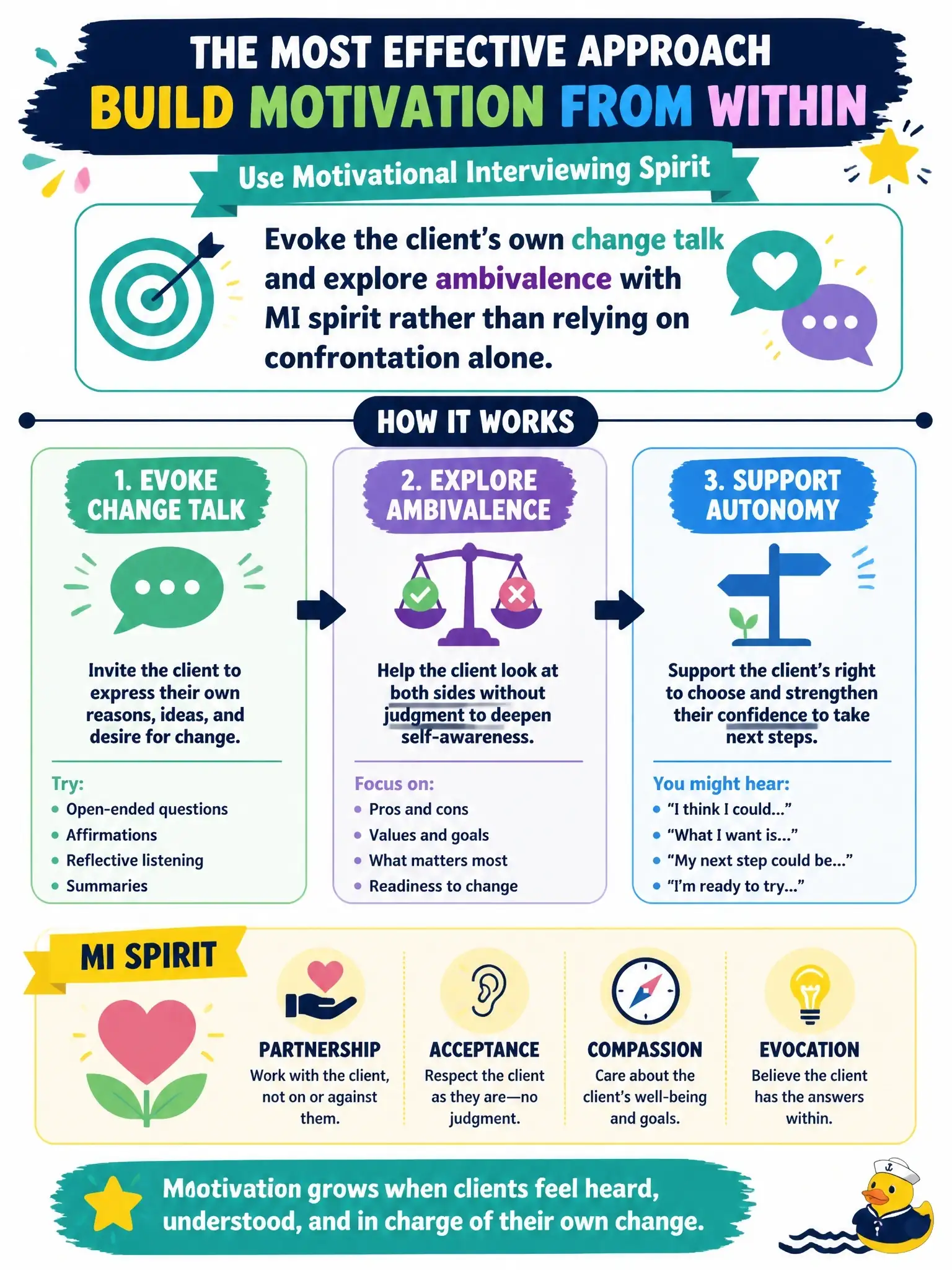
When a client says they 'should' look for work but has no plan, that's ambivalence wearing a polite coat. You draw out their own reasons and next steps with MI spirit instead of arguing them into it. Confrontation alone usually just tightens the coat.
Full Explanation
When a client says they “should” look for work but shows no plan, the best fit is evoking the client’s own change talk and exploring ambivalence with MI spirit rather than relying on confrontation alone. Civic VR clients often carry external “shoulds” from courts, families, or benefit systems; MI helps surface autonomous reasons for change and reduces resistance created by pressuring speeches.
Lecturing weekly on laziness until a plan appears fails by concept as shaming confrontation that increases resistance and damages alliance. Writing the job-search plan unilaterally and forbidding input fails because MI is collaborative and client-authored motivation predicts follow-through. Using only sarcasm to shame the client into applications fails as antithetical to MI spirit and professional ethics.
Exam caveat: MI is not endless chatting without direction; it strategically elicits change talk toward vocational goals and can include advice with permission. Operational check: use open questions and reflections around the “should,” develop discrepancy with client values, affirm autonomy, ask permission before information, and invite the client to design a small next step they personally endorse.