
Early sessions feel cold and the client begins canceling. Which alliance-focused response is most appropriate?
Select an answer to reveal the explanation.
Short Explanation
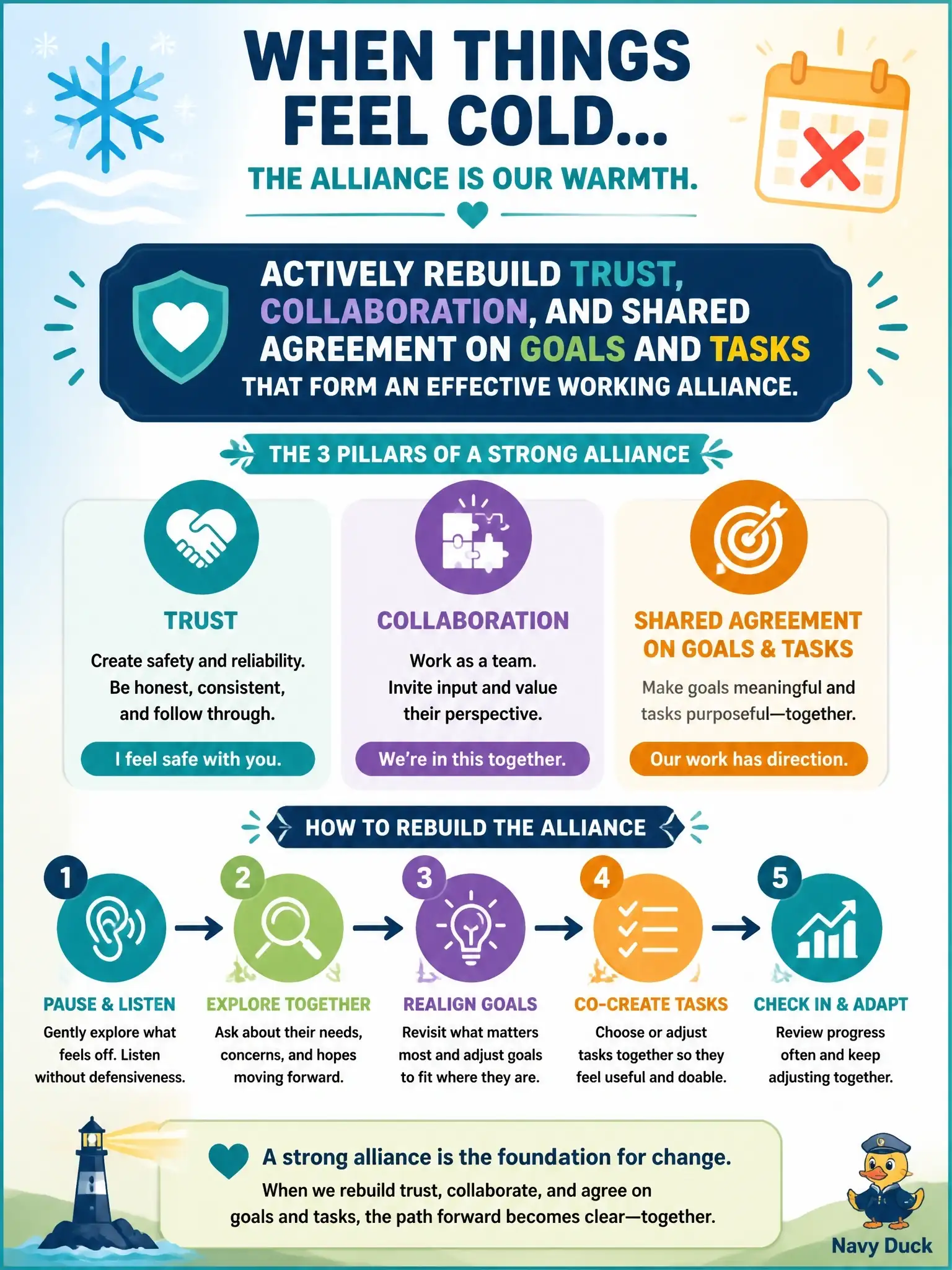
If the counseling room feels like a dentist waiting room, you'll see cancellations. Alliance work means warming up the partnership — trust, shared goals, clear tasks — so the client has a reason to show up. Cold sessions aren't fixed by fees or silence.
Full Explanation
When early sessions feel cold and cancellations begin, the alliance-focused response is to actively rebuild trust, collaboration, and shared agreement on goals and tasks that form an effective working alliance. Civic engagement in vocational rehabilitation often rises or falls with relational safety, not paperwork alone; cold tone and no-shows are frequently alliance data rather than simple character evidence.
Interpreting cancellations only as laziness and doubling fees fails by concept as a character attack that ignores alliance strain and can accelerate dropout. Switching to email-only case management with no relationship discussion fails by avoiding the rupture while reducing counseling to logistics. Ignoring cold tone because alliance is “irrelevant” to vocational outcomes fails because alliance quality is linked to engagement, retention, and outcomes in counseling and rehab contexts.
Exam caveat: rebuilding alliance includes bond plus agreement on goals and tasks—not warmth alone without a shared vocational plan. Operational check: name the strain nondefensively, invite feedback about what feels off, clarify mutual goals and next tasks, adjust session structure if needed, and document the repair conversation and renewed agreements.