
A counselor nearly mistakes medication side effects for primary substance intoxication in a dual-diagnosis client. What is the most appropriate next literacy step?
Select an answer to reveal the explanation.
Short Explanation
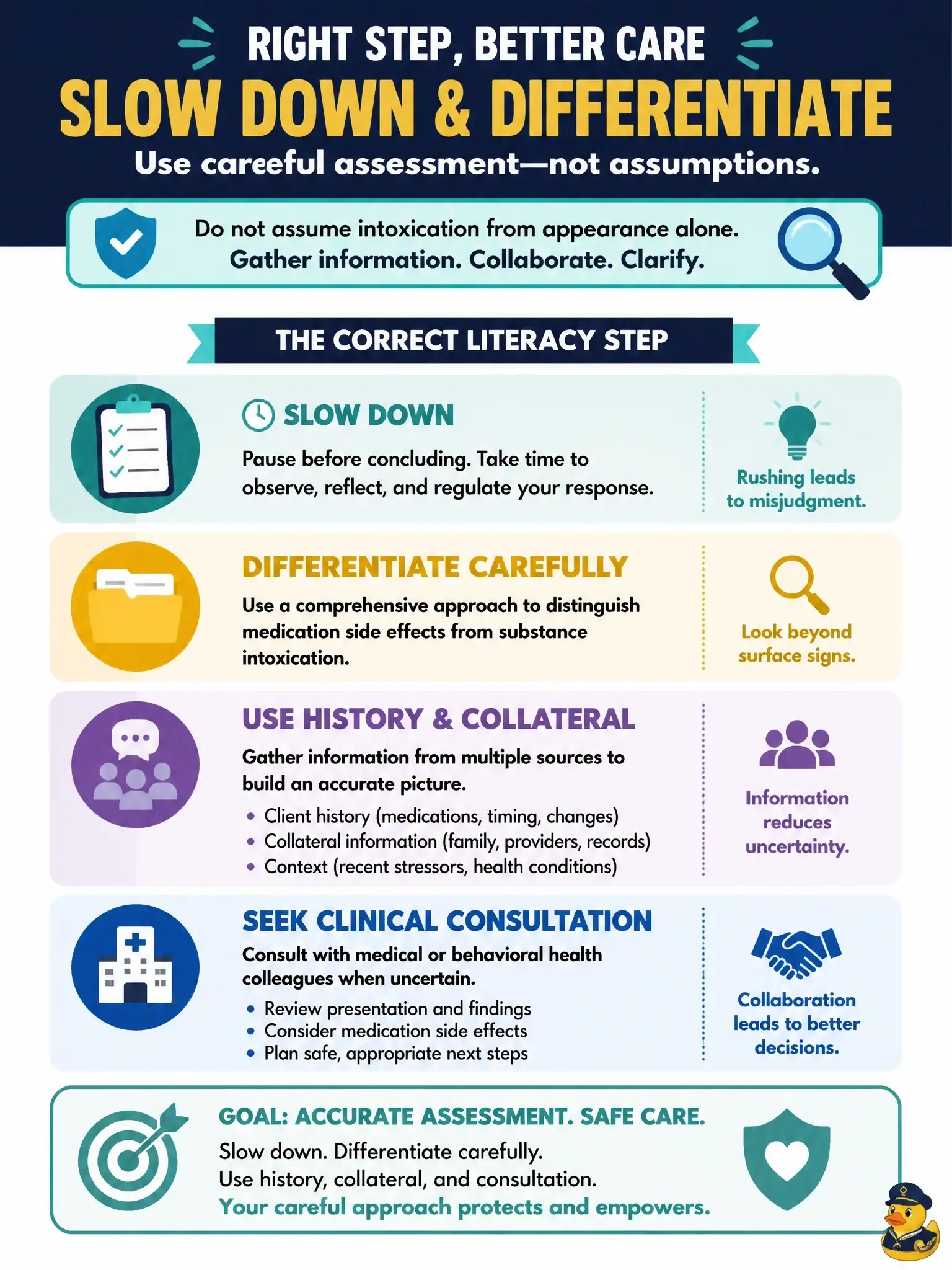
Sedation, tremor, or slurred speech can look like a night out — or like a medication side effect. You can wreck trust and treatment if you jump to 'intoxicated' from a glance. Slow down, gather history, and check with the clinical team.
Full Explanation
Nearly mistaking medication side effects for primary substance intoxication is a dual-diagnosis literacy moment: slow down and differentiate carefully with history, collateral, and clinical consultation rather than assuming intoxication from appearance alone. Civic counselors protect clients from wrongful labels that can trigger inappropriate discharge, lost benefits of the doubt with employers, or stigma that follows the chart. Stopping all psychiatric medication immediately without medical involvement fails as dangerous scope overreach that can precipitate relapse or withdrawal crises. Always discharging dual-diagnosis clients when speech or gait looks atypical fails by concept as a punitive overreaction to ambiguous signs that may be iatrogenic or neurologic. Documenting intoxication as fact whenever any medication is prescribed fails by false attribution that contaminates the record. Exam caveat: counselors do not make final medical differential diagnoses alone; literacy means recognizing ambiguity and consulting appropriately. Operational check: ask timeline of doses, substances, and symptom onset; gather collateral with consent; contact the prescriber or SUD clinician promptly; and avoid conclusive intoxication language until differentiation is better supported.